The purpose of this Blog is to introduce men and women all over the World to the Doctrines of Grace; the 5 Solas; Reformation Theology and the Lord and Savior Jesus Christ.
Showing posts with label Righteousness. Show all posts

Monday, December 17, 2012

The Importance of Jesus' Fulfilling All Righeousness For Us

Then Jesus came from Galilee to the Jordan to John, to be baptized by him. John would have prevented him, saying, "I need to be baptized by you, and do you come to me?" But Jesus answered him, "Let it be so now, for thus it is fitting for us to fulfill all righteousness." - Matthew 3:13-15
What an odd passage. Jesus comes to John to be baptized. John, knowing Jesus' identity, tries to stop Him and tells him it should be the other way around. Jesus tells him to do it anyway in order to' fulfill all righteousness'. Huh? What righteousness? Isn't Jesus already righteous, we ask? What actual need would there be to fulfill any more righteousness? While we all acknowledge that Jesus is indeed righteous in His essence, but I propose to demonstrate from the text of Scripture that, in order to become a perfect substitute for us, Jesus also needed to fulfill all righteousness as a man from our side, a man who is 'born under the law' who needed to perfectly keep it in order to be able to impute righteousness to us. Yes we must be quick to acknowledge that our Lord’s atoning death removes sin. Clearly, the curse of the law is removed because Jesus endured the penalty for us. “For our sake he made him to be sin who knew no sin, so that in him we might become the righteousness of God.” (2 Cor. 5:21). “Christ redeemed us from the curse of the law by becoming a curse for us—for it is written, "Cursed is everyone who is hanged on a tree” (Gal. 3:13). Indeed, as the text of Scripture declares, in order for human beings, who are sinners, to have eternal life the guilt and penalty of sin must be removed. But Jesus does this not only by dying the death we justly deserve but by living the life we should have lived. This means, along with punishment for sins, that we must also have a perfect record of obedience to God’s law. When these two conditions are fulfilled people can be justified or declared righteous, before God. Therefore, justification contains one negative and one positive element.

The fact is, if Jesus simply needed to impute the righteousness of God from His essence, there would have been no need for him to live for 33 years. Instead when Herod went to go massacre the infants in Bethlehem, Jesus death as an infant would have sufficed for our justification. But this was not the plan of God because to become a perfect high priest and lamb without blemish, Jesus not only had to die for us but he had to live for us. It is clear then that the Scriptures speak of God's people not only being justified by His death (Rom. 3:25; 5:9) but also as being saved by His life or obedience (Rom. 5:10, 19). Aside from the above obvious passages, where else do the Scriptures teach this? Well if you turn with me to Hebrews chapters 4 and 5 we will find a very precise passage on this very topic:   Continue at Reformation Theology

Friday, October 19, 2012

The True Israel of God

Father Abraham had many sons, many sons had father Abraham. I am one of them and so are you…,” so the old children’s song goes. Although it’s a silly song that requires the raising of arms, legs, and the nodding of heads, the song’s theology is unquestionably biblical. In Romans 4:1–16, the Apostle Paul explains that Abraham is “the father of us all.”

As new covenant believers, we have been justified by grace alone through faith alone because of the finished work of Christ alone. As an old covenant believer, Abraham, the father of Israel, was justified by grace alone through faith alone because of the future work of Christ alone. Abraham stood on the promised salvation of God in the Messiah who was to come just as we stand on the promised salvation of God in the Messiah who has come. True believers in the Old Testament were saved in the same way that true believers are saved in the New Testament— by faith, and by faith alone. Abraham believed the Lord, and He counted it to him as righteousness (Gen. 15:6).  Continue at Burk Parsons

Monday, May 28, 2012

Grace All the Way

There is a damaging idea floating around that says, "God saved you, now what are you going to do for him?" This is a recipe for failure. If you come to the Christian life believing you can do anything for God in your own strength or repay him on any level, you fall back to the self-dependent spiritual death from which Jesus saved you.

Ephesians 2 frees us from this lie by showing that the Christian life is completely fueled by God's grace. The chapter is filled with the high-octane gospel of grace for both our justification and also our sanctification. It begins with how believers were dead in their sins, then moves to how God loved us and rescued us from this death by his grace, bringing salvation to all in Christ, uniting Jews and Gentiles as one people in whom the Spirit of God dwells. The first half of the chapter focuses on God's rescue operation, which delivered us from our sin and God's wrath, and ends with the verse 10, which centers on how God's deliverance means we are created anew for lives of righteousness. As Peter O'Brien notes, Paul has already described salvation as "a resurrection from the dead, a liberation from slavery, and a rescue from condemnation"; he moves now to the idea of a new creation.

Ephesians 2:4-5 proclaims Gods grace clearly: "God, being rich in mercy, because of the great love with which he loved us, even when we were dead in trespasses, made us alive together with Christ---by grace have you been saved." Regeneration takes place when the spiritual dead come alive in Christ. Dead people do not cooperate with grace. Without regeneration, there is no possibility of faith. Paul got this from Jesus, who told Nicodemus: "Unless a man is born again first, he cannot possibly see or enter the kingdom of God" (John 3:3).

The theme of Ephesians 2:8-9 is clear: grace. This theme was already mentioned in Ephesians 2:5, but as Tet-Lim Yee points out, what was then more of an "undercurrent" now becomes the main point. We are saved by grace, not anything we have done. The passage has often been used to support the idea that justification before God is by grace alone, and not anything we do. And for good reason: the verses strike with great emphasis the note of salvation as a complete "gift of God." We have done nothing to bring it about that could lead us to boast. And yet it is nearly impossible not to boast in the radical love of God when we grasp this reality.  Continue at Justin Holcomb

Friday, April 13, 2012

Fight Your Sin

By Jonathan Dodson, Gospel-Centered Discipleship

Yesterday we posted the first of three in a series on fighting sin. Check out the post on the importance of knowing your sin. Once we know our sin, the challenge is to actually fight it.

Know that victory over sin has already been won.

Before we address fighting sin, it is worthwhile to point out that the victory over sin has already been won in Christ. The good news of the gospel is that Jesus has defeated sin, death, and evil through his own death and resurrection and is making all things new, even us. Paul explains Jesus' victory over sin and its implications for us in Romans 6:6-11:
  • The power of sin has been rendered powerless, as we are no longer enslaved to it but to Christ!
  • However, disciples will continue to battle sin until our final reunion with Christ. This is why Paul exhorts us to “consider” ourselves dead to sin and alive in Jesus.
  • The time between the cross and the return of Christ will be filled with battles against sin, but in these battles we possess a new life which enables us to defeat sin through Christ’s decisive victory.
  • The fight of faith is a fight to be our new, authentic selves in Christ, free from sin and alive to God in righteousness. Knowing our sin, we fight against it by fighting to be who we already are in Christ.

Why Fight?

Fighting your sin is a tenacity to put sin to death, which arises from our life in Christ. Unfortunately, many disciples do not walk in their newness of life but in old patterns of sin. Perhaps this lackadaisical approach to sin is because we value Jesus’s atonement for our guilt and the penalty of sin, but at a heart level fail to value and understand how his atonement has also freed us from the power of sin? Or perhaps our indifference to fighting sin springs from a false belief that God accepts us just as we are, not as who we will be? Why fight if we are already accepted?  Continue at Jonathan Dodson

Tuesday, March 13, 2012

Work Out Your Salvation

“Work out your salvation with fear and trembling.” It’s often used either as a whip or explained away (“Now, what Paul isn’t saying is…”). As usual, it’s crucial to examine the statement in the flow of Paul’s letter.

Context, Context...

First, the whole statement reads, “Therefore, my beloved, as you have always obeyed, so now, not only as in my presence but much more in my absence, work out your own salvation with fear and trembling, for it is God who works in you, both to will and to work for his own good pleasure” (Phil 2:12-13).

Second, “Therefore,…” already clues us to what has gone before. Paul has described Christ’s humility and exaltation for our salvation, which he commended as an example for believers. Jesus Christ is Lord, having been exalted to the Father’s right hand as our Redeemer (Phil 2:1-10). 

Third, in chapter 3 Paul will draw a line between his assets and liabilities, and move his assets (“righteousness under the law”) into the liabilities column, counting his good works apart from Christ as “dung, in order that I may gain Christ and be found in him, not having a righteousness of my own that comes from the law, but that which comes through faith in Christ, the righteousness from God that depends on faith…” (Phil 3:8-9).   Continue at Michael Horton  

Saturday, March 3, 2012

The Pain and the Gain of True Holiness

I’ve been struck again by the wonderful depth and simplicity of Paul’s Letter to the Galatians, this time with respect to his treatment of the spiritual struggle in the final chapters. Justification is not a process or a reward for those who are victorious in battle. Rather, it is a completed verdict that is rendered on the sole basis of Christ’s imputed righteousness. Precisely on this basis, we have a lot of work ahead of us. It will be a battle; we’ll win some and lose some. However, the war itself has been decided. We live from Christ’s victory over sin’s guilt and power toward Christ’s victory over sin’s presence. In the meantime, it’s choppy waters.

What pain and what gain? First, it’s crucial to notice that Paul is not talking about justification but sanctification here. The pain is perpetual struggle, warfare, and battle between the Spirit and the flesh, not between justification and condemnation. All of those who are justified are in Christ and therefore are indwelt by the Spirit. In the old covenant, provision for atonement was made in the sacrificial system of the Temple that the Spirit filled with his glory. And yet, in the new covenant the law is written on our hearts, our sins are forgiven, and the Spirit indwells us as his temple. Yet this very indwelling of the Spirit arouses the flesh to arms. Paul is not saying that we walk in the Spirit in order to be justified, but that those who are justified are in the Spirit and therefore must “walk by the Spirit” (Gal 5:16). 

Seeking to bring the church back under the old covenant, Paul’s opponents in Galatia had not even realized that the heart of the law is love. Like his gospel, Paul’s law is too simple. His critics demanded that Gentile believers be circumcised, keep kosher, and “observe days and months and seasons and years” (4:10). In the meantime, they looked down on others (especially Gentiles who didn’t act like Jews). Like Jesus in his exchanges with the Pharisees, Paul not only blames his opponents for confusing the law with the gospel but for setting aside God’s law (summarized by love) to obey their own rules, programs and ceremonies. The result of this false righteousness was disregard for God’s law under the pretense of fulfilling it. Legalism bred arrogance; instead of building each other up in the gospel and love, they were biting and devouring each other over who was “in” and who was “out.”  Continue at Michael Horton

Friday, March 2, 2012

The Danger of Worldly Compromise

“Be ye not unequally yoked together with unbelievers: for what fellowship hath righteousness with unrighteousness? and what communion hath light with darkness? And what concord hath Christ with Belial? or what part hath he that believeth with an infidel? And what agreement hath the temple of God with idols? for ye are the temple of the living God; as God hath said, I will dwell in them, and walk in them; and I will be their God, and they shall be my people. Wherefore come out from among them, and be ye separate, saith the Lord, and touch not the unclean thing; and I will receive you. And will be a Father unto you, and ye shall be my sons and daughters, saith the Lord Almighty.” — 2 Corinthians 6:14-18

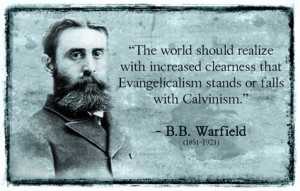
B.B. Warfield (1851-1921)

Commenting on the above passage, Warfield writes,

If we will scrutinize our present passage closely we shall quickly see that the separation which the Apostle is urging here, too, is not separation from men but from evil – applying, in deed, to the Corinthians in the way of exhortation what our Lord prayed for in behalf of His followers, not that they should be taken out of the world, but that they should be kept from the evil of the world. The exhortation: ‘Come ye out from among them and be ye separate, saith the Lord,’ is immediately followed by the explanation, ‘And touch no unclean thing.’ And the whole exhortation closes with a poignant prayer that they may ‘cleanse themselves from every defilement.’ It is not from their fellow-men that the Apostle would have Christians hold themselves aloof; it is from the sin and shame, the evil and iniquity, which stains and soils the lives of so many of their fellow-men. This is the Apostolic variety of Puritanism.  Continue at Eric. T. Young

Saturday, February 18, 2012

What Unbelieving Pagans Know about God and Why They Are Responsible for It

I am continually amazed at how much dense theology Paul is able to pack into a few lines of a letter. Consider, for example, just four verses: Romans 1:18-21.
 For the wrath of God is revealed from heaven against all ungodliness and unrighteousness of men, who by their unrighteousness suppress the truth. 19 For what can be known about God is plain to them, because God has shown it to them. 20 For his invisible attributes, namely, his eternal power and divine nature, have been clearly perceived, ever since the creation of the world, in the things that have been made. So they are without excuse. 21 For although they knew God, they did not honor him as God or give thanks to him, but they became futile in their thinking, and their foolish hearts were darkened.
Paul has just finished exulting in the “good news” of the gospel (Rom. 1:15-17), but he now begins to paint a contrasting backdrop of the “bad news” for those who rebel against their holy creator. Whereas “the righteousness of God is revealed from faith for faith” to all who believe (vv. 16-17), “the wrath of God is revealed from heaven” against all who suppress God’s truth (v. 18). Paul piles up the terms in reference to the godless Gentiles: on the one hand, “ungodliness and unrighteousness” describes what they do, and on the other hand “by their unrighteousness” is the way in which they go about their work of suppressing truth. The reality of the redundancy is repulsive: by their unrighteousness they perform unrighteousness.  Continue at Justin Taylor

Saturday, December 31, 2011

Are You Righteous?

“For our sake he made him to be sin who knew no sin, so that in him we might become the righteousness of God.” 2 Corinthians 5:21

Ethical behaviorism is a term Psychologists use which defines righteousness exclusively in terms of what a person does or does not do. In this sense, a righteous person is one who does the right things and avoids the wrong things. An unrighteous person is one who does the wrong things and avoids the right things. Defined this way, righteousness is a quality that can be judged by an observation of someone’s behavior. Virtue and uprightness is purely a matter of outer conduct without any hint of what goes on inside you.

William Hordern illustrates well how this definition of righteousness is the definition held by the world:

The law enforcement institutions of society are concerned with right behavior. They do not care why people obey the law, so long as they obey it. The person who breaks no laws is righteous in their sight regardless of the motivation that produces law abiding behavior.

In the Sermon on the Mount, Jesus breaks radically from this definition of righteousness. He cuts through the outer behavior of a person and looks at what’s in the heart. Jesus insists that righteousness is not simply a matter of what we do or don’t do but rather a question of why we do or don’t do it.

A few years ago when my boys were younger, they would gather all the neighborhood kids in our yard to play football. And every once in a while a pass would be overthrown, landing in my neighbors grass. My neighbor (an angry, grumpy, old curmudgeon) would always come outside and scream at my boys and their friends, threatening to confiscate the ball if it happened again. My boys, being young at the  time, would always come inside with tears in their eyes, lips quivering, because they were scared of our neighbor. Well, being the scrapper that I am, there were countless times that I wanted to march over to my neighbor and give him a piece of my mind. I wanted to make it clear that if he ever yelled at my boys again…well, you get the idea. I never did, though. I would stare him down from time to time, but I never went next door to let him have it. Some would assume that my refusal to let loose on my neighbor was an act of righteousness: I was exercising love, patience, self-control. But was it?  Keep Reading >>>

Friday, October 28, 2011

The Active Obedience of Christ – No Hope Without It!

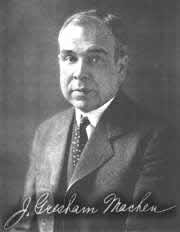
Shortly before he died (January 1, 1937), Dr. J. Gresham Machen sent a final telegram to his friend Professor John Murray. The words of the telegram were these:
“I’m so thankful for the active obedience of Christ. No hope without it.”
I’m convinced that in these short words, Dr. Machen was able to express the essence of the biblical Gospel. Let me explain: 
Theologians talk of a double function of Christ as our Savior in saving us – His passive and active obedience. The passive obedience refers to His laying His life down for us His sheep. He died an atoning death paying the full penalty for sins. Yet, what is often missed is the function of His 33 years of life on earth perfectly fulfilling all the demands of the law. This righteousness, one that has fulfilled the entire law of God is what is credited to our account as believers in Christ. Christ is our righteousness!

CHRIST DIED FOR OUR SINS, AND LIVED FOR OUR RIGHTEOUSNESS
 
The Lord Jesus Christ not only died an atoning death for our sins, but before He ever went to the cross, He lived a sinless life that perfectly fulfilled the righteous standards of the law. If all that was necessary for our justification was the death of Jesus on the cross, He could have come down to earth on a parachute on Good Friday, died on the cross for us, and three days later, risen again. But we all know that this is not what happened. Why? Because that would never have been enough.    Keep Reading >>>

Monday, October 24, 2011

Are You Depending Upon A Righteousness of Your Own? Your Righteousness Shall Perish With You


George Whitefield (1714-1770)

“To the one who does not work but believes in him who justifies the ungodly, his faith is counted as righteousness” ― Romans 4:5

George Whitfield,

Are any of you depending upon a righteousness of your own? Do any of you here, think to save yourselves by your own doings? I say to you…your righteousness shall perish with you. Poor miserable creatures! What is there in your tears? What in your prayers? What in your performances, to appease the wrath of an angry God? Away from the trees of the garden; come, ye guilty wretches, come as poor, lost, undone, and wretched creatures, and accept of a better righteousness than your own. As I said before, so I tell you again, the righteousness of Jesus Christ is an everlasting righteousness: it is wrought out for the very chief of sinners. Ho, every one that thirsteth, let him come and drink of this water of life freely. Are any of you wounded by sin? Do any of you feel you have no righteousness of your own? Are any of you perishing for hunger? Are any of you afraid ye will perish forever? Come, dear souls, in all your rags; come, thou poor man; come, thou poor, distressed woman; you, who think God will never forgive you, and that your sins are too great to be forgiven; come, thou doubting creature, who art afraid thou wilt never get comfort; arise, take comfort, the Lord Jesus Christ, the Lord of life, the Lord of glory, calls for thee: through his righteousness there is hope for the chief of sinners, for the worst of creatures. What if thou hadst committed all the sins in the world? What if thou hadst committed the sins of a thousand, what if thou hadst committed the sins of a million of worlds? Christ’s righteousness will cover, the blood of the Lord Jesus Christ will cleanse, thee from the guilt of them all. O let not one poor soul stand at a distance from the Savior. My dear friends, could my voice hold out, was my strength equal to my will, I would wrestle with you; I would strive with arguments, till you came and washed in this blood of the Lamb; till you came and accepted of this everlasting righteousness.   Keep Reading>>>

Tuesday, September 13, 2011

The Active Obedience of Christ – No Hope Without It!

On September 8th I posted Is the Christian’s Hope in Christ’s Active Obedience or Their Own Works in response to something Rick Warren had said in a Tweet against the doctrine of Imputation. The intent of that article was not to do an in-depth presentation of the doctrine of the Imputation of Christ’s righteousness at the time of new believer’s justification, but to contrast what the Bible clearly teaches about it with what Rick Warren said. I have been requested to give more of my understanding of the Reformation doctrines that are closely associated with Justification, especially in Imputation of Christ’s active obedience and why it is essential. As I researched this, I ran across an  article I had read about five years ago over at RefomationTheology.com.

The article below is by John Samson and is titled The Active Obedience of Christ – No Hope Without It! – Enjoy and be blessed – Mike Ratliff

Shortly before he died (January 1, 1937), Dr. J. Gresham Machen sent a final telegram to his friend Professor John Murray. The words of the telegram were these: “I’m so thankful for the active obedience of Christ. No hope without it.” I’m convinced that in these short words, Dr. Machen was able to express the essence of the biblical Gospel. Let me explain:

Theologians talk of a double function of Christ as our Savior in saving us – His passive and active obedience. The passive obedience refers to His laying His life down for us His sheep. He died an atoning death paying the full penalty for sins. Yet, what is often missed is the function of His 33 years of life on earth perfectly fulfilling all the demands of the law. This righteousness, one that has fulfilled the entire law of God is what is credited to our account as believers in Christ. Christ is our righteousness!

Some time ago, I wrote the following:

CHRIST DIED FOR OUR SINS, AND LIVED FOR OUR RIGHTEOUSNESS - The Lord Jesus Christ not only died an atoning death for our sins, but He also lived a sinless life that perfectly fulfilled the righteous standards of the law. If all that was necessary for our justification was the death of Jesus on the cross, He could have come down to earth on a parachute on Good Friday, died on the cross for us, and three days later, risen again. But we all know that this is not what happened. Why? Because that would never have been enough.    Keep Reading...

Saturday, September 3, 2011

The Reformed Faith

A Brief and Untechnical Statement of the Reformed Faith by Benjamin Breckinridge Warfield
 
1. I believe that my one aim in life and death should be to glorify God and enjoy him forever; and that God teaches me how to glorify him in his holy Word, that is, the Bible, which he had given by the infallible inspiration of this Holy Spirit in order that I may certainly know what I am to believe concerning him and what duty he requires of me. 

2. I believe that God is a Spirit, infinite, eternal and incomparable in all that he is; one God but three persons, the Father, the Son, and the Holy Ghost, my Creator, my Redeemer, and my Sanctifier; in whose power and wisdom, righteousness, goodness and truth I may safely put my trust. 

3. I believe that the heavens and the earth, and all that in them is, are the work of God’s hands; and that all that he has made he directs and governs in all their actions; so that they fulfill the end for which they were created, and I who trust in him shall not be put to shame but may rest securely in the protection of his almighty love. 

4. I believe that God created man after his own image, in knowledge, righteousness and holiness, and entered into a covenant of life with him upon the sole condition of the obedience that was his due: so that it was by willfully sinning against God that man fell into the sin and misery in which I have been born.   Keep Reading...

Wednesday, June 22, 2011

Explaining the Gospel


9Marks recently asked a group of pastors and theologians how they would explain the gospel in 100 words or less. I liked Michael Horton's answer best, even though he completely blew the word limit.

What is your greatest fear? If I were asking that question in many parts of the world, answers would probably cluster around basic needs such as running water, food, vaccines, and shelter. For most of us in the United States, though, our greatest fears are more likely to be things like the fear of loneliness, some cataclysmic event that throws me off the ladder of upward mobility, divorce, or the inability to find any ultimate meaning in life. None of these fears is illegitimate, yet none is ultimate. These fears haunt us only because we have the luxury of having them haunt us. Until we are confronted with the reality of God—in all of his blinding majesty, weightiness, and frightful claim on our lives—we are overwhelmed by secondary troubles. But when for some reason there is the slightest glimpse of God in his holiness, we either do our best to domesticate him, turn him into a pet by suppressing the truth, or run for the hills to escape the confrontation. Keep Reading...

Monday, May 9, 2011

Why Your “Best Try” Is Such a Miserable Failure

How’s that perfection thing working out? 

In our democratic society we love to talk about freedom. But anybody out there ever tried to be perfect? Ah, shucks. Turns out we’re not as free as we thought.

Freedom of the will is a thorny issue—but only theoretically speaking. The problem of the un-free will is not a philosophical problem. The crux is that we are called to perfection, and we can't achieve it, so none of us is truly free. 
    “Free will, after the fall, has the power to do good only in a passive capacity, but it can always do evil in an active capacity,” –Thesis 14, Heidelberg Disputation  
Here’s a non-Yoda translation: after sin came into the world, the human will was so corrupted, even our best efforts are tainted before God. People have the capacity to do good but only when God comes onto the scene and makes us alive again.  Read the rest HERE

Wednesday, January 19, 2011

The Active Obedience of Christ

Shortly before he died (January 1, 1937), Dr. J. Gresham Machen sent a final telegram to his friend Professor John Murray. The words of the telegram were these: “I’m so thankful for the active obedience of Christ. No hope without it.” I’m convinced that in these short words, Dr. Machen was able to express the essence of the biblical Gospel. Let me explain: 

Theologians talk of a double function of Christ as our Savior in saving us – His passive and active obedience. The passive obedience refers to His laying His life down for us His sheep. He died an atoning death paying the full penalty for sins. Yet, what is often missed is the function of His 33 years of life on earth perfectly fulfilling all the demands of the law. This righteousness, one that has fulfilled the entire law of God, is what is credited to our account as believers in Christ. Christ is our righteousness!

Some time ago, I wrote the following: Continue Reading>>>

Monday, December 6, 2010

Unspeakably Good News! Our Times, His Appointment

”To know that while our feelings fluctuate, and our frames vary, and our experience ebbs and flows as the tide, yet our righteousness varies not, changes not, and that we are not justified one moment more really, more freely, more completely than another, is a mercy unspeakably great.” ~Octavius Winslow 

A Father’s Hand

“My times are in your hand.” Psalm 31:15
Our times of adversity are also in God’s hand. As every sunbeam that brightens, so every cloud that darkens, comes from God. We are subject to great and sudden reverses in our earthly condition. Joy is often succeeded by grief, prosperity by adversity. We are on the pinnacle today, tomorrow at its bottom. Oh! What a change may one event and one moment create! But, beloved, ALL is from the Lord. Continue Reading>>>