The purpose of this Blog is to introduce men and women all over the World to the Doctrines of Grace; the 5 Solas; Reformation Theology and the Lord and Savior Jesus Christ.
Showing posts with label Temptation. Show all posts

Thursday, March 13, 2014

The Anatomy of Sin's Seduction

To understand how the flesh dupes us, consider James 1:14–15 in light of the principles of deception:

. . . each one is tempted when, by his own evil desire, he is dragged away and enticed. Then, after desire has conceived, it gives birth to sin; and sin, when it is full-grown, gives birth to death.

James is writing to people trying to excuse their sin much the way Adam and Eve did in the Garden, pinning the blame on God. But James says that the whole guilt of sin lies in the sinner, as he is hoodwinked by the desires of his own flesh. He helps us unmask the con man within by exposing what the flesh wants, and how it goes about getting it from us.

First, the goal the flesh aims at is death (verse 15). What- ever sin pretends, it will end in death. The flesh wants us to believe that the consequences for dallying with sin will only be slight (not as much blessing from God, a cheaper seat in heaven). Knowing this is our first means of arming ourselves against deceit (as knowing that the used-car salesman will do anything to sell you a car helps to protect you from driving home the lemon while he laughs behind your back).   Continue at Alistair Begg,

Saturday, October 26, 2013

Satan’s Permission to Sift You like Wheat

“Simon, Simon, behold, Satan has demanded permission to sift you like wheat” (Luke 22:31). Did Jesus ever speak more startling words to Peter? Surely all of the Twelve were within earshot of Jesus’ words and would be attacked by the devil but, as their leader, Peter was addressed by name and, most obviously, singled out by the Evil One. Just as Satan would succeed—temporarily—in scattering the disciples by striking down the Chief Shepherd, so he would succeed, but only temporarily, in striking down Peter.

Satan Did More than Say “Please.” The New American Standard translation says that Satan “demanded” permission from God to target Peter (as does the ESV). Satan said more than “Please” to God, i.e., he asked with a strong degree of insistence. And Satan demanded this permission from the sovereign Lord for himself (middle voice), that is, for his own selfish, destructive agenda.   Continue at Paul Tautges

Friday, September 6, 2013

The Accuser and the Advocate

Satan bears many names. Satan has many schemes. Satan wears many hats. Satan comes in many disguises. And through it all, one of his favorite tactics and one of his most successful tactics is to be an accuser. The book of Revelation assures us that night and day he stands as our accuser.
accuser (noun)
1: one that charges with a fault or offense
2: one that charges with an offense judicially or by a public process
Satan is an Accuser and you know his accusations. You have heard him charge you with a fault, you have heard him proclaim your guilt. You have heard it in the courtroom of your heart and mind and conscience.   Continue at Tim Challies

Tuesday, October 30, 2012

20 Ways Satan May Seek to Destroy You

He is the serpent, the Great Dragon, Beelzebul, the ruler of this world, the prince of the power of the air, the evil one, and the adversary. He is Satan. And—if you are a follower of Jesus Christ—he hates your guts with a passion. Like a roaring lion he is prowling about seeking to destroy you. How can you stand firm and resist the devil so that he will flee from you? First, do not be naive; you must consider his ways.
  1. He may slander God to you in order to cast doubt on God’s goodness and shipwreck your faith (Gen 3:4-5).
  2. He may tempt you to deceive others in order to create, or maintain, the impression of being more spiritual (Acts 5:3; Jn 8:44).
  3. He may corrupt your mind and steer you away from the simplicity of Christ and His gospel (2 Cor 11:3).
  4. He may hinder [cut in on, as in a race] your gospel witness and steal it from unsuspecting hearts (1 Thess 2:18; Matt 13:19).
  5. He may wrestle against you, fighting against your progress in Christ (Eph 6:12).
  6. He may tempt you to commit sexual immorality against your spouse as a result of neglecting the intimacy of the marriage bed (1 Cor 7:5).
  7. He may harass you with some form of fleshly affliction (2 Cor 12:7). Continue at Paul Tautges

Tuesday, July 24, 2012

Why Are So Many Men Hooked on Internet Porn & Video Games?

You know the guy I’m talking about. He spends hours into the night playing video games and surfing for pornography. He fears he’s a loser. And he has no idea just how much of a loser he is. For some time now, studies have shown us that porn and gaming can become compulsive and addicting. What we too often don’t recognize, though, is why.

In a new book, The Demise of Guys: Why Boys Are Struggling and What We Can Do About It, psychologists Philip Zimbardo and Nikita Duncan say we may lose an entire generation of men to pornography and video gaming addictions. Their concern isn’t about morality, but instead about the nature of these addictions in reshaping the patten of desires necessary for community.

If you’re addicted to sugar or tequila or heroin you want more and more of that substance. But porn and video games both are built on novelty, on the quest for newer and different experiences. That’s why you rarely find a man addicted to a single pornographic image. He’s entrapped in an ever-expanding kaleidoscope.

There’s a key difference between porn and gaming. Pornography can’t be consumed in moderation because it is, by definition, immoral. A video game can be a harmless diversion along the lines of a low-stakes athletic competition. But the compulsive form of gaming shares a key element with porn: both are meant to simulate something, something for which men long.

Pornography promises orgasm without intimacy. Video warfare promises adrenaline without danger. The arousal that makes these so attractive is ultimately spiritual to the core.  Continue at Russell D. Moore

Saturday, June 23, 2012

How Far is Too Far? (Part 3)


Earlier this week, Gerald Hiestand expressed the need for pastors and ministry leaders to develop a more thought-out premarital sexual ethic. Research shows that only 20% of Christians remain abstinent prior to marriage. As evangelicals, we are often ready to take a necessary stand on homosexual ethics, yet the issue of heterosexual purity is compromised for nearly 80% of us. And so we want to begin a conversation that may feel offensive, overly conservative, or at a minimum, uncomfortable. Nonetheless, we think it’s an important one to have. We encourage you to begin by reading Gerald’s post and How Far is Too Far Part 1 and part 2 for an introduction to this series of posts.

How far is too far? Perhaps this is the wrong question, but it’s one that is asked nonetheless. Gerald Hiestand and Jay Thomas give a thought provoking answer in Sex, Dating, and Relationships. What does it mean to adhere to the New Testament’s vision of sexual purity? Here’s a short excerpt:

Don’t eat the cake.

Imagine that a man comes home from work one evening to find that his wife has baked a cake. As he walks into the kitchen, she sees him eying the cake and explicitly states, “Don’t eat that cake; it’s for our party this evening.” He nods in understanding, and she leaves the kitchen. As soon as she leaves, he cuts himself a large slice and places it on his plate. And then, bite by bite, he chews the cake and spits it back onto his plate. Having thus chewed the entire piece (but not swallowed, mind you), he scrapes the chewed piece back into the empty space on the cake tray. At this moment his wife walks back into the kitchen and looks at him in horror. “What are you doing?!” she exclaims. “I told you not to eat the cake!” He looks at her calmly and says with an assuring voice, “And indeed I have not. You see, dear, I define eating as ‘swallowing.’ And since I didn’t swallow the cake, I didn’t eat the cake. In sum, I did not have eating relations with that cake.”   Continue at Crossway

Monday, June 11, 2012

Pastors: You Need To Grow Too!

Being a pastor can be one of the most enjoyable and fruitful roles to play in the scheme of God’s redemptive story. Not only do you get to see lives transformed by Christ (Col 1:28), but you also get to be an active part of seeing that process and relationship move forward. It is this growth toward being more like Christ that drives what we do. We’re driven to see the church grow, people grow, and gospel opportunities grow.  However, if we’re not careful, the most important area of growth can become neglected, our own spiritual growth. 

Howard Hendricks used to tell us that in seminary we would learn more than most people will ever know about God and the scriptures.  And yet, that knowledge doesn’t always lead to passionate growth. Far too often our passion to grow everything else is stronger than it is to grow our own souls. 

Paul understood this tendency and the dangers it presented to the lives of spiritual leaders and pastors.  He tells Timothy his young protégé in 1 Timothy 4:16, “Pay close attention to your life and your teaching; persevere in these things, for by doing this you will save both yourself and your hearers” (HCSB). There is an alluring temptation to allow the external execution of ministry to far exceed that of our spiritual and physical health.  It seems that Paul is stating that when you’re vigilant with your spiritual health and consistently submitting to God’s Word and leading, the external growth will follow. The ability to do this well reflects a deep sense of trust.

As we achieve success, it becomes easy to misplace the source of that success. The better we do, the better we think we are. When we focus on our spiritual growth, we are reminded and connected to the One who is powering the growth. Christ’s work on our behalf and then His working through us personally is the fuel for our whole life.  In John 15:5, Jesus states, “you can do nothing without ME.” From a biblical and theological standpoint we all amen this statement. But in reality at some point in our journey, as the Lord blesses our ministry, we begin to equate God’s using us as Him needing us. Then it is only a short step until we begin believing the hype about ourselves.   Continue at Eric Mason

Wednesday, May 30, 2012

The Seduction of Pornography and the Integrity of Christian Marriage, Part One

The intersection of pornography and marriage is one of the most problematic issues among many couples today–including Christian couples. The pervasive plague of pornography represents one of the greatest moral challenges faced by the Christian church in the postmodern age. With eroticism woven into the very heart of the culture, celebrated in its entertainment, and advertised as a commodity, it is virtually impossible to escape the pervasive influence of pornography in our culture and in our lives. 

At the same time, the problem of human sinfulness is fundamentally unchanged from the time of the Fall until the present. There is no theological basis for assuming that human beings are more lustful, more defenseless before sexual temptation, or more susceptible to the corruption of sexual desire than was the case in any previous generation.

Two distinctions mark the present age from previous eras. First, pornography has been so mainstreamed through advertising, commercial images, entertainment, and everyday life, that what would have been illegal just a few decades ago is now taken as common dress, common entertainment, and unremarkable sensuality. Second, explicit eroticism–complete with pornographic images, narrative, and symbolism–is now celebrated as a cultural good in some sectors of the society. Pornography, now reported to be the seventh-largest business in America, claims its own icons and public figures. Hugh Hefner, founder of Playboy, is considered by many Americans to be a model of entrepreneurial success, sexual pleasure, and a liberated lifestyle. The use of Hugh Hefner as a spokesman by a family-based hamburger chain in California indicates something of how pornography itself has been mainstreamed in the culture.   Continue at Al Mohler

Thursday, April 19, 2012

Why Idolatry Was (and Is) Attractive

Most Westerners have struggled at one time or another to understand the attraction of idolatry in the ancient world. What could be so compelling about an inanimate block of wood or chunk of stone? Hard core idolatry feels as tempting as beet juice. It’s likely someone out there loves a frothy glass of obscure vegetable extract, but the temptation doesn’t weigh heavily on our souls.

But idolatry made a lot of sense in the ancient world. And, had we lived two or three millennia ago, it almost certainly would have been tempting to each one of us. In his commentary on Exodus, Doug Stuart explains idolatry’s attraction with nine points. You’ll likely want to save this list and file it for future sermons or Bible studies.

1. Idolatry was guaranteed. The formula was simple. Carve a god out of wood or stone and the god would enter the icon. Now that you have a god in your midst, you can get his (or her) attention quickly. Your incantations, oaths, and offerings will always be noticed.

2. Idolatry was selfish. Scratch the gods backs and they’ll scratch yours. They need food and sacrifices; you need blessings. Do your stuff and they’ll be obliged to get you stuff.

3. Idolatry was easy. Ancient idolatry encouraged vain religious activity. Do what you like with your life. So long as you show up consistently with your sacrifices, you’ll be in good shape.

4. Idolatry was convenient. Gods in the ancient world were not hard to come by. Access was almost everywhere. Statues can be used in the home or on the go.   Continue at Kevin DeYoung

Saturday, March 31, 2012

The Mega Millions Lottery Is a Suicidal Craze

Tonight a ticket will be chosen worth over half a billion dollars. Lottery agents in New York were selling 1.3 million Mega Millions tickets per hour Thursday. 

Officials were expecting to sell about 1.2 billion tickets total before the drawing. 

“Americans spend about $60 billion on the lottery every year,” says Stephen Dubner, co-author of “Freakonomics.” “More than $500 per American household goes to playing the lottery.” (CBS This Morning)

There are at least seven reasons you should not gamble with your money in this way — and should tell your congressmen not to support it.

1. It is spiritually suicidal.
“Those who desire to get rich fall into temptation and a snare and many foolish and harmful desires which plunge men into ruin and destruction. . . They have pierced themselves with many a pang” (1 Timothy 6:7–10).
2. It is a kind of embezzlement.
Manager’s don’t gamble with their Master’s money. All you have belongs to God. All of it. Faithful trustees may not gamble with a trust fund. They have no right. The parable of the talents says Jesus will take account of how we handled his money. “They went and worked” (Matthew 25:16). That is how we seek to provide for ourselves (1 Corinthians 4:12; 1 Thessalonians 4:11; Ephesians 4:28)  Continue at John Piper

Monday, March 26, 2012

The Lord’s Prayer (Part 2)

What does it mean to “hallow God’s name”? What are we asking when we pray, “Thy kingdom come”? Why does the Lord’s Prayer begin with these theological issues, rather than with our own practical concerns? The hosts address these questions and more as they continue to unpack the implications of the Lord’s Prayer as part of their series through the Sermon on the Mount.


RELATED ARTICLES
Our Daily Bread
Michael Horton


Saturday, March 10, 2012

Some Practical Tips for Fighting Temptation


Learning from Those Who’ve Failed

The first few chapters of the Bible give us good insight into the ways that sin & temptation work. Adam and Eve fail. Their children and their grandchildren after them fail. How was it that sin worked to bring them down and what can we learn?

Here are just a couple practical suggestions for fighting temptation as gleaned from Genesis 3-4.

1. Get Outside Perspective

The power of temptation is bound up in the moment. In the rush of debate, Eve didn’t pause to consider the ramifications of questioning God’s words. She didn’t ask Adam, ‘Hey what did God actually say anyway?’ Still less did she think to herself, ‘Maybe we should ask God for some clarity on why we can’t have the fruit from this tree.’ But part of the lure of the temptation to sin is the seductive voice that says, ‘You determine right & wrong for yourself. You make your own laws.’

In our world, getting outside perspective is still humbling. Removing yourself from the moment of temptation to ask a friend or someone that you trust for some perspective means that we don’t have the answers or the capacity to determine right & wrong on our own. It means we’re not God. But that’s probably why it’s a good first step.  Continue at

Wednesday, February 29, 2012

The Best Thing You Can Do For Your Pastor

What is the best thing that you can do for you pastor? Compliment him on his “outstanding, almost Charles Spurgeon-like sermon”? Give money to the church? Give your time and skills to the church? Not heckle him? Admire him for his manly beard? While those are all wonderful things, they are not the best thing that you can do for you pastor.

The absolute, most important, best thing you can do for your pastor is pray for him.

I was freshly reminded of that fact this morning when I read 2 Corinthians 1:1
You also must help us by prayer, so that many will give thanks on our behalf for the blessing granted us through the prayers of many.
This is Paul talking. The apostle. The dude who wrote a significant portion of the New Testament. The guy who got blindsided by Jesus on Damascus Road. The guy who had the whole “taken up to the third heaven and seeing things too glorious for words” experience. This isn’t a little ol’ Average Pastor With Minimal Gifting. We are talking about THE Apostle Paul who studied under THE Gamaliel. If anyone could feel sure of his ministry success it was Paul. I would expect Paul to say, “I am confident of my success in the Lord, but your prayers would also be helpful.”

But that’s not what Paul says. He says, “You also MUST help us by prayer.” There’s a hint of desperation in his voice. He is pleading for the prayers of the Corinthians. Why? Why does Paul feel such a deep need for the prayers of others?

Because he knows that the depth of his fruitfulness hinges on the prayers of others. He knows that he will not be successful unless he is propelled forward by the prayers of the saints.  Continue at Stephen Altrogge

Thursday, February 16, 2012

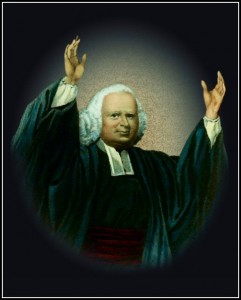
Satan’s Schemes by George Whitefield

He is full of hatred, envy, and revenge: For what other motives could induce him to molest innocent man and woman in paradise? And why is he still so restless in his attempts to destroy us, who have done him no wrong?

He is a being of great power, as is evident in his being able to act on the imagination of our blessed Lord, so as to depict some sort of vision to Him of all the kingdoms of the world and their splendor, and all this in a moment of time. His power is also displayed in the transporting of the sacred body of our dear Savior, through the air up to the highest point of the temple; and also of his driving a herd of pigs so furiously that the whole herd rushed down a steep bank into a lake and died in the water. Yes, so great is Satan’s power, that, I do not doubt, that if God was to permit him to use his full strength, he could turn the earth upside down, or pull the sun out of its orbit.

But Satan is most known for his remarkable ability to use his cleverness against mankind. Since he is not given power from God to take us by force, he is therefore required to wait for opportunities to betray us, and to catch us by the use of deception. He, therefore, made use of the serpent, which was the most crafty of all the beasts of the field, in order to tempt our first parents; and accordingly he and his accomplices are described in the New Testament as being cunning and crafty in their deceitful scheming. In the words of our text, this morning, the Apostle says, “We are not unaware of his schemes:” thereby implying, that we are more in danger of being seduced by his system of deception, than overpowered by his strength.  Read it all HERE

If Facebook Tempts You

With the news from Wall Street that Facebook is going public, we can be confident the social media giant aims to stay around for a while. And why shouldn't it? With more than 845,000,000 monthly users, the company has become deeply ingrained the public's psyche. Whether your preference is Facebook or Twitter or one of the hundreds of other services, social networking is firmly rooted as the new way to "do community." The ability to connect or reconnect with these networks offers innumerable benefits and privileges we simply did not have before. We are, however, becoming increasingly aware of the limitations of virtual community and the problems associated with our being so connected.

The Drain


Talk with enough folks who regularly use Facebook or Twitter and you'll soon recognize a pattern. Mental drain accompanies comparing your life with all of your friends and acquaintances. Recently, Christian hip-hop artist Shai Linne tweeted he had quit following another Christian hip-hop artist on Twitter. The reason was not a doctrinal disagreement or failed friendship. Linne quit following this other artist---whom he greatly respects and admires---because he had noticed a sense of envy creep up after reading the tweets confirming the other's success. Linne later explained in a video where the issue was discussed in detail, that he took this practical step to guard his heart.

An "out of sight, out of mind" approach worked for Linne. Could that work for you? Are we as quick to act, surgically removing sin or the temptation of sin associated with our use of social media? Furthermore, if we as adults are struggling with the sin of jealousy, envy, or covetousness, what is the use of social media doing to our kids?  Continue at Jason Allen

Tuesday, January 31, 2012

Why John Piper Isn’t a Millionaire

John Piper preached a sermon yesterday on giving that I hope everyone will listen to. It is the only time I have ever heard him talk with specificity about how he spends his own money. He acknowledges the risk of sharing his own story but rightly concludes it is worth the risk to share.

Piper says that he gives away all of the copyrights to the books that he writes to the Desiring God Foundation. So he gets none of the royalties from his books. Why does he do this? Because he knows he would be a millionaire if he didn’t, and he doesn’t trust his own heart with those kinds of riches. For Piper, the issue is not how much money you make but how much you keep. He is apparently keeping very little.

This is one of the reasons why Piper is a hero to me. I know that Piper is just a regular guy; he’s human and sinful like the rest of us. Still, he’s a regular guy who fights with all his might to pursue his joy in God. God, help us all to do the same. Continue at Denny Burk

Saturday, December 3, 2011

Book Review: Overcoming Sin and Temptation


I had previously read the Banner of Truth edition's The Mortification of Sin; this current edition is not abridged which is a plus for me. Furthermore, this volume is far more handsome. One of my favorite features is the facsimile of the books' covers.

Without further ado.

John Owen is a man God greatly used and one of my favorite Puritans. Owen starts off by answering the question Why this topic? "This was seconded by an observation of some men’s dangerous mistakes, who of late days have taken upon them to give directions for the mortification of sin, who, being unacquainted with the mystery of the gospel and the efficacy of the death of Christ, have anew imposed the yoke of a self wrought-out mortification on the necks of their disciples, which neither they nor their forefathers were ever able to bear [cf. Acts 15:10]." (41).

John Owen provides some Proverbs-like wisdom through out the book. . . here are my favorite two:
  1. "Always be killing sin or it will be killing you."
  2. "[B]y the omission of this duty grace withers, lust flourishes, and the frame of the heart grows worse and worse; and the Lord knows what desperate and fearful issues it has had with many."
Further on in the book, Owen defines what mortification is not (chapter 5) and is (chapter 6).  Read On...

Saturday, November 26, 2011

The Root Of All Sin

Temptation is a false promise–a promise that doesn’t deliver. When we give into temptation, we are believing a lie. In the moment that we’re being tempted to do something, say something, or believe something, there is a deeper temptation happening under the surface. This may come as a surprise to you, but temptation has more to do with belief than it does behavior. Every temptation to sin (going all the way back to the Garden of Eden) is, at it’s root, a temptation to disbelieve the gospel.

When we are being tempted, we are being enticed to purchase something we think we need in order to escape the judgement of emptiness. On the surface, the bait might be lust, anger, greed, self-pity, defensiveness, entitlement, revenge, having to win, and so on. But the only reason we take the bait is because we think it will satisfy our deeper hunger for meaning, freedom, validation, respect, empowerment, affection, a sense of identity, worth, and so on.

So, here’s the connection between sinning (the fruit of the problem) and unbelief (the root of the problem): our failure to lay aside the sin that so easily entangles is the direct result of our refusal to believe in the rich provisional resources that are already ours in Christ–we’re not believing that, by virtue of our Spirit-wrought union with Christ, everything we need and long for, we already possess. John Calvin rightly said that, “Christians are in perpetual conflict with their own unbelief.”   Keep Reading >>>

Saturday, November 12, 2011

When Satan Tempts Me to Despair

I love how Christian replies to Apollyon when they face off in John Bunyan’s The Pilgrim’s Progress. After Apollyon accuses Christian of a series of sins, he basically replies, “You’re right. But I’m actually even worse than that.” That disarming statement sets up the death blow:

Apollyon accused,
  1. “You almost fainted when you first set out, when you almost choked in the Swamp of Despond.
  2. You also attempted to get rid of your burden in the wrong way, instead of patiently waiting for the Prince to take it off.
  3. You sinfully slept and lost your scroll,
  4. you were almost persuaded to go back at the sight of the lions, and
  5. when you talk of your journey and of what you have heard and seen, you inwardly desire your own glory in all you do and say.”

[Christian replied,]
  1. “All this is true, and much more that you have failed to mention,” Christian agreed.
  2. “But the Prince whom I now serve and honor is merciful and ready to forgive.
  3. Besides, these infirmities possessed me while I was in your country, for there I allowed them to come in. But I have groaned under them, have been sorry for them, and have obtained pardon from my Prince.”
—John Bunyan, The Pilgrim’s Progress: From This World to That Which Is to Come (ed. C. J. Lovik; Wheaton: Crossway, 2009), 89–90 (formatting added). Cf. my review and “The Pilgrim’s Progress for Children.”   Keep Reading >>>

Thursday, November 3, 2011

Martin Luther’s Theology of the Cross: Two Great Articles by Carl Trueman

In an age of evangelical power politics and big church pragmatism, Carl Trueman reminds us that “the foolishness of God is wiser than men, and the weakness of God is stronger than men.” (1 Cor. 1:25). The first article is from yesterday, the second from today:

The Forgotten Insight:
“At a meeting of the Saxon Chapter of the Augustinian Order in the city of Heidelberg in 1518, a monk called Leonhard Beier presented a series of theses which Luther had prepared, whilst Dr Martin himself presided over the proceedings. The Heidelberg Disputation was to go down in history as the moment when Luther showcased his radical new theology for the first time.

At the heart of this new theology was the notion that God reveals himself under his opposite; or, to express this another way, God achieves his intended purposes by doing the exact opposite of that which humans might expect. The supreme example of this is the cross itself: God triumphs over sin and evil by allowing sin and evil to triumph (apparently) over him. His real strength is demonstrated through apparent weakness. This was the way a theologian of the cross thought about God….[Read entire article at Reformation 21]

“Our temptation to be preoccupied with those that our celebrity-aesthetic society finds lovely – the young, the artistic, the talented, the famous, the trendy, the brash, the bold, the beautiful, the cool, the self-promoting and the hip – does not reflect the priorities of the God of the cross. He is more likely to build his church with precisely those that this world considers weak and despised. Indeed, he delights so to do; and our attitude, our self-understanding, our theology, our proclamation of who God is and how he acts, must all reflect that fact if we are to be true theologians of the cross rather than theologians of glory”….[Read entire article at Reformation 21]  HT: Eric T. Young

IMAGE