The purpose of this Blog is to introduce men and women all over the World to the Doctrines of Grace; the 5 Solas; Reformation Theology and the Lord and Savior Jesus Christ.
Showing posts with label Scripture. Show all posts

Tuesday, July 16, 2013

Six Eternal Truths to Remember Each Day


A startling thing has happened among modern Christians in the western world. Many of us habitually think and act as if there is no eternity—or, as if what we do in this present life has no bearing on eternity. 
 
The trend today is to focus not on our eternal future (who cares about the “sweet bye and bye”?) but our present circumstances, as if this world were our home. Yet Scripture states the reality of our eternal future should dominate and determine the character of our present life, right down to the words we speak and the actions we take (James 2:122 Peter 3:11–12).

Let’s be sure to remind ourselves today—and every day—of “the real thing.” Here are six eternal truths to remember:

1. There are only two eternal destinations—Heaven or Hell—and I and every person I know will go to one or the other.

Enter through the narrow gate. For wide is the gate and broad is the road that leads to destruction, and many enter through it.  But small is the gate and narrow the road that leads to life, and only a few find it (Matthew 7:1314). 

Both Heaven and Hell touch Earth—an in-between world leading directly into one or the other. The best of life on Earth is a glimpse of Heaven; the worst of life is a glimpse of Hell. For Christians, this present life is the closest they will come to Hell. For unbelievers, it is the closest they will come to Heaven.   Continue at Randy Alcorn

Friday, June 28, 2013

What about Movie Clips? Applying the Regulative Principle

I had been a pastor for just a few months when a faithful church member sought me out to discuss the use of media in the services. He had led previous pastors to incorporate video and sound clips, and he wanted to be of help to me. He started off with a question kind of like this:
 
“So, what do you think about movie clips in the services?”

“Well, I really hadn’t planned on using media in the services.”

“Really? I’ve been involved in worship for quite some time, and it’s a pretty effective way to communicate.”

“Yeah, I don’t doubt that. But I’m afraid it might distract people from the heart of the service, the singing, preaching, and praying of the Word.”

“I wouldn’t think of it as a distraction, more of an addition, it makes the whole service better.”

“You might be right, but I really want our focus to be on the power of God’s Word to engage and excite us, so I’m going to stay away from movie clips.”

That’s about how the conversation ended. We were two grown men who both love the Lord but with different viewpoints on what would most honor God and be helpful to this local church. If you were in my shoes, how would you have answered his question?

Over the years, I’ve been asked to weigh in on many such issues related to our Sunday morning service.

Should we have Independence Day bunting? I said no, after figuring out what bunting is.

Christmas decorations? I said yes.     Continue at Aaron Menikoff

Friday, June 7, 2013

The Primacy of the Word in Worship

worship-ministry-wordle-brown-600x400
The Word of God is of supreme importance in the life of the Christian, containing as it does God’s revelation of his Person, his will and his ways. The Word needs to be pored over, ingested into one’s mind and heart, meditated on, and acted upon. It is a unique and precious repository of spiritual truth and guidance and encouragement. There is no aspect of the life of the church or of the individual believer that should not be tied to a scriptural mooring and infused with biblical substance (2 Tim 3:16-17). The Bible is indeed 
”a lamp unto my feet, and a light 
unto my path” (Ps 119:105.

When Christians gather for
 corporate worship, it is logical that 
the Word of God should play a 
central and dominant role. For 
since worship involves focusing our
 thoughts and hearts and voices on 
the praise of God, in response to
 his self-revelation and his gracious
 saving initiative, we of course need
 that view of God which the Word gives us if our worship is to be “in truth” (John 4:23-24). Our worship can only duly honor God if it accurately reflects what he reveals about himself in his Word.

The Word Neglected

That said, the astounding observation has been made as to how little use is made of Scripture in the worship services of most evangelical churches. The irony of course is that those who claim most strongly to stand on the Bible have so little of it in their worship. While the sermon of course takes a prominent role in our services, even preaching consists mostly of talking about the Scriptures (often after reading just a very few verses). It must be said that liturgical groups (whether on the more liberal or the more conservative end of the spectrum theologically) have probably ten times as much actual Scripture in their services (because it is built into their liturgies) as most evangelical free churches!    Continue at Grace Community

Friday, May 17, 2013

The Difference Between Original Autographs and Original Texts

If you're looking for a way to critique the authority of Scripture, there are seemingly endless options. There are historical critiques (e.g., many of these books are forgeries). There are logical critiques (e.g., the Gospels contradict themselves). There are moral critiques (e.g., God is immoral to order the slaughter of entire cities). And there are hermeneutical critiques (e.g., no one can agree on what the Bible means).
In recent years, however, a more foundational challenge has arisen. All of the above critiques are essentially the same; they all argue the words of the Bible are not true. But this newer and more foundational challenge is not about whether the words of the Bible are true, but whether we have the words of the Bible at all.    

At the core of this challenge is the fact that we only have handwritten copies of these books we treasure. And, in reality, we only have copies of copies of copies. And given that scribes made mistakes, and that the transmission process was imperfect, how can we be sure that these texts have been preserved? How can we be sure we actually have the words of Scripture?

Bart Ehrman's best-selling book Misquoting Jesus focuses on this issue as it pertains to the New Testament text: 
What good is it to say that the autographs (i.e., the originals) were inspired? We don't have the originals! We have only error-ridden copies, and the vast majority of these are centuries removed from the originals and different from them . . . in thousands of ways.    Continue at Michael J. Kruger

Saturday, February 23, 2013

The Word-less “Church”


Many American churches are in a mess. Theologically they are indifferent, confused, or dangerously wrong. Liturgically they are the captives of superficial fads. Morally they live lives indistinguishable from the world. They often have a lot of people, money, and activities. But are they really churches, or have they degenerated into peculiar clubs?

What has gone wrong? At the heart of the mess is a simple phenomenon: the churches seem to have lost a love for and confidence in the Word of God. They still carry Bibles and declare the authority of the Scriptures. They still have sermons based on Bible verses and still have Bible study classes. But not much of the Bible is actually read in their services. Their sermons and studies usually do not examine the Bible to see what it thinks is important for the people of God. Increasingly they treat the Bible as tidbits of poetic inspiration, of pop psychology, and of self-help advice. Congregations where the Bible is ignored or abused are in the gravest peril. Churches that depart from the Word will soon find that God has departed from them.    Continue at Robert Godfrey

Wednesday, November 28, 2012

16 Rules of Bible Interpretation

Jesus, in the preamble to quoting a verse from the Old Testament said, “…have you not read what was spoken to you by God…” (Matt. 22:31). He then went on to quote a verse from the book of Genesis. Think about that for a moment. Jesus believed (and held people accountable for doing so) that when someone read a verse from the Old Testament, they were reading something spoken to them by God. That is a very high view of Scripture, to be sure. 

The testimony of Jesus and of the Bible is that “All Scripture is God breathed” (2 Tim. 3:16). Therefore, when we open up a page in our Bibles, we are treading upon holy ground. The Bible, although a book, is also unlike any other book. It is not simply a book giving facts about God. The Bible is a book written by God. Certainly, human writers were involved, but the text of Scripture is inspired or breathed out by God Himself. Just having this concept in place would greatly help us in our Bible studies. 

What do I mean by that? 

Well, many people view the interpretation of God’s Word as “no big deal” really. To them it is nothing more important than the reading of any other book, at least in their methodology. Continue at John Samson


Thursday, October 11, 2012

A Year of Biblical Womanhood: A Review


There are several reasons why I decided to read and review Rachel Held Evans’ forthcoming book A Year of Biblical Womanhood: How a Liberated Woman Found Herself Sitting on Her Roof, Covering Her Head, and Calling Her Husband "Master" (Thomas Nelson; October 30, 2012). 

I certainly am not writing this review out of any sense of convenience and comfort. Here’s why I did: 

First, as a Christian woman who adheres to Reformed doctrine, I believe the Bible to be the inerrant word of God, written by men, inspired by God, infallible in all that it teaches, sufficient for all of life and doctrine, and the very words of God, words from God. And this new book from Evans is a recent example of how this essential truth is lost.

Second, I write this review because I have something of a relational history with the author. I have had the pleasure of corresponding with her over emails and have enjoyed our brief interactions. 

Third, and even more centrally, I write this review out of a love for my fellow sisters in the church who are trying to walk with integrity as women, as I am, before God. 

Finally, I write this review out of a love for the lost who are searching for answers about God and the Bible and will read this book and sadly be misled. 

Before I begin the review, let me say that I find this book to be most troubling because of Evans’ handling of Scripture. As much as I hoped to be pleasantly surprised, as I read my heart became heavy. And yet, for all its weaknesses, this book is sure to draw a lot of attention in the coming weeks.  Continue at Trillia Newbell

Thursday, September 20, 2012

The Bible Doctrine of the Separated Life

The question of the separated life is a very important one, not only because it is a practical question which must be faced by every thoughtful Christian, but also because of the doctrinal ramifications that it has. Insistence upon the obligation to live what is called "the separated life" is very prevalent in some circles of earnest Christians today. The details of the separation demanded vary greatly; practices which are tolerated by some groups are denounced by others as inconsistent with Christian duty and fellowship, and vice versa. In general, "the separated life," as the term is commonly used, may be understood to be a life which is separated not only from what can be proved by Scripture to be sinful, but also from various other practices which may be indifferent in themselves; and this separation is regarded as binding on the conscience of the Christian, and is sometimes made a term or condition of ecclesiastical or even of Christian fellowship.

This problem is far more important than is at first apparent. It is far more important than the mere question whether Christians ought to participate in or to abstain from certain particular kinds of conduct. Other problems of the greatest importance are involved. If we give a wrong answer to the question, "What is the Bible doctrine of the separated life?" we are certain to fall into serious errors in other doctrines. Using the term "separated life" in the Biblical, not the popular, sense, we may say that the separated life is an ethical implication of the covenant of grace and is related to the doctrine of sanctification as the latter deals with the nature and place of good works in the Christian life. The other doctrines which are involved in the question of the separated life are: (1) Christian liberty in the use of things indifferent; (2) liberty of conscience from the commandments of men; (3) the sufficiency of Scripture as the standard of faith and conduct; (4) the nature and limits of the authority of the Christian church. The purpose of the present paper is to set forth the teaching of Scripture concerning the separated life, and then to show how erroneous teaching about the separated life affects the four doctrines enumerated above.  Continue at Johannes G. Vos

Thursday, March 22, 2012

Holiness Wars: Antinomianism in Church History

Like Moses (Dt 6:5; Lev 19:18), Jesus taught that the whole law was summarized by the command to love God and neighbor (Mat 22:37). He came not to abolish but to fulfill the law (Mat 5:17-20). Nevertheless, Jesus was famously accused by the religious leaders as an “antinomian” for refusing to accord the same weight to the extrabiblical rules of the elders. Evidently, Paul, too, was accused of “antinomianism” by his critics. “And why not do evil that good may come?—as some people slanderously charge us with saying” (Rom 3:8; cf. 6:1). Encouraging believers in God’s grace, nevertheless warned them against “using your freedom as a cover-up for evil” (1 Pet 2:16). Peter adds that “lawless people” were using the gospel as an excuse for license; “ignorant and unstable,” they were twisting the Scriptures “to their own destruction” (2 Pet 3:16-18). It should be noted that the charge of antinomianism and the reality of a lawlessness based on Scripture-twisting could only arise perpetually throughout the church’s history because the gospel of free justification in Christ apart from works is so clearly taught in Scripture. 

As Packer’s first type indicates, the first form of explicit antinomianism was a stripe of Gnosticism. Gnostics identified the body with evil, the prison-house of the soul, longing to be reunited with the cosmic Christ (distinguished from the human Jesus). For some, this meant extreme asceticism and mistreatment of the body; for others, licentiousness, since it didn’t matter what the body did, as long as the spirit was pure. The church father Augustine was famously converted from a life of debauchery in Manichaean Gnosticism.  Continue at Michael Horton

Wednesday, February 8, 2012

Tattoos and Skin Deep Hermeneutics

It used to be easy for Christians to formulate an opinion about tattoos. Sailors had them. And some prisoners. Other than corpsmen and convicts the only ink you saw in church was on the page.

This is not a pointed tirade against tattoos, nor a defense of them; it’s a jab at bad hermeneutics. I have found that some like to decorate their arguments with Bible verses that have no place in the debate.

These are the three usual suspects…

1. Thou shalt not tattoo thyself.
Leviticus 19:28 ”You shall not make any cuts on your body for the dead or tattoo yourselves: I am the Lord.”

This one is the biggie. It is literally the only verse in the Bible to actually employ the word ‘tattoo.’ So if you can’t get this one to play for your team, you don’t have a team.

The immediate North & South context of the verse should provide a clear indication that an understanding of Leviticus’ place in the canon of Scripture is going to be a key. The verse below says don’t make your daughter a prostitute. I sure hope that still applies. But the verse above says you can’t trim your beard or the hair next to your ears. Ever been to an orthodox synagogue? The gents who congregate there (and keep the whole Mosaic Law—kudos for consistency) look a little different from those who attend the men’s breakfast at your church, right? If Christians don’t need to apply verse  27, then why do we have to obey vs 28 of the same chapter?  Continue at Clint Archer

Saturday, September 24, 2011

Calvinism, Systematic Theology and Scripture

At some level, every Calvinist who is not hyper embraces a paradox (you can call it tension, antinomy, aporia, really deep mystery, or whatever you like, but I prefer "paradox"). This is properly true of every Christian, but it is especially true of Biblical Calvinists. Our theology generates paradox, whether it's the apparent duality of divine wills, multiple senses of God's love and hatred for fallen humanity, or the compatibility of deterministic divine sovereignty and real human choice/freedom/responsibility. Calvinism without the essential balance of Biblically-derived paradox is in danger of going the way of Herman Hoeksema and the PRC. Characteristically, hyper-Calvinists eschew paradoxes in every possible way. Arminians, for their part, also seem reluctant to embrace paradoxes. Some take great delight in calling Calvinistic paradoxes "contradictions," ignoring the fact that these are unavoidable if we take divine revelation and historic/orthodox Christianity at face value.
 
THEOparadox is essentially a call for Calvinists (and others) to do two things:
 
1. Go whole hog and embrace every Biblically justified paradox, refusing to exegetically "adjust" any verse or passage of Scripture that might create a seeming contradiction in Systematic Theology.

 2. Be rigorous in trying to understand, explain and evaluate possible resolutions to these paradoxes, but accept the fact that we can ultimately have no greater certainty than the very words of Scripture afford us.    Keep Reading...

Friday, September 2, 2011

Spurgeon In Defense of Commentaries

I love Bible commentaries. And it never ceases to amaze me how often people criticize the use of commentaries in the study of God’s word, as if Heaven simply opens and pours in knowledge without any study. With this in mind, I offer the following comments from the “Prince of Preachers” himself, Mr. Charles Spurgeon:

“In order to be able to expound the Scriptures, and as an aid to your pulpit studies, you will need to be familiar with the commentators: a glorious army, let me tell you, whose acquaintance will be your delight and profit. Of course, you are not such wiseacres as to think or say that you can expound Scripture without assistance from the works of divines and learned men who have laboured before you in the field of exposition. If you are of that opinion, pray remain so, for you are not worth the trouble of conversion, and like a little coterie who think with you, would resent the attempt as an insult to your infallibility. It seems odd, that certain men who talk so much of what the Holy Spirit reveals to themselves, should think so little of what he has revealed to others. My chat this afternoon is not for these great originals, but for you who are content to learn of holy men, taught of God, and mighty in the Scriptures. It has been the fashion of late years to speak against the use of commentaries. If there were any fear that the expositions of Matthew Henry, Gill, Scott, and others, would be exalted into Christian Targums, we would join the chorus of objectors, but the existence or approach of such a danger we do not suspect. The temptations of our times lie rather in empty pretensions to novelty of sentiment, than in a slavish following of accepted guides. A respectable acquaintance with the opinions of the giants of the past, might have saved many an erratic thinker from wild interpretations and outrageous inferences. Usually, we have found the despisers of commentaries to be men who have no sort of acquaintance with them; in their case, it is the opposite of familiarity which has bred contempt.” ~ Charles Spurgeon      Grace Online

Thursday, August 25, 2011

Settle Down - Don’t Lose Your Passion and Energy; Take Charge of It


The “restless” aspect of the Young, Restless, Reformed movement is something of a mixed blessing. Restlessness per se is is of course no great virtue. But the energy, intensity, drive, and passion that underlie the restless tendencies of our young adult years are wonderful assets that hold great potential for good. They can be—and should be—harnessed and put to work for Christ’s kingdom.

As a matter of fact, a lively enthusiasm for spiritual things is one of the best features of the YRR movement, and it is precisely what the church of Christ needs after a few generations of increasing indifference about sound biblical doctrine.

Apathy is malignant. It breeds lukewarmness, which is more despised by our Lord than either complete coldness or fiery fanaticism (Revelation 3:16).

So I’m grateful for the keen interest the YRR movement has shown in gospel-centered doctrine and preaching. I understand the value of the energy and enthusiasm young adults seem to bring to every conference and each conversation I have with them.

My encouragement to them is this: Don’t squander your youthful vigor on mere restlessness. Apply yourself to humble service for the cause of Christ within the context of the church. Remember that “whoever would be great among you must be your servant, and whoever would be first among you must be slave of all” (Mark 10:43-44).

Meanwhile here are three crucial biblical virtues to cultivate. These will keep us from becoming unsettled and restless:


Steadfastness
One mark of spiritual health and stamina that gets far too little notice these days is steadfastness. Stability. Constancy. Firmness of heart.

Those are qualities Scripture repeatedly and emphatically commends. The righteous person “is like a tree planted,” while the wicked “are like chaff that the wind drives away” (Psalm 1:3-4).
  

Paul told the restless Corinthians, “Be steadfast, immovable, always abounding in the work of the Lord, knowing that in the Lord your labor is not in vain” (1 Corinthians 15:58). In Colossians 1:23, he encourages believers to “continue in the faith, stable and steadfast, not shifting from the hope of the gospel that you heard.” Firmness of faith is a grossly undervalued quality (Colossians 2:5; 3:14).     Continue Reading...

Saturday, August 6, 2011

Revealed or Concealed?

In my last post, I tried to lay a foundation for an understanding of some ground-level issues relating to hermeneutics, or principles of interpretation of Scripture. Like I mentioned there, studying hermeneutics is rather tricky, because it seems circular to attempt to interpret Scripture in order to glean biblical principles of interpretation. You know, chicken or egg?

I suggested that the way out of this conundrum was to consider the nature of Scripture itself, particularly as defined in the opening verses of the book of Hebrews. From those verses we learned that God spoke, and thus Scripture is fundamentally communication. And based on that, the interpreter’s default orientation to the text is to understand it in its plain, normal sense, just like he does with other communication.

John MacArthur summarizes the point well:  Read it HERE

Saturday, March 5, 2011

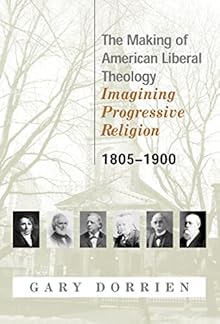
The Making of American Liberal Theology

The Making of American Liberal Theology Imagining Progressive Religion 1805-1900 (WJK 2001) is the first volume of Gary Dorrien’s magisterial three volume series on the history of American liberalism. I don’t know much about Dorrien except that when he began the series he was at Kalamazoo College and now he is at Union Theological Seminary. From what I’ve read (and I did not read every page), he is sympathetic to liberalism (hence the position at Union), but also fair and clear. I doubt that many evangelicals need to read these volumes, but some pastors and students may want to have them as reference material on their shelves.

So what is liberalism?

Like any “ism” it’s diverse and not easy to define. But certain characteristics shine through in Dorrien’s narrative. For the sake of historical accuracy and for the sake of spotting recurring themes in the contemporary church, it’s important to understand something about the basic themes of liberal theology (note: the headings are mine, all the indented text is from the book).

1. True religion is not based on external authority    Keep Reading>>>

Tuesday, January 25, 2011

Some Thoughts on the Right of Private Interpretation of Scripture

The right of every Christian believer to read and interpret the Bible is one of the distinguishing features of Reformed Protestantism. Famously, when Martin Luther was charged with heresy at the Diet of Worms this was his defence,
Unless I am convinced by Scripture and plain reason - I do not accept the authority of the popes and councils, for they have contradicted each other - my conscience is captive to the Word of God. I cannot and I will not recant anything for to go against conscience is neither right nor safe. God help me. Amen.
This attitude gave birth to what Alister McGrath calls "Christianity's dangerous idea"  - the right of private interpretation of Scripture (see here). Armed with this "right" Protestants subjected Roman Catholic traditions to the scrutiny of Scripture and attempted to reform the Church in line with the teaching of the Bible. The right of private interpretation is closely allied with two other defining characteristics of Protestantism; the priesthood of all believers and the clarity of Scripture. All true Christians may read and understand Holy Scripture because each believer has a personal knowledge of God, Jeremiah 31:34, John 6:45, 1 John 2:20. This saving knowledge of God in Christ is disclosed in the Scriptures, 2 Timothy 3:15. The basic message of the Bible clear so that every believer may read God's written Word with understanding. These principles gave impetus to the Protestant drive to give the Bible back to the people of God by translating Holy Scripture into the vernacular. Keep Reading>>>

Friday, January 7, 2011

The Unity of The Bible: Genesis

These posts will be concise, because time is of essence to me, and I must spend much more time learning and ministering in my churches than I do blogging.

Genesis sets the tone for the rest of the Scriptures. That is seen in a number of ways, as will be evident by the repetition by the subsequent books of the themes initiated by God in Genesis. It is also seen in that Jesus refers to Genesis on more than one occasion for the purpose of teaching the people. Not only does that show the role of the Pentateuch in Jesus’ theology, but also the foundational nature of the book of beginnings. It is also seen in the fact that God created the heavens and the earth, then place man in paradise in Genesis; which theme is re-enacted by God creating new heavens and a new earth and placing man in paradise once again in the eschaton as seen in the book of Revelation. Continue Reading>>>

Thursday, October 28, 2010

Word Ministry and Deed Ministry

The word “mission” gets caught up in this question about the relationships of words and deeds. Some people say that we should define “mission” narrowly—to admit only Word ministry (the Great Commission—making disciples and teaching) in its definition. Some people say that we should define the word broadly—to admit everything which is commanded of the Christian life in the New Testament.


“Mission” is not a biblical word, so in one sense we can define it however we please. But the reality is that whatever you include in the definition gains a certain privilege over what’s not included in the definition. So if you ask the question, “What’s the mission of the church?” and I answer, “Word ministry,” I’m privileging Word ministry over everything else. But if I say, “To do everything Jesus commanded in Word and Deed” or “Love God and neighbor” then I privilege nothing, and words and deeds become indistinguishably important for ministry and mission. Read it all HERE

Tuesday, September 28, 2010

The Deep Depths of Relevancy: A Response

Trying to use the world and its ways to attract people is against scripture itself. Here are a few: ". . . do not be conformed to this world. . ." -Romans 12:2. "Beware lest anyone cheat you through philosophy and empty deceit, according to the tradition of men, according to the basic principles of the world, and not according to Christ." -Colossians 2:8. "Do not love the world or the things in the world. If anyone loves the world, the love of the Father is not in him." -1 John 2:15. "For the wisdom of this world is foolishness with God." -1 Corinthians 3:19.
We just produced a video on this subject that may be helpful to you. http://vimeo.com/15035465. Please watch it and remember that it is not based on what we think but what scripture says.
Next, some of the comments defended the sincerity and genuineness of the guys in Grave Robber. I am not saying anything against their sincerity or personal devotion. I do not know any of them. But as the old saying goes you can be sincere, yet sincerely wrong. Plus, even if someone was converted to Christ, the end does not justify the means. I rejoice over a conversion, but pragmatism is not the rule of thumb. Scripture is our only source of truth.
Some have questioned why I am against their celebration of death since death is natural and all around us. We do not rejoice in nor glorify death. Horror movies and zombies are unacceptable because they are not only glorifying death but glorifying death by entertainment. Read the rest HERE

See the original blog post HERE