The purpose of this Blog is to introduce men and women all over the World to the Doctrines of Grace; the 5 Solas; Reformation Theology and the Lord and Savior Jesus Christ.
Showing posts with label Active Obedience. Show all posts

Monday, March 18, 2013

The Active & Passive Obedience of Christ

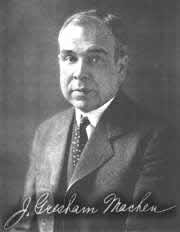
Dismissing his doctor's orders, J. Gresham Machen, beaten down by a career of struggling for the Faith even within his own communion, kept his commitments to a small circle of Orthodox Presbyterian parishes in South Dakota. "I have too much to do," he insisted, as his chest was even then tight from pneumonia. The next day, however, Machen was hospitalized. On New Year's Eve, the host pastor visited this infamous opponent of Liberalism on his deathbed and the elder statesman related a dream he had enjoyed that made him long for Heaven. "Sam, it was glorious, it was glorious," he said. "Sam, isn't the Reformed Faith grand?" Just before he passed into the next world, Machen dictated a telegram to John Murray, professor of systematic theology at Westminster Seminary. These last words read, "I'm so thankful for the active obedience of Christ. No hope without it." (1

Once more we are reminded of just how practical and relevant doctrine can be in our deepest crises. When all is well, we can dispense with such questions, but not when the truly great issues of life are staring us in the face. But what is this "active obedience of Christ" to which Machen referred and why was it such a remarkable comfort in his dying hour?

John Murray, the recipient of that famous telegram, wrote eloquently of this great biblical doctrine. "Early in our Lord's ministry we have his own witness" to being the promised "Servant of the Lord" in Isaiah, says Murray. When John the Baptist questioned the propriety of him baptizing the Messiah, Jesus answered, "Let it be so now; it is proper for us to do this to fulfill all righteousness" (Mt 3:15). (2) It was our Lord's great pleasure and duty to "fulfill all righteousness" down to the least stroke of the Law: "I came down from heaven, not to do my own will, but the will of him who sent me" (Jn 6:38). Calvin observes, "Now someone asks, how has Christ abolished sin, banished the separation between us and God, and acquired righteousness to render God favorable and kindly toward us? To this we can in general reply that he has achieved this for us by the whole course of his obedience." (3

We are told in Scripture that Jesus Christ was both human and divine. Because of this union of the divine with the human nature, "he grew in wisdom and stature and in favor with God and man" (Lk 2:52). In fact, he "learned obedience from the things he suffered" (Heb 5:8). This is not at all to suggest that our Lord was sinful, but in his humiliation he was truly and fully human. That is, just as he grew up physically, so too he progressively obeyed God throughout his life. At no point did he fail to respond positively to his Father's will, so his growth was perfect and complete.   Continue at Michael S. Horton

Friday, October 28, 2011

The Active Obedience of Christ – No Hope Without It!

Shortly before he died (January 1, 1937), Dr. J. Gresham Machen sent a final telegram to his friend Professor John Murray. The words of the telegram were these:
“I’m so thankful for the active obedience of Christ. No hope without it.”
I’m convinced that in these short words, Dr. Machen was able to express the essence of the biblical Gospel. Let me explain: 

Theologians talk of a double function of Christ as our Savior in saving us – His passive and active obedience. The passive obedience refers to His laying His life down for us His sheep. He died an atoning death paying the full penalty for sins. Yet, what is often missed is the function of His 33 years of life on earth perfectly fulfilling all the demands of the law. This righteousness, one that has fulfilled the entire law of God is what is credited to our account as believers in Christ. Christ is our righteousness!

CHRIST DIED FOR OUR SINS, AND LIVED FOR OUR RIGHTEOUSNESS
 
The Lord Jesus Christ not only died an atoning death for our sins, but before He ever went to the cross, He lived a sinless life that perfectly fulfilled the righteous standards of the law. If all that was necessary for our justification was the death of Jesus on the cross, He could have come down to earth on a parachute on Good Friday, died on the cross for us, and three days later, risen again. But we all know that this is not what happened. Why? Because that would never have been enough.    Keep Reading >>>

Monday, October 17, 2011

The Obedience of the Second Adam and True Israel

There are several defining moments in the life of our Lord Jesus Christ that deserve the deepest and most serious consideration. His baptism at the Jordan, His temptation in the wilderness, His transfiguration, His agony in Gethsemane and His sufferings on the cross are the most significant points in Jesus’ earthly ministry. The baptism and temptation are singular in their importance because of the representative character which they portray. In order to fully understand any subsequent act in the life of Christ the central importance of these two inaugural events must first be discerned.

Matthew, Mark and Luke each collectively bear witness to the fact that the wilderness temptation occurred immediately after Jesus was baptized. His baptism was nothing less than identification with those for whom He came to die. John’s baptism was a baptism of repentance. Jesus needed no repentance, but He underwent it to show that He was the sin-bearing representative of His people. It was most likely also the Messianic anointing with which His public ministry was inaugurated. This event, for the first time in human history, led to the unfolding of the mystery of the Trinity. There at the Jordan, the Father pronounced his declaration of delight over the Son, as the Spirit descended upon Him. The readers’ mind must reach back to the first manifestation of the Spirit, where, at the creation of the world, He is said to have hovered over the waters that the Father and Son spoke into existence. The declaration of the Father at Jesus’ baptism was meant to carry the Son through His entire ministry, especially through the atoning death He was to endure on the cross. The declaration that Jesus was the Father’s beloved Son, is put both to Jesus and to those who were present at the baptism. Jesus was obeying the Father by undergoing a baptism of repentance–a “repentance” that He alone, of all mankind, did not need. As the representative of His people, Jesus was obeying what His Father had commanded Israel to do, and was therefore well pleasing to Him. He was, in brief, the second Adam doing all that the Father commanded His people to do.    Keep Reading...

Tuesday, September 13, 2011

The Active Obedience of Christ – No Hope Without It!

On September 8th I posted Is the Christian’s Hope in Christ’s Active Obedience or Their Own Works in response to something Rick Warren had said in a Tweet against the doctrine of Imputation. The intent of that article was not to do an in-depth presentation of the doctrine of the Imputation of Christ’s righteousness at the time of new believer’s justification, but to contrast what the Bible clearly teaches about it with what Rick Warren said. I have been requested to give more of my understanding of the Reformation doctrines that are closely associated with Justification, especially in Imputation of Christ’s active obedience and why it is essential. As I researched this, I ran across an  article I had read about five years ago over at RefomationTheology.com.

The article below is by John Samson and is titled The Active Obedience of Christ – No Hope Without It! – Enjoy and be blessed – Mike Ratliff

Shortly before he died (January 1, 1937), Dr. J. Gresham Machen sent a final telegram to his friend Professor John Murray. The words of the telegram were these: “I’m so thankful for the active obedience of Christ. No hope without it.” I’m convinced that in these short words, Dr. Machen was able to express the essence of the biblical Gospel. Let me explain:

Theologians talk of a double function of Christ as our Savior in saving us – His passive and active obedience. The passive obedience refers to His laying His life down for us His sheep. He died an atoning death paying the full penalty for sins. Yet, what is often missed is the function of His 33 years of life on earth perfectly fulfilling all the demands of the law. This righteousness, one that has fulfilled the entire law of God is what is credited to our account as believers in Christ. Christ is our righteousness!

Some time ago, I wrote the following:

CHRIST DIED FOR OUR SINS, AND LIVED FOR OUR RIGHTEOUSNESS - The Lord Jesus Christ not only died an atoning death for our sins, but He also lived a sinless life that perfectly fulfilled the righteous standards of the law. If all that was necessary for our justification was the death of Jesus on the cross, He could have come down to earth on a parachute on Good Friday, died on the cross for us, and three days later, risen again. But we all know that this is not what happened. Why? Because that would never have been enough.    Keep Reading...

Wednesday, January 19, 2011

The Active Obedience of Christ

Shortly before he died (January 1, 1937), Dr. J. Gresham Machen sent a final telegram to his friend Professor John Murray. The words of the telegram were these: “I’m so thankful for the active obedience of Christ. No hope without it.” I’m convinced that in these short words, Dr. Machen was able to express the essence of the biblical Gospel. Let me explain: 

Theologians talk of a double function of Christ as our Savior in saving us – His passive and active obedience. The passive obedience refers to His laying His life down for us His sheep. He died an atoning death paying the full penalty for sins. Yet, what is often missed is the function of His 33 years of life on earth perfectly fulfilling all the demands of the law. This righteousness, one that has fulfilled the entire law of God, is what is credited to our account as believers in Christ. Christ is our righteousness!

Some time ago, I wrote the following: Continue Reading>>>