The purpose of this Blog is to introduce men and women all over the World to the Doctrines of Grace; the 5 Solas; Reformation Theology and the Lord and Savior Jesus Christ.
Showing posts with label Controversy. Show all posts

Wednesday, March 19, 2014

9 Thoughts on Celebrity Pastors, Controversy, the New Calvinism

1. The term “celebrity pastor” is decidedly pejorative. I don’t know anyone who would be happy to own the phrase. That doesn’t mean we can’t use it. But it means we should not attach it to pastors in a knee jerk way. A Christian with some combination of influence, social media followers, books, a large church, and speaking engagements may be a public Christian or a well known individual, but let’s not use “celebrity pastor” unless we mean to say he relishes the spotlight, has schemed his way into the spotlight, and carries himself as being above mere mortals. Does this fit some popular preachers? Probably. Does it fit all of them? By no means.

2. Having said that, let us beware of the many devilish dangers that can beset us in this internet age. Have there always been Christians mired in controversy? Have there always been popular preachers? Have there always been charlatans in the church? Yes, yes, and yes. These things are not new. What is new is the myriad of ways we can channel our pride, feed our pride, and keep numerical count of our pride. I don’t think I’ve read a negative post on celebrity pastors or the evangelical industrial complex that doesn’t touch on legitimate issues and very real dangers. This is not a throwaway point. We need warnings. I need them too.   Continue at Kevin De Young

Wednesday, March 12, 2014

The Line at Mars Hill's Communion Table

This week brought to light more disturbing facts concerning Mars Hill's leadership. By paying to put Mark Driscoll's book on the New York Times Bestseller list, Mars Hill Executive Elders may have put the church's 501(c)3 tax exempt status in jeopardy. That would be a multi-million dollar hole from which the church may not recover. There is growing pressure for Mark to step down from leadership as more elders accuse him of what I have personally witnessed firsthand - a bullying, angry leadership style that leaves members and staff bleeding on the sidelines. He laughed about the dead bodies under the bus of Mars Hill in 2007/2008. People have been pointing out the dead bodies for years, but apparently the pile has to be big enough to see from space before enough pressure will be raised to cause change or repentance. But I admit from personal experience that, until you are personally splattered with your own blood or the blood of someone standing beside you in ministry, it is hard to believe the problem is as big as it is.

The larger Body of Christ needs to take seriously the criteria set in Scripture for acting on such accusations – two or three witnesses.

I Tim. 5:19-20 Do not admit a charge against an elder except on the evidence of two or three witnesses. As for those who persist in sin, rebuke them in the presence of all, so that the rest may stand in fear.    Continue at Theology for Women

Celebrity Pastors: A Retrospective


When I raised the 'celebrity pastor' issue a few years ago, my primary concern was the distasteful self-promotion and the cultivation of cults of personality which it seemed to involve.  The first time that I caught serious flack for this was when I mentioned an incident where a group of European churchmen was evicted from the VIP seating at a conference to make way for some young folk.  I well remember a conversation with one of the organizers shortly thereafter when, having declined an invitation to be part of the next gathering (and thus find myself standing inside the tent, as President Johnson would have said), I was told that I needed to understand that the only thing that would be changed as a result of my article was the VIP nomenclature for the seating. In retrospect, that reaction was pregnant with significance: the critics were to be treated as the problem, but the band was to play on.   Continue at Carl Trueman

Friday, February 28, 2014

Spontaneous Baptisms

Over the last week, there’s been a lot of discussion about the practice of spontaneous baptism, spurred on by controversy surrounding Elevation Church’s how-to guide for “doing your part in God’s miracle.” Russell Moore’s weighed in, The Gospel Coalition released a roundtable discussion between Matt Chandler, Mark Dever and Darrin Patrick about 18 months ago, and undoubtedly many more voices are bound to say something.

None of us, of course, should be surprised that Furtick and Elevation would meticulously plan out such things—after all, anyone who has read Furtick’s books or heard him speak anywhere would be painfully aware of his Revivalist, um, “exuberance.” The first time I heard him speak was at the Willow Creek Leadership Summit a few years back where he demoed the power of Spirit Keys to set the mood during a worship gathering (and I hated Spirit Keys ever since).   Continue at Aaron Armstrong

Friday, December 13, 2013

The Real Problem with Mark Driscoll's 'Citation Errors'

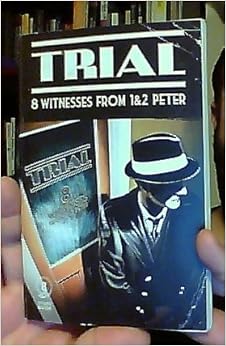
The Twittersphere lit up this past week with the revelation that Mark Driscoll's new book includes passages that bear a striking resemblance (though not quite word-for-word equivalence) to material from the book that is cited as their source. Further digging found a Bible study guide published by Driscoll's church in 2009 that did lift an entire passage, word-for-word, from an InterVarsity Press commentary on 1 and 2 Peter. The ensuing controversy has revolved largely around one of the last truly scandalous words in the English language: plagiarism.

I believe this scandal is largely misplaced.

To be sure, there is something troubling here, which I'll get to in a moment. But the fact that popularizers like Driscoll borrow material in books like A Call to Resurgence, without documenting the source of every turn of phrase in painstaking detail? Without excusing the carelessness, that's about as shocking (shocking!) as Captain Renault's discovery, in the movie Casablanca, that there was gambling going on at Rick's Café Américain.

As for the unattributed copying in the church's Bible study guide, by "Pastor Mark Driscoll": this was, without a doubt, improper use. But rather than tar it with the explosive word plagiarism, with that word's connotations of intent to reap rewards by presenting others' work as one's own, why not simply call it a mistake?    Continue at Andy Crouch

Wednesday, October 30, 2013

Can a Christian Commit Suicide?

TGC NunezThis controversial topic has unfortunately often been addressed in emotional ways, not through biblical analysis. Those of us who grew up Roman Catholic have always heard suicide is a mortal sin that irretrievably sends people to hell. Influenced by the arguments of Augustine and Aquinas, this belief dominated through the Reformation. However, for Luther, the Devil is capable of oppressing (not possessing) a believer to the point of pushing him to commit the sin of suicide (Table Talk, Vol 54:29). As the salvation became better understood, many Reformation thinkers and theologians distanced their views from the Church of Rome.

Besides this traditional position of the Catholic Church, we encounter three others:

a) A true Christian would never commit suicide, since God wouldn't allow it.
b) A Christian may commit suicide, but would lose his salvation.
c) A Christian may commit suicide without losing his salvation.

So what does the Bible say?

Let's begin by talking about those truths we know as revealed in God's Word:
  • Humanity is totally depraved (Isa. 64:6; Rom. 3:10-18). This doesn't mean we're as evil as we could be, but that every human capacity—intellect, heart, emotions, will—is tainted by sin.    Continue at Miguel Núñez

Saturday, October 26, 2013

See you in Seattle, Pastor John MacArthur?


Dear Pastor John MacArthur,


Let me start by saying thank you.

Thank you for preaching the Bible year after year. As a new Christian, I listened to a lot of your sermons via technology and learned a lot of Bible from you.

Thank you for staying faithful to your wife. You’ve been in ministry long enough to see a parade of scandals, and young men need examples of fidelity to their marriage covenant.

Thank you for staying at your church for so many years. It’s become vogue for a pastor to sell enough books that they can quit ministry in a local church and go do something else. Thank you for serving one church for the long haul. I hope by God’s grace to do the same.

Lastly, thank you for having courage and boldness. Admittedly, we disagree on some things that I would consider secondary and you would consider primary, but a man who takes the Bible seriously and has passion to defend truth is rare in our day.

You have made deposits in my life through your ministry and for that I thank God and appreciate you.   Continue at Mark Driscoll

Wednesday, May 22, 2013

Four Further Thoughts on the Complementarian Conversation

Since my post three weeks ago on New Wave Complementarianism, there has been a, well, wave of responses, rejoinders, and surrejoinders. I won’t take time to link to them all; they are easy enough to find. I am grateful for the thoughtful reflections from my brothers and sisters.
  

I don’t have a lot to add, except to offer a few suggestions that perhaps may help the continuing discussion be a fruitful one.

One, let’s make sure we are all talking about the same thing. No one has trademarked the term “complementarian,” and I understand these labels can be quite fluid. But the best place to start by way of definition is the Danvers Statement. If we are all complementarians having this discussion, we should have some semblance of a definition of complementarianism. Historically (and I realize it’s not a long history), Danvers has provided a useful starting point. Complementarianism, as a definable “ism,” arose in response to a set of concerns (e.g., gender confusion, ambivalence about motherhood, physical abuse, women in unbiblical leadership roles, hermeneutical oddities) and a laid down a set of biblical affirmations (e.g., men and women are equal as divine image bearers, they have distinct roles, redemption reverses the curse of male and female sin, certain ministry roles are reserved for men, there are countless ministry opportunities in the world for both men and women). These concerns and affirmations are not the last word on complementarianism. But if we want to be sure we are talking about the same thing, they should be among the first words.    Continue at Kevin DeYoung

Saturday, April 20, 2013

The “Old Path” Is Not Always the Best Path – The KJV Is a Great Example!

I’ve seen it several times recently. “We are following the old paths!” I got an invitation to an “Old-Fashioned” tent revival. As the modern world rushes headlong in new, strange and frightening ways, there is a tendency for us to try to hold on to what is old, what is comfortable – that which we have known. We look back to the middle of the 20th Century as a golden age for the church (well, white Americans do – blacks probably don’t remember that era of church-approved racism, discrimination and segregation quite so fondly!).

I’ve known people (lots of them) who think that everything that is wrong with the church today is because we have abandoned the “old ways” of the mid-20th Century. The solution, then, is to simply go back to how we did them back. If we just did today what we did then, what happened then would happen now!

I think every church ought to, in some ways, be “old-fashioned.” My quarrel with the phrase is that when we talk about the old ways, we miss it by about 1900 years. For most, old-fashioned means, “the way we did things back in my day.” We ought to seek to pattern our churches after the New Testament church as much as we can. Our doctrine ought to be old doctrine, built directly from the scriptures. Our practices ought to be biblical practices translated into modern situations. But I fail to see the value in trying to take the modern church (as messed-up as it is) back to the 1950s and 1960s. Suits and ties. Hymns with a piano and organ. Spring and Fall Revivals.   Continue at Dave Miller

Friday, April 5, 2013

Controversy in the New Testament

Sometimes it may seem that we spend too much time refuting falsehood. All of us are chagrined at the preponderance of error both within and without the Church. We may write off those who attempt to combat it and set forth the truth in clarity over against it as “heresy hunters.” The term is used pejoratively; but should it be? Take a quick look at the Books of the New Testament, merely scratching the surface, and see what you think.
  • In the Gospels Jesus warns against false teachers, speaks of wolves in sheep’s clothing and the “leaven of the Pharisees.” The record of His ministry is one of conflict with those who refused to accept the teaching He set forth.
  • Acts contains the record of the church’s first major controversy over whether or not a person must become a Jew before he could qualify as a Christian. A church council was called to settle the matter. Paul goes to lengths to warn the Ephesian elders about wolves who would devour the flock and schismatically draw away disciples to themselves.
  • Romans is an entire doctrinal treatise about justification by faith alone in contrast to salvation by works, and how sanctification follows thereafter. In it, Paul also takes up the rejection of the Jewish church.
  • I Corinthians is loaded with problems; schism, misuse of gifts, church discipline, marriage and divorce, and on, and on, on.  Continue at Jay Adams

Saturday, February 16, 2013

5 Reasons a Calvinism Discussion Doesn’t Matter

Editor: Mike is away from his computer – I don’t think its fatal, but perhaps we should pray for him? – and gave me permission to post this. I’m planning to, after this post, return to my commitment, which I wish I had not strayed from, to avoid any discussions of Calvinism! This post was originally published at Mike’s site, Borrowed Light. If it is not in your feed, put it in immediately! Because I said so!
Earlier this week I explained why this discussion on Calvinism matters. Now I’m going to explain in what way this discussion doesn’t matter and why I wish we’d spend our efforts elsewhere. Apparently 5 points are really helpful for discussion…so in honor of all the problems those five points have caused…here are 5 reasons why this Calvinism discussion doesn’t matter. 
Truth is the Spirit’s job

I don’t need to be the truth police. I cannot change someone’s heart and make them embrace the truth. All I can do is present the truth as I see it in Scripture and leave it up to the work of the Spirit. It’s not my job to beat truth into someone’s head. Besides there is a decent chance that I’m wrong myself. There are likely doctrines of which I hold (yes even important ones) of which I’ll need to repent of no more than 5 minutes after entering into heaven.
If I really believe that leading brothers and sisters into all truth is the Spirit’s job it changes the way that I interact with them. John Newton is instructive here. When explaining his position on election and perseverance he said, “If you should accede to my opinions upon my persuasion only, you would be little benefited by the exchange”. Newton knew that what really mattered was the Spirit’s work upon the man to whom he was speaking. And it made him humbly present his position, love the man, and leave the results of the discussion up to the Lord.   Continue at Mike Leake

Thursday, December 13, 2012

Tullian Keeps Digging

I’ve tried very hard to be diplomatic and restrained in my criticisms of Tullian Tchividjian’s writing (here and here). I’ve tried to communicate genuine appreciation for his books while also expressing my deep concerns. I’ve watched others  gently and wisely caution him about the theological trajectory he is on, and yet he seems to just keep on digging deeper and going further. I’ve watched with growing anxiety as his imbalanced and confusing theology gains popularity. But there comes a time when we have to move from concern to alarm.

Yesterday’s blog post God doesn’t need your good works, but your neighbor does pushed me over that edge.

Using truth to eliminate truth

The headline, like much of the blog post contains truth. However Tullian uses that truth to eliminate another truth, a vitally important one. Of course God doesn’t need our good works. But Tullian uses that truth to argue that God is not interested in them, pleased by them, and nor does he respond to them.

Let’s start with this statement:
Forever freed from our need to pay God back or secure God’s love and acceptance, we are now free to love and serve others.
Yes we are freed from our need to pay God back or secure God’s love and acceptance. But please don’t use that truth as a proof that the Christian has no concern to show his love for God by worshipful and grateful service, or to deny that God’s revelation of His love to us, and our experience of it, can and does change depending on our love-stoked obedience (John 14:21, 23).   Continue at David Murray

Tuesday, December 4, 2012

Sin Remains: My Response To Rick Phillips


A couple weeks ago I posted a blog asking the question “Are Christians totally depraved?” The point I wanted to make was simple: “Because Christian’s never leave off sinning, they can never leave the Gospel” (Spurgeon).
The reason this is so important is because we will always be suspicious of grace (“yes grace, but…”) until we realize our desperate need for it. Our dire need for God’s grace doesn’t get smaller after God saves us. We never outgrow our need for Christ’s finished work on our behalf-we never graduate beyond our desperate need for Christ’s righteousness and his strong and perfect blood-soaked plea “before the throne of God above.”

But I had to tease out my answer a bit because for centuries theologians have acknowledged that “total depravity” means more than one thing. I wrote:
On the one hand, total depravity means that we are all born “dead in our trespasses and sins” (Ephesians 2:1-3; Colossians 2:13; Romans 3:10-12; Romans 8:7-8), with no spiritual capacity to incline ourselves Godward. We do not come into this world spiritually neutral; we come into this world spiritually dead…In this sense, total depravity means we are “totally unable” to go to God. We will not because we cannot, and we cannot because we’re dead.
I continued:
So, in the sense above, Christians are obviously not totally depraved. We who were dead have been made alive.

But God, being rich in mercy, because of the great love with which he loved us, even when we were dead in our trespasses, made us alive together with Christ—by grace you have been saved—and raised us up with him and seated us with him in the heavenly places in Christ Jesus…(Ephesians 2:4-6)
But once God regenerates us by his Spirit, draws us to himself, unites us to Christ, raises us from the dead, and grants us status as adopted sons and daughters, is there any sense in which we can speak of Christian’s being totally depraved?
Yes.
Theologians speak of total depravity, not only in terms of “total inability” to come to God on our own because we’re spiritually dead, but also in terms of sin’s effect: sin corrupts us in the “totality” of our being. Our minds are affected by sin. Our hearts are affected by sin. Our wills are affected by sin. Our bodies are affected by sin.    Continue at Tullian Tchividjian

Saturday, December 1, 2012

Striving After Godliness Should Not Be So Controversial: Responding to the CT Reviews

I was surprised to learn on Monday that Christianity Today was running four reviews of my new book The Hole in Our Holiness. I consider it a sign of respect that they think the book deserving of this kind of analysis. I’m grateful too for the invitation to round out this week of reviews with a response of my own. Though I’m hesitant to respond—because rejoinders often appear (or are!) defensive and thin-skinned—I’ll venture a few thoughts on each review.

Erik Raymond has written the sort of review every author enjoys. He understands the book, appreciates the book, and recommends the book. I’m particularly grateful that Raymond sees, and agrees with, my emphasis on grace-based effort and my use of various confessions. Since both of these points were criticized by others in this series, it’s good to see not everyone considered these elements to be mistaken. I’m thankful for Raymond’s kind, encouraging review.

Mark Labberton and Tyler Braun hit on different themes, but both have written the same sort of review. They like a lot about the book, but would have said more or less in some areas. Since the book was short, 146 under-sized pages, there is certainly more that could have been said about a number of important issues. Labberton wishes I would have said more about what lies beneath the biblical call to holiness (and our dismissal of it) and the public implications of a holy life. It’s hard to know how to respond to this criticism except to say I addressed some of both, but could have done more. I could have talked more about consumerism and social justice and (especially) the kingdom, as Labberton suggests. I also could have talked more about abortion, statism, and religious liberty. Holiness touches on all of life, so almost any topic would have been fair game. As a pastor, I addressed the sorts of issues I see people struggling with most and the issues talked about most directly and most frequently in the New Testament. That leads us to recurring concerns with sexual immorality, relational sins, and vices associated with the breaking of the Ten Commandments.   Continue at Kevin DeYoung

Monday, October 29, 2012

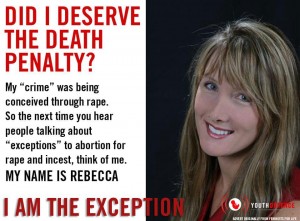
Legitimate Exceptions for Abortion?

Justin Taylor has put together an article entitled “Exceptions for Abortion?” which contains much wisdom about this very sensitive subject. He writes:


I assume by now that most readers are aware of the controversy regarding comments by candidate Richard Mourdock, who is running for Senate, regarding rape not being an exception for abortion. In a recent debate, when asked about the issue, he responded:
This is that issue that every candidate for federal, or even state, office faces, and I too stand for life. I know there are some who disagree and I respect their point of view and I believe that life begins at conception. The only exception I have [for abortion] is in that case [where] the life of the mother [is threatened]. I struggled with it for a long time, but I came to realize that life is a gift from God. And I think even when life begins in that horrible situation of rape that it is something that God intended to happen.
President Obama, through a spokesperson, “felt those comments were outrageous and demeaning to women.”

There are many angles to this story, including media ignorance, media malfeasance, political clumsiness, bioethics, and Christian witness.

Many members of the media pounced on the story, reporting that Mr. Murdock said that rapes were intended by God. Al Mohler has an important commentary on this today. He writes:
The controversy over his statements reveals the irresponsibility of so many in the media and the political arena. The characterizations and willful distortions of Mourdock’s words amount to nothing less than lies.  Continue at John Samson

Wednesday, September 12, 2012

Evangelicalism Really is Divided

The year was 1950, and evangelicalism was at a crossroads. For the previous 50 years evangelicals had fought to create an identity. Having separated from the main-line denominations, evangelicals now were an mish-mashed group lacking identity. The former generation of evangelicals was tired, having fought battles for the purity and proliferation of the movement. Feeling that the gospel’s integrity was at stake, they had worked to raise up a younger generation of like-minded evangelicals.

Billy Graham Preaching full stadiumThis new generation realized that their movement lacked identity. They also noticed that the previous generation had fought battles, some of which appeared to be little more than shadow-boxing as the former enemies had receded for the time being. As this new generation looked across the evangelical landscape, they saw a blank canvass. This new generation labored to create an identity for their group. Ian Murray, in Evangelicalism Divided, shows the struggles that ensued during the battle for the identity of this second generation.

This is one of those books that every American Christian needs to read. In fact, I bet many readers of our blog have already read it, and the rest probably own it. If you have not cracked it, then dust it off and break it out. Before I moved to Viriginia, the elders at Grace Church spent much of the year reading this book together. It was stunning how much of Murray’s details related directly to present controversy in evangelicalism.   Continue at Jesse Johnson

Wednesday, August 1, 2012

My Take: Chick-fil-A Controversy Reveals Religious Liberty Under Threat

Editor's Note: R. Albert Mohler Jr. is president of the Southern Baptist Theological Seminary, the flagship school of the Southern Baptist Convention and one of the largest seminaries in the world.
 
By R. Albert Mohler Jr., Special to CNN 

(CNN)–Cultural upheavals often occur in the most surprising contexts. Who expected that a clash between sexuality and religious liberty would be focused on a restaurant company mainly known for its chicken sandwiches?

And yet the controversy over Chick-fil-A is a clear sign that religious liberty is at risk and that this nation has reached the brink of tyrannical intolerance from at least some of our elected leaders.

The controversy ignited when Chick-fil-A President Dan Cathy, son of the company’s legendary founder, Truett Cathy, told a Baptist newspaper that he and his company “operate on biblical principles” and “are very much supportive of the family — the biblical definition of the family unit.”

Defining Chick-fil-A as “a family business,” Cathy went on to say that “We intend to stay the course. … We know that it might not be popular with everyone, but thank the Lord, we live in a country where we can share our values and operate on biblical principles.”   Continue at CNN

God Is Not Dead Yet

You might think from the recent spate of atheist best-sellers that belief in God has become intellectually indefensible for thinking people today. But a look at these books by Richard Dawkins, Sam Harris, and Christopher Hitchens, among others, quickly reveals that the so-called New Atheism lacks intellectual muscle. It is blissfully ignorant of the revolution that has taken place in Anglo-American philosophy. It reflects the scientism of a bygone generation rather than the contemporary intellectual scene.

That generation's cultural high point came on April 8, 1966, when Time magazine carried a lead story for which the cover was completely black except for three words emblazoned in bright red letters: "Is God Dead?" The story described the "death of God" movement, then current in American theology.

But to paraphrase Mark Twain, the news of God's demise was premature. For at the same time theologians were writing God's obituary, a new generation of young philosophers was rediscovering his vitality.

Back in the 1940s and '50s, many philosophers believed that talk about God, since it is not verifiable by the five senses, is meaningless—actual nonsense. This verificationism finally collapsed, in part because philosophers realized that verificationism itself could not be verified! The collapse of verificationism was the most important philosophical event of the 20th century. Its downfall meant that philosophers were free once again to tackle traditional problems of philosophy that verificationism had suppressed. Accompanying this resurgence of interest in traditional philosophical questions came something altogether unanticipated: a renaissance of Christian philosophy.  Continue at William Lane Craig

See Also: A New Day for Apologetics


Wednesday, June 27, 2012

Fruit of Controversy

Let us not fear the opposition of men; every great movement in the Church from Paul down to modern times has been criticized on the ground that it promoted censoriousness and intolerance and disputing. Of course the gospel of Christ, in a world of sin and doubt, will cause disputing; and if it does not cause disputing and arouse bitter opposition, that is a fairly sure sign that it is not being faithfully proclaimed. As for me, I believe that a great opportunity has been opened to Christian people by the “controversy” that is so much decried. Conventions have been broken down; men are trying to penetrate beneath pious works to the thing that these words designate; it is becoming increasingly necessary for a man to choose whether he will stand with Christ or against Him. Such a condition, I for my part believe, has been brought about by the Spirit of God . . . Controversy, in other words, has resulted in a striking intellectual and spiritual advance. Some of us discern in all this the work of the Spirit of God. And God grant that His fire be not quenched! God save us from any smoothing over of these questions on the interests of a hollow pleasantness; God grant that great questions of principle may never rest until they are settled right! It is out of such times of questioning great revivals come. God grant that it may be so today! Controversy of the right sort is good; for out of such controversy, as Church history and Scripture alike teach, there comes the salvation of souls.
—J. Gresham Machen, What Is Faith? (MacMillan, 1925), 41–43. 

Tuesday, June 26, 2012

Gay Pride?

Homosexuality is not a topic I enjoy talking (or writing) about, but given its recent rise in the news cycle (thanks to the controversy over same-sex marriage) it’s a topic that I, as a Christian, feel compelled to discuss for several reasons. One, to combat the continued misrepresentations from supporters of the homosexual agenda on the Christian position on homosexuality. Two, to continue to reason these things out in the public square so that the nature of the debate will progress. Three, to help fellow Christians who either are misinformed on this issue or haven’t studied this issue enough to form a cogent response when the opportunity presents itself. In other words, I talk about this issue because it is continually brought to our attention by homosexual activists and the media; therefore, a response is called for. I am fully aware that most people do not share my view on this issue because I know that most people do not have a Biblical worldview. All I ask is that if you disagree with what I am about to say that you fairly represent what I am going to say and attack the argument, not the person.

Over this past weekend, Chicago held it’s annual Gay Pride parade, a parade to celebrate and promote acceptance for homosexuals and their lifestyle. I find it interesting that the word “pride” is used. The concept is obvious; homosexuals should take pride in who they are and how they live. Pride is, of course, the opposite of shame or stigma, so acceptance of the homosexual lifestyle and of homosexuals first comes when they accept themselves as normal, functioning members of the society. Then they can advocate for acceptance from the general populace.   Continue at NewCreationPerson