The purpose of this Blog is to introduce men and women all over the World to the Doctrines of Grace; the 5 Solas; Reformation Theology and the Lord and Savior Jesus Christ.
Showing posts with label Theologians. Show all posts

Thursday, July 18, 2013

Every Christian Is A Theologian

Every Christian is a theologian. We are always engaged in the activity of learning about the things of God. We are not all theologians in the professional sense, academic sense, but theologians we are, for better or worse. The ‘for worse’ is no small matter. Second Peter warns that heresies are destructive to the people of God and are blasphemies committed against God. They are destructive because theology touches every dimension of our lives. The Bible declares that as a man thinks in his heart, so is he…Those ideas that do grasp us in our innermost parts, are the ideas that shape our lives. We are what we think. When our thoughts are corrupted, our lives follow suit. All know that people can recite the creeds flawlessly and make A’s in theology courses while living godless lives. We can affirm a sound theology and live an unsound life. Sound theology is not enough to live a godly life. But it is still a requisite for godly living. How can we do the truth without first understanding what the truth is? No Christian can avoid theology. Every one has a theology. The issue, then, is not, do we want to have a theology? That’s a given. The real issue is, do we have a sound theology? Do we embrace true or false doctrine?

Essentials Truths of the Christian Faith, Wheaton, IL: Tyndale, 1992, p. vii

Tuesday, August 21, 2012

30 Suggestions for Theological Students and Young Theologians

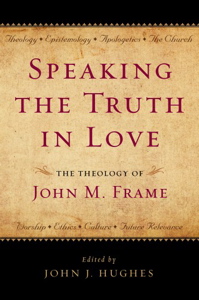
“Reflections of a Lifetime Theologian: An Extended Interview with John M. Frame,” interviewed by P. Andrew Sandlin in Speaking the Truth in Love: The Theology of John Frame (ed. John J. Hughes; Phillipsburg, NJ: Presbyterian & Reformed, 2009), 106–10: 

[Question]: Finally, what advice would you offer to theological students and young theologians as they face a lifetime of theological work?

[John Frame’s answer]: Well, here are some thoughts, in no particular order.
  1. Consider that you might not really be called to theological work. James 3:1 tells us that not many of us should become teachers and that teachers will be judged more strictly. To whom much (biblical knowledge) is given, of them shall much be required.
  2. Value your relationship with Christ, your family, and the church above your career ambitions. You will influence more people by your life than by your theology. And deficiencies in your life will negate the influence of your ideas, even if those ideas are true.
  3. Remember that the fundamental work of theology is to understand the Bible, God’s Word, and apply it to the needs of people. Everything else—historical and linguistic expertise, exegetical acuteness and subtlety, knowledge of contemporary culture, and philosophical sophistication—must be subordinated to that fundamental goal. If it is not, you may be acclaimed as a historian, linguist, philosopher, or critic of culture, but you will not be a theologian.
  4. In doing the work of theology (the fundamental work, #3), you have an obligation to make a case for what you advocate. That should be obvious, but most theologians today haven’t a clue as to how to do it. Theology is an argumentative discipline, and you need to know enough about logic and persuasion to construct arguments that are valid, sound, and persuasive. In theology, it’s not enough to display knowledge of history, culture, or some other knowledge. Nor is it enough to quote people you agree with and reprobate people you don’t agree with. You actually have to make a theological case for what you say.  Continue at John Frame

Saturday, April 28, 2012

A Call and Agenda for Pastor-Theologians

There have never been this many Christians around the world, yet few know much about God, the actual contents of the Bible, or the ways in which God's people have interpreted and applied the Bible historically. Many Americans, at least, still go to church and read the Bible--as their social lives permit. Even more in the Global South do so with fervency and zeal. Still, despite our apparent esteem for the Bible's status and authority, few believers know as much about its contents as they do about Hollywood movies, popular music, or athletics.

Indeed, as anyone who teaches in our churches can attest, few today know the Ten Commandments (I mean all ten, in proper order), the twelve apostles, the letters of Paul, or even the titles of the books included within the biblical canon. A basic grasp of Bible doctrine is also hard to find today. How many Christians do you know who can articulate what Scripture teaches about our Lord's two natures, the ministry of the Spirit, or the nature of the church? Even first-year seminarians have trouble with these things.

The church wants education and needs theological leaders. In this day when many pastors lead non-theologically, and academics work in a way that is lost on the people of God, we need pastor-theologians who can minister the Word in ways that edify the saints and offer a winsome public witness to the goodness, truth, and beauty of the Lord and his will for us.

The time is ripe for dialogue, even charitable debate, regarding the best way forward. So I offer the following theses in the hope that they will incite a large number of church leaders--in congregations and divinity schools--to think together with me about how we can serve God's people more effectively as preachers, teachers, and Christian educators.

1. Our churches and our world desperately need pastors to lead and teach theologically.    Continue at Douglas A. Sweeney

Thursday, March 29, 2012

Spiritual Dyslexia

Chapter 19 of my new book “Twelve What Abouts…”

Dyslexia warps reality; the consequences of which can be catastrophic. It is something that causes great hardship to multitudes in our day. People with normal, or even above normal, intelligence suffer from dyslexia as the brain reverses numbers, letters or words. It is a huge learning handicap and, in severe cases, can greatly limit education and employment opportunities. 

For those unfamiliar with the problem, imagine having the word “GOD” written clearly in front of you and yet your brain interprets the information as “DOG,” as the first and last letters of the word are transposed. I am sure you will agree that there is a vast chasm of difference inherent in this misinterpretation. My heart truly goes out to those who have to go through life having to combat dyslexia.

Moving from the physical to the spiritual realm, I believe multitudes of Christians suffer from what I would call “spiritual dyslexia.” It’s a phrase I heard some years ago and found it to be a striking one. Theologians don’t use this language of course. They would be much more comfortable describing this concept as “the noetic effects of sin,” which is the simple recognition that since the Fall of Adam, all of mankind’s faculties have been negatively affected, including his mind. In simple terms, we just don’t think now as clearly and precisely as we would have done if there had been no Fall. 

According to 1 Corinthians 13, this side of glory, we only see through a glass darkly. One day, we will all comprehend things exactly (as much as finite minds can grasp the infinite). Yet right now, we all have our traditions and blind spots. If we knew exactly where we were wrong, we would change our viewpoint immediately. But the point is that we do not see these things until God the Holy Spirit enlightens us and overcomes the effects of our depravity.  Continue at John Samson

Friday, February 24, 2012

Your Theological System Should Tell You How to Exegete

Systematic theology looks at the whole Bible and tries to understand all that God says on a given subject (e.g., sin, heaven, angels, justification).

Exegesis is what you do when you look at a single text of Scripture and try to understand what the author–speaking in a specific culture, addressing to a specific audience, writing for a specific purpose–intended to communicate.

Good systematic theology will be anchored in good exegesis. The sum of the whole is only as true as the individual parts. No Christian should be interested in constructing a big theological system that grows out of a shallow and misinformed understanding of the smaller individual passages. I don’t know of any evangelical pastor or scholar who disagrees with these sentiments.

But what about the reverse? We all know exegesis should inform systematic theology, but should our theological systems also inform our exegesis? Some Christians, especially biblical scholars, have argued that the best exegesis is completely theologically unprejudiced. We can’t bring our theological concerns to the Bible, lest we gerrymander the Scriptures and impose anachronistic categories on the text. The unspoken (or spoken) assumption is that the traffic between exegesis and theology is one way. Biblical scholars do their work, and as long as theologians pay attention to professional exegesis they can go on and do their own work. But the task of exegesis, it is often implied and sometimes explicitly said, has little to gain from listening to the theologians.  Continue at Kevin DeYoung

Monday, February 20, 2012

The Call to Radical World-Changing Discipleship

Usually, the call to be world-transformers comes from church leaders: pastors and theologians. It comes in different forms. Sometimes it’s the biblically defensible application of Christ’s announcement that his church is a city on a hill, his followers “salt and light” in the world. They are to be what they are where God has placed them, in their many different callings in life. 

On other occasions, though, it is a more general and somewhat vague but nevertheless urgent call to a deeper, broader, and collective activism. On the right, it tends to be a call to greater personal and public morality. Reacting against a familiar agenda, many younger evangelicals don’t want to be the Fox Network at prayer; whatever their politics, they want to make a difference in the world by radical discipleship, sacrificing their personal comforts for suffering neighbors at home and around the world. No doubt sociological demographics plays a role in where one lands. Younger people, either single or without children, are freer to focus their energies on a broader range of neighbors, while later they find themselves focusing on the family, both at home and in the public square.

Maybe the obsession reveals more about the dangers of ministers stewing in our own juices—perhaps even suffocating in the caverns of regular ministry—that we don’t get out much. But what about their parishioners? Is the most important thing we have to say to them that they are not making a difference in the world, making touchdowns for Jesus, and transforming culture?

Think of the nurse who dragged herself out of bed to attend the means of grace after having worked a fifteen-hour shift. Ministers shouldn’t feel guilty for not having cared for the physical needs of hundreds of neighbors in the hospital this last week. But why should they load down this nurse for failing to “live her faith” because she extended hours of neighbor-love in her ordinary vocation rather than as an identifiable church-related “ministry”?  Continue at Michael Horton

Saturday, October 29, 2011

Theologian for the Ages: John Calvin

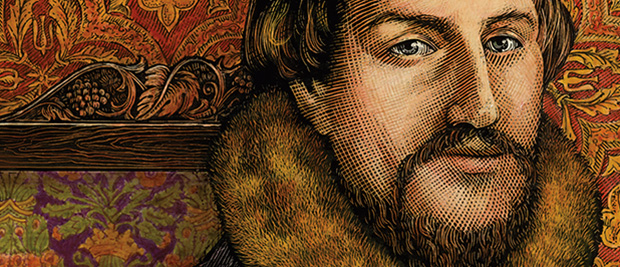
John Calvin (1509–1564) is easily the most important Protestant theologian of all time and remains one of the truly great men who have lived. A world-class theologian, a renowned teacher, an ecclesiastical statesman, and a valiant Reformer, Calvin is seen by many as the greatest influence on the church since the first century. Apart from the biblical authors themselves, Calvin stands as the most influential minister of the Word the world has ever seen. Philip Melanchthon revered him as the most able interpreter of Scripture in the church, and therefore labeled him simply “the theologian” (J. H. Merle d’Aubigné, History of the Reformation in Europe in the Time of Calvin, Vol. 7 [1880; repr., Harrisonburg, Va.: Sprinkle, 2000], 82). And Charles Spurgeon said that Calvin “propounded truth more clearly than any other man that ever breathed, knew more of Scripture, and explained it more clearly” (C. H. Spurgeon, “Laus Deo,” The Metropolitan Tabernacle Pulpit: Sermons Preached by C. H. Spurgeon, Vol. 10 [Pasadena, Texas: Pilgrim, 1976], 310).
 
Calvin was born on July 10, 1509, to Gerard and Jeanne Cauvin in the French cathedral city of Noyon, some sixty miles north of Paris. Gerard was a notary, or financial administrator, for the Roman Catholic bishop of the Noyon diocese and, thus, a member of the professional class. At age fourteen, John entered the leading educational institution of Europe, the University of Paris, to study theology in preparation for the priesthood. There, he was immersed in the principles of the Renaissance, humanism, and scholarship. A serious and remarkably learned young man, he graduated with a master’s degree (1528).   Keep Reading >>>

Friday, October 28, 2011

The Active Obedience of Christ – No Hope Without It!

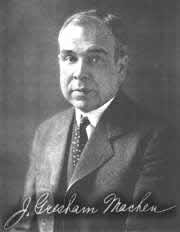
Shortly before he died (January 1, 1937), Dr. J. Gresham Machen sent a final telegram to his friend Professor John Murray. The words of the telegram were these:
“I’m so thankful for the active obedience of Christ. No hope without it.”
I’m convinced that in these short words, Dr. Machen was able to express the essence of the biblical Gospel. Let me explain: 

Theologians talk of a double function of Christ as our Savior in saving us – His passive and active obedience. The passive obedience refers to His laying His life down for us His sheep. He died an atoning death paying the full penalty for sins. Yet, what is often missed is the function of His 33 years of life on earth perfectly fulfilling all the demands of the law. This righteousness, one that has fulfilled the entire law of God is what is credited to our account as believers in Christ. Christ is our righteousness!

CHRIST DIED FOR OUR SINS, AND LIVED FOR OUR RIGHTEOUSNESS
 
The Lord Jesus Christ not only died an atoning death for our sins, but before He ever went to the cross, He lived a sinless life that perfectly fulfilled the righteous standards of the law. If all that was necessary for our justification was the death of Jesus on the cross, He could have come down to earth on a parachute on Good Friday, died on the cross for us, and three days later, risen again. But we all know that this is not what happened. Why? Because that would never have been enough.    Keep Reading >>>

Monday, December 13, 2010

Roger Nicole (1915-2010)

Yesterday, December 10, 2010, was the 95th birthday of Roger Nicole, the great Reformed-Baptist theologian.


This evening was his homegoing to be with his Lord. He has completed his earthly race. Having fought the good fight of faith, he entered into the joy of his Master. And undoubtedly he heard the words we all long to hear: “Well done, good and faithful servant.”

He was, by common consent, a theological giant. (See these brief reflections by Don Carson, Tim Keller, and Mark Dever.) But because he never wrote a book and didn’t travel the conference circuit, many evangelicals have not heard of him, to our detriment. As Timothy George has written: Continue Reading>>>

Tuesday, November 2, 2010

Next Generation of Theologians Craves Historical Tradition

The newest thing in Protestantism is really the oldest thing in Protestantism: Reformed theology.
Young Christians are turning to the centuries-old teachings of church fathers such as John Calvin and Jonathan Edwards — reading their work, watching pastors talk about them on YouTube and sporting their faces on sweatshirts.
The nationwide renewal of Reformed theology has been going on for about a decade, and it has finally made its way to Houston. Two Reformed seminaries opened local campuses this fall, Redeemer Seminary, which recently broke off from Westminster Theological Seminary, and Reformed Theological Seminary. They are holding classes for a couple of dozen young Christians from Presbyterian, Reformed, Evangelical and Baptist churches.
"We're offering that historical, Calvinist tradition to a generation that's interested in it," said the Rev. John Crimmins, the interim director of RTS' Houston campus and the senior pastor at Christ Evangelical Presbyterian Church, where they meet.
He describes their theological stance as "winsomely Reformed," focusing on the sinfulness of man, the grace of God and his sovereignty over all things, including salvation.
This Sunday is Reformation Day, marking 493 years since Martin Luther nailed his disputes on the door of a Catholic Church. Since then, Protestants across denominations have relied on the early thinkers of their tradition. Continue Reading>>>

HT: Feeding