The purpose of this Blog is to introduce men and women all over the World to the Doctrines of Grace; the 5 Solas; Reformation Theology and the Lord and Savior Jesus Christ.
Showing posts with label Authority. Show all posts

Wednesday, June 11, 2014

How Are Women Saved Through Childbearing?


What did Paul mean when he said in 1 Timothy 2:15, “Yet she [the woman] will be saved through childbearing — if they continue in faith and love and holiness, with self-control”?

Henry Alford’s interpretation of this verse is not widely known. I find it compelling and would like to commend it for your consideration. Henry Alford was a British Anglican scholar who published commentary on The Greek New Testament in 1863.

The context is that Paul is arguing why men should be the authoritative leaders and teachers in the church rather than women.
I do not permit a woman to teach or to exercise authority over a man; rather, she is to remain quiet. For Adam was formed first, then Eve; and Adam was not deceived, but the woman was deceived and became a transgressor. Yet she will be saved through childbearing — if they continue in faith and love and holiness, with self-control. (1 Timothy 2:12–15)    Continue at John Piper

Wednesday, April 30, 2014

10 Characteristics of Mr Controller

I’m trying to figure out how to distinguish between authority and authoritarianism. Any help you can give me would be much appreciated because while I think I can tell the difference, I’m finding it difficult to define the difference. I think I know it when I see it, but can I explain it to someone else? Not so easy.

But let me take a stab at this and please jump in with your own suggestions and corrections. I’ll begin with some broad definitions:

Authority is the lawful use of lawful authority: God, the church, the state, or a business has given someone the right to govern and guide your life in a certain area, and that authority is being exercised in the right areas in the right way.   Continue at David Murray

Wednesday, January 8, 2014

How Mark Dever Passes Out Authority

Over the years Mark Dever, senior pastor of Capitol Hill Baptist Church in Washington, D.C., has seen plenty of opportunities to accrue authority, some of which he keeps, many of which he passes out. And the way he passes out authority has shaped the culture of our church in countless ways.

Here are 20 ways he distributes authority, followed by 10 ways this shapes our church culture. Some apply just to lead pastors; many apply to all of us.

1. Build the church on the gospel. No matter who's teaching, the gospel must be front and center. Mark has established this pattern. When relationships and power structures are grounded in the gospel, people use their authority not to lord it over one another, but to serve one another (Matt. 20:25-28).

2. Establish a plurality of staff and non-staff elders. On an elder board composed exclusively of staff elders, each man may possess one vote, but the staffing structure imposes a hierarchy. Adding non-staff elders to the board disrupts and flattens that hierarchy.

3. Limit the percentage of main-slot preaching. Mark, with the elders' agreement, limits himself to preaching 50 percent to 65 percent of Sunday mornings. That way, other voices have the chance to grow and gain authority. And the congregation depends more on the Word than on one man.   Continue at Jonathan Leeman

Saturday, April 27, 2013

Does the Bible Tell Christians to Judge Not?

We live in a world that increasingly strives to (supposedly) promote the idea of tolerance, but actually becomes intolerant of Christian absolutes as it does so. Whether it involves religion, behavior, or human sexuality, there is a growing anti-Christian sentiment in America and other Western nations. Ultimately, built into this “tolerance” is the concept that truth is determined by each individual, not by God. This has led many people to conclude that making judgments on anyone (especially coming from Christians) is wrong because the Bible says ”judge not” (Matthew 7:1). Interestingly enough, those who reject the notion of God or the credibility of the Bible often attempt to use God’s Word (e.g., by quoting verses out of context) to excuse their actions when they are presented with the gospel and the plight of sinners for rejecting it.

The Authority on Judging


Scripture makes it very clear that there is one supreme Judge of all—the Lord God—and that He alone has the authority to determine right and wrong motives and behaviors.


Many Old Testament passages attest to the truth of God as Judge:

God is a just judge, and God is angry with the wicked every day. (Psalm 7:11)
He shall judge the world in righteousness, and he shall administer judgments for the people in uprightness. (Psalm 9:8)
Let the heavens declare His righteousness, for God himself is Judge. Selah (Psalm 50:6)
For the Lord is our Judge, the Lord is our Lawgiver, the Lord is our King; He will save us. (Isaiah 33:22)

The Old Testament is rife with passages that establish God as the ultimate Judge. When we come to the New Testament, we find that the Father has committed authority and judgment to the Son. Jesus spoke of this authority before He ascended to heaven after the Resurrection (Matthew 28:18). 


“For the Father judges no one, but has committed all judgment to the Son.” (John 5:22)   Continue at Ken Ham

Monday, June 18, 2012

The Illusion of an Infallible Magisterium

In an article entitled, “Who’s in Charge Here? The Illusions of Church Infallibility” Dr. Michael Horton writes:

In my experience with those who wrestle with conversion to Roman Catholicism—at least those who have professed faith in the gospel, the driving theological issue is authority. How can I be certain that what I believe is true? The gospel of free grace through the justification of sinners in Christ alone moves to the back seat. Instead of the horse, it becomes the cart. Adjustments are made in their understanding of the gospel after accepting Rome’s arguments against sola scriptura. I address these remarks to friends struggling with that issue.

Reformation Christians can agree with Augustine when he said that he would never have known the truth of God’s Word apart from the catholic church. As the minister of salvation, the church is the context and means through which we come to faith and are kept in the faith to the end. When Philip found an Ethiopian treasury secretary returning from Jerusalem reading Isaiah 53, he inquired, “Do you understand what you are reading?” “How can I,” the official replied, “unless someone guides me?” (Ac 8:30-31). Explaining the passage in the light of its fulfillment in Christ, Philip baptized the man who then “went on his way rejoicing” (v 39). 

Philip did not have to be infallible; he only had to communicate with sufficient truth and clarity the infallible Word.

For many, this kind of certainty, based on a text, is not adequate. We have to know—really know—that what we believe is an infallible interpretation of an ultimate authority. The churches of the Reformation confess that even though some passages are more difficult to understand, the basic narratives, doctrines and commands of Scripture—especially the message of Christ as that unfolds from Genesis to Revelation—is so clearly evident that even the unlearned can grasp it.   Continue at John Samson

Saturday, February 11, 2012

Obey Your Pastors and Submit to Them


Few passages are more commonly misread, or simply avoided, than Hebrew 13:17:

Obey your leaders and submit to them, for they are keeping watch over your souls, as those who will have to give an account.

It shouldn’t surprise us that this passage often goes avoided. This is bound to happen in a culture where postmodernism rejects all claims of authority and where examples of abuses of authority are not hard to find in the news.

To make matters worse, a surface reading of this passage seems to sanction some form of authoritarianism, an unqualified obedience and submission to pastors in all matters. But that’s not the message of this passage, as we will see.

What follows are a few important thoughts on this passage, beginning with a closer look at the idea of “obeying.”

Here is how W. E. Vine defines the Greek word “obey” (πείθο):

In Hebrews 13:17, believers are commanded to obey their leaders. The word used is peithō which has the usual meaning of “convince” or “persuade.” The “obedience” suggested is not by submission to authority, but resulting from persuasion. Peithō and pisteuō, “to trust,” are closely related etymologically; the difference in meaning is that the former implies the obedience that is produced by the latter.

Peithō, “to persuade, to win over,” in the passive and middle voices, “to be persuaded, to listen to, to obey,” is so used with this meaning, in the middle voice, e.g., in Acts 5:36-37 (in v. 40, passive voice, “they agreed”); Rom. 2:8; Gal. 5:7; Heb. 13:17; Jas. 3:3.  Continue at Obey Your Pastors

Monday, January 23, 2012

The Evangelical Uneasy Conscience Faces the Future

It’s a little book by a dead man from the last generation, and it just might be the road-map for the future of American Christianity. I’m referring to the late theologian Carl F. H. Henry’s 1947 book “The Uneasy Conscience of Modern Fundamentalism.” This slim little paperback’s importance might not seem obvious in a digital whirling world of contemporary Christians, but the issues Henry raised over sixty years ago are more relevant than ever.

When most people think of Carl Henry, they tend to think of his magnum opus, the six-volume “God, Revelation, and Authority,” which dealt with the major philosophical and theological challenges to Christian theism and the biblical canon. Some remember his work as a pioneer, along with Billy Graham, in the explosion of the post-World War II evangelical movement. From his place as a founding faculty member at Fuller Seminary to his role as first editor of “Christianity Today” and beyond, Henry was the intellectual godfather of the cause. But, in my view, “Uneasy Conscience” is what matters most for us these days.  Continue at Russell Moore

Saturday, November 5, 2011

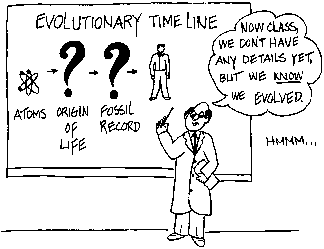
Peter Enns on Paul, Adam, and Evolution

For Peter Enns, evolution denies the historical Adam and Eve, and that gives rise to the questions he’s trying to answer. The fact that Paul viewed Adam as the first human being has, for Enns, been shown to be wrong scientifically. Enns asserts that Paul is theologically right on the point that Jesus defeated sin and death, but that he “may be wrong” on what caused the problem–Adam’s sin. Though he “may be wrong” on that, Enns asserts, Paul is right about sin and death and the solution. Enns says that even if Adam and Eve didn’t bit an apple, sin and death are real.

Enns seems to want to keep the theology while discarding the history as he explains: “I don’t need a historical Adam to make all that happen… I understand why Paul says what he says, cause he’s an ancient man, cause he’s a Jew.”

For Enns, the theory of evolution carries as much authority as Scripture, and it shows that Paul was wrong about Adam being the first human. Moreover, the interpretations that Paul and the other biblical authors provide of earlier Scripture are just possibilities, not necessarily correct readings that function as controls on how those earlier texts should be read.

Peter Enns is trying to combine two different religions, evolution and Christianity...  Read the rest HERE

Saturday, October 22, 2011

Thinking through the Tension of Congregational and Elder Authority

I have long appreciated the ministry of 9Marks. They have consistently provided extremely helpful resources for the local church. In a recent article they demonstrated another commendable quality: they talk about tough issues.

The title of the article: How Congregations with Authority Submit to Elders tells us something of where this is headed. You have a situation where the church is led by the elders while the congregation serves as “the final court of appeal.”

The author, Bobby Jamieson, asks two helpful questions:
If the congregation as a whole is the final court of appeal, what does it mean for a church to submit to its leaders?
and
Do you see the dilemma? If the Bible located church authority exclusively in the elders, the idea of submission would be simple: the elders would make the decisions, and the congregation would submit to those decisions. But what does it mean for a congregation to submit to its elders when the congregation itself holds final authority?   Keep Reading>>>

How Congregations with Authority Submit to Elders

If the congregation as a whole is the final court of appeal, what does it mean for a church to submit to its leaders?

The Bible teaches that elders are to teach the Word, set a godly example for the flock, and oversee the affairs of the church (1 Tim. 3:2; 1 Pet. 5:3; 1 Tim. 5:17). Scripture therefore calls all Christians to “submit” to the leaders of our churches (Heb. 13:17). At the same time, Scripture teaches that the congregation as a whole has final authority in matters of discipline (Matt. 18:17; 1 Cor. 5:4-5) and doctrine (Gal. 1).

Do you see the dilemma? If the Bible located church authority exclusively in the elders, the idea of submission would be simple: the elders would make the decisions, and the congregation would submit to those decisions. But what does it mean for a congregation to submit to its elders when the congregation itself holds final authority?

Instead of considering this question in the abstract, let’s do it in an actual setting you may encounter.

Consider a case of church discipline. I would argue that, even in a congregational church, the process of discipline should be led by the elders. To work to work to restore someone who is in sin requires spiritual maturity (Gal. 6:1, Jude 23). Therefore, it makes sense for the elders to be the primary group who work behind the scenes to address sin issues in the congregation.
 
Still, the congregation maintains final authority. The decision to excommunicate must finally be theirs. The elders cannot simply “announce” that they have excommunicated so-and-so. They must bring all irresolvable cases of unrepentant sin to the congregation for a final decision.     Keep Reading>>>

Monday, October 17, 2011

The Greatest Fight in the World

…the Word is like its Author, infinite, immeasurable, without end. If you were ordained to be a preacher throughout eternity, you would have before you a theme equal to everlasting demands. Brothers, shall we each have a pulpit somewhere amidst the spheres? Shall we have a parish of millions of leagues? Shall we have voices so strengthened as to reach attentive constellations? Shall we be witnesses for the Lord of grace to myriads of worlds which will be wonder-struck when they hear of the incarnate God? Shall we be surrounded by pure intelligences enquiring and searching into the mystery of God manifest in the flesh? Will the unfallen worlds desire to be instructed in the glorious gospel of the blessed God? And will each one of us have his own tale to tell of our experience of infinite love? I think so, since the Lord has saved us "to the intent that now unto the principalities and powers in heavenly places might be known by the church of the manifold wisdom of God." If such be the case, our Bibles will suffice for ages to come for new themes every morning, and for fresh songs and discourses world without end.

We are resolved, then, since we have this arsenal supplied for us of the Lord, and since we want no other, to use the Word of God only, and to use it with greater energy. We are resolved—and I hope there is no dissentient among us—to know our Bibles better. Do we know the sacred volume half so well as we should know it? Have we laboured after as complete a knowledge of the Word of God as many a critic has obtained of his favourite classic? Is it not possible that we still meet with passages of Scripture which are new to us? Should it be so? Is there any part of what the Lord has written which you have never read? I was struck with my brother Archibald Brown's observation, that he bethought himself that unless he read the Scriptures through from end to end there might be inspired teachings which had never been known to him, and so he resolved to read the books in their order; and having done so once, he continued the habit. Have we, any of us, omitted to do this? Let us begin at once. I love to see how readily certain of our brethren turn up an appropriate passage, and then quote its fellow, and crown all with a third. They seem to know exactly the passage which strikes the nail on the head. They have their Bibles, not only in their hearts, but at their fingers' ends. This is a most valuable attainment for a minister. A good textuary is a good theologian. Certain others, whom I esteem for other things, are yet weak on this point, and seldom quote a text of Scripture correctly: indeed, their alterations jar on the ear of the Bible reader. It is sadly common among ministers to add a word or subtract a word from the passage, or in some way to debase the language of sacred writ. How often have I heard brethren speak about making "your calling and salvation" sure! Possibly they hardly enjoyed so much as we do the Calvinistic word "election", and therefore they allowed the meaning; nay, in some cases contradict it. Our reverence for the great Author of Scripture should forbid all mauling of his words. No alteration of Scripture can by any possibility be an improvement. Believers in verbal inspiration should be studiously careful to be verbally correct. The gentlemen who see errors in Scripture may think themselves competent to amend the language of the Lord of hosts; but we who believe God, and accept the very words he uses, may not make so presumptuous an attempt. Let us quote the words as they stand in the best possible translation, and it will be better still if we know the original, and can tell if our version fails to give the sense. How much mischief may arise out of an accidental alteration of the Word! Blessed are they who are in accord with the divine teaching, and receive its true meaning, as the Holy Ghost teaches them! Oh, that we might know the Spirit of Holy Scripture thoroughly, drinking it in, til we are saturated with it! This is the blessing which we resolve to obtain.    Keep Reading>>>

Friday, September 23, 2011

The Gospel according to the Church Fathers

After the apostles died, was the gospel hopelessly lost until the Reformation?
 
That certainly seems to be a common assumption in some Protestant circles today. Thankfully, it is a false assumption.

I’m not entirely sure where that misconception started. But one thing I do know: it did not come from the Protestant Reformers.

The Reformers themselves (including Luther, Zwingli, Calvin, and others) were convinced that their position was not only biblical, but also historical. In other words, they contended that both the apostles and the church fathers would have agreed with them on the heart of the gospel.

For example, the second-generation Lutheran reformer, Martin Chemnitz (1522-1586), wrote a treatise on justification in which he defended the Protestant position by extensively using the church fathers. And John Calvin (1509-1564), in his Institutes, similarly claimed that he could easily debunk his Roman Catholic opponents using nothing but patristic sources. Here’s what he wrote:

If the contest were to be determined by patristic authority, the tide of victory — to put it very modestly —would turn to our side. Now, these fathers have written many wise and excellent things.  . . . [Yet] the good things that these fathers have written they [the Roman Catholics] either do not notice, or misrepresent or pervert.  . . .  But we do not despise them [the church fathers]; in fact, if it were to our present purpose, I could with no trouble at all prove that the greater part of what we are saying today meets their approval.     Keep Reading...

Wednesday, September 21, 2011

Presuppositions And Inerrancy

“In apologetic argument, as in everything else we do, we must presuppose the truth of God’s Word. We either accept God’s authority or we do not, and not to do so is sin”1

It is supposed by some that we cannot and should not approach any issue with presuppositions. First of all, that in itself is a presuppositional approach; one that supposes one can be absolutely neutral and objective, which is impossible. We may be able to come near to objectivity and neutrality, but we must honestly accept that we all have presuppositions and biases. Those who argue against presuppositions actually live their lives by presuppositions. Simply by scheduling their activities they live by the presupposition that the world is ordered by a uniform movement of the earth in relation to the sun. They live by the presupposition that a week is seven days long and that each month is regulated by the lunar cycles. One simply cannot live without presuppositions. Thus it is that I shall attempt to lay out some presuppositions relating to the inerrancy of the Scriptures.2

Presupposition One: God As The Source Of All Knowledge And Truth
We all assume that we have knowledge. Even the person who seeks to tell us that we cannot know anything thinks that he knows what he is saying, and he expects us to understand him.

Where does knowledge come from? Is knowledge based upon certain nervous impulses and hormonal changes? Is knowledge simply the result of observation? If this is the case, knowledge for one person will certainly not be necessarily the knowledge that another thinks that he has. In fact, knowledge would be relative and thus be only opinion. On the other hand, if knowledge is something that can be held in common by humans, knowledge must have an absolute and objective source that determines the truth or falsity of a matter.   Keep Reading...

Tuesday, August 16, 2011

Pornographic Divination

In a post last week, I pointed out that the preposterous claims, unhinged behavior, and spiritual quackery that are so prominent at the charismatic movement's lunatic fringe are by no means limited to the outer edges. Goofiness and gullibility are necessary byproducts of a belief system that fails to take seriously the principle of sola Scriptura and its ramifications (i.e., the authority and sufficiency of Scripture).

Here's a sample of the kind of thing I was referring to: The video below features Mark Driscoll, claiming the Holy Spirit regularly gives him graphic visions showing acts of rape, fornicators in flagrante delicto, and sexual child molesters in the very act. WARNING: This is an extremely disturbing video, for multiple reasons:
  • This is bad teaching. The biblical "Gift of discernment" has nothing to do with soothsaying and everything to do with maturity, clear understanding, the ability to make wise and careful distinctions, and (especially) skill in differentiating between holy and profane, clean and unclean, truth and falsehood (Ezekiel 44:23; Hebrews 5:14).
  • The counsel Driscoll gives is bad counsel. If by his own admission Driscoll's divinations are not "a hundred percent always right," he has no business accusing people of serious sins—including felony crimes—based on what he "sees" in his own imagination. Much less should he encourage his congregants to dream that they have such an ability and urge them to "use that gift."  Keep Reading...


Wednesday, August 3, 2011

What Makes Evangelicals Different?

What is it that separates evangelicals from the rest of the world, even some other branches of Christianity? The fundamental dividing line is the belief in the inerrancy and authority of Scripture. Why does it matter if we believe this or not?
  • It matters because what you think about the Bible directly affects what you believe and how you live. Is the Bible like an all-you-can-eat buffet where you pick and choose what to believe and obey?
  • It matters because views of the Bible set individuals and institutions on very different trajectories. Institutions that have rejected the Bible’s entire trustworthiness have often gone on to embrace beliefs incompatible with the gospel. This controversial issue is a theological line in the sand.
How is the Bible a book like no other? It is:

A book that is God-breathed: Inspiration. God authored the Bible through humans. He did not dictate it as an executive would dictate do a secretary. If a musician plays the same tune through a variety of wind instruments, each will sound different although each is coming from the same breath. God produced the Bible through the different personalities of his “instruments.”    Keep Reading...

Monday, May 2, 2011

Submission and Authority in the Home

Conrad Mbewe continues his exposition of biblical submission and exercise of authority, based on 1 Peter. This message – #4 of 6 – focuses on the family. We see here that rebellion against parents is not a narrow issue which one can work around. As with proper teaching about the broad intent and application of the 10 Commandments, biblical instruction about our responsibility to submit to God’s Word is comprehensive and our ability to obey is wretched. Hence, the Word convicts us of our need of Christ, in every area of our lives.

Saturday, March 5, 2011

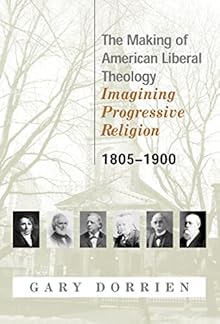
The Making of American Liberal Theology

The Making of American Liberal Theology Imagining Progressive Religion 1805-1900 (WJK 2001) is the first volume of Gary Dorrien’s magisterial three volume series on the history of American liberalism. I don’t know much about Dorrien except that when he began the series he was at Kalamazoo College and now he is at Union Theological Seminary. From what I’ve read (and I did not read every page), he is sympathetic to liberalism (hence the position at Union), but also fair and clear. I doubt that many evangelicals need to read these volumes, but some pastors and students may want to have them as reference material on their shelves.

So what is liberalism?

Like any “ism” it’s diverse and not easy to define. But certain characteristics shine through in Dorrien’s narrative. For the sake of historical accuracy and for the sake of spotting recurring themes in the contemporary church, it’s important to understand something about the basic themes of liberal theology (note: the headings are mine, all the indented text is from the book).

1. True religion is not based on external authority    Keep Reading>>>

Friday, January 28, 2011

John Owen on the Authority of the Pope

Yesterday I gave a paper on Puritan Attitudes Towards Rome Reloaded to the Bradford on Avon Ministers' Fraternal. Here's an excerpt:

One of Cane’s main arguments in the Fiat Lux was that before England departed from Rome during the reign of Henry VIII, the nation was at peace with itself. Since relinquishing the authority of the pope, however, the country had been beset by terrible divisions between the various Protestant sects. There was nothing for it but to return to Rome, only then all would be well again, ‘we have no remedy for our evils, no means of ending our differences, but by a return unto the rule of the Roman see.’

The legitimacy of the pope’s authority was one of the key points at issue between John Owen and his Roman opponent, John Vincent Cane. He deployed five main lines of argument against the Roman Catholic claim that the pope has universal authority over the Church. Continue Reading>>>

Tuesday, January 25, 2011

Some Thoughts on the Right of Private Interpretation of Scripture

The right of every Christian believer to read and interpret the Bible is one of the distinguishing features of Reformed Protestantism. Famously, when Martin Luther was charged with heresy at the Diet of Worms this was his defence,
Unless I am convinced by Scripture and plain reason - I do not accept the authority of the popes and councils, for they have contradicted each other - my conscience is captive to the Word of God. I cannot and I will not recant anything for to go against conscience is neither right nor safe. God help me. Amen.
This attitude gave birth to what Alister McGrath calls "Christianity's dangerous idea"  - the right of private interpretation of Scripture (see here). Armed with this "right" Protestants subjected Roman Catholic traditions to the scrutiny of Scripture and attempted to reform the Church in line with the teaching of the Bible. The right of private interpretation is closely allied with two other defining characteristics of Protestantism; the priesthood of all believers and the clarity of Scripture. All true Christians may read and understand Holy Scripture because each believer has a personal knowledge of God, Jeremiah 31:34, John 6:45, 1 John 2:20. This saving knowledge of God in Christ is disclosed in the Scriptures, 2 Timothy 3:15. The basic message of the Bible clear so that every believer may read God's written Word with understanding. These principles gave impetus to the Protestant drive to give the Bible back to the people of God by translating Holy Scripture into the vernacular. Keep Reading>>>