The true Christian is the only happy man, because his conscience is at peace.
That mysterious witness for God, which is so mercifully placed within
us, is fully satisfied and at rest. It sees in the blood of Christ a
complete cleansing away of all its guilt. It sees in the priesthood and
mediation of Christ a complete answer to all its fears. It sees that,
through the sacrifice and death of Christ, God can now be just, and yet
be the justifier of the ungodly. It no longer bites and stings and makes
its possessor afraid of himself. The Lord Jesus Christ has amply met
all its requirements. Conscience is no longer the enemy of the true
Christian, but his friend and adviser. Therefore he is happy. Continue at Eric T. Young
Showing posts with label J. C. Ryle. Show all posts
Showing posts with label J. C. Ryle. Show all posts
Wednesday, April 9, 2014


Tuesday, January 21, 2014
5 Principles for Christian Growth

The words of James must never be
forgotten: “Every good gift and every perfect gift is from above, and
comes down from the Father of lights” (James 1:17). This is no doubt as
true of growth in grace, as it is of everything else. It is the “gift of
God.” But still it must always be kept in mind that God is pleased to
work by means. God has ordained means as well as ends. He that would
grow in grace must use the means of growth.
This
is a point, I fear, which is too much overlooked by believers. Many
admire growth in grace in others and wish that they themselves were like
them. But they seem to suppose that those who grow are what they are by
some special gift or grant from God and that, as this gift is not
bestowed on themselves, they must be content to sit still. This is a
grievous delusion and one against which I desire to testify with all my
might. I wish it to be distinctly understood that growth in grace is
bound up with the use of means within the reach of all believers and
that, as a general rule, growing souls are what they are because they
use these means. Continue at Eric T. Young
Thursday, November 21, 2013
The Deity of Christ — J.C. Ryle

“My
Father has given me authority over everything. No one really knows the
Son except the Father, and no one really knows the Father except the Son
and those to whom the Son chooses to reveal him.” – Luke 10:22
“These
are the words of one who was very God of very God, and no mere man. We
read of no patriarch, or prophet, or apostle, or saint, of any age, who
ever used words like these. They reveal to our wondering eyes a little
of the mighty majesty of our Lord’s nature and person. They show Him to
us, as the Head over all things, and King of kings–’all things are
delivered to me of my Father.’ They show Him as one distinct from the
Father, and yet entirely one with Him, and knowing Him in an unspeakable
manner. ‘No man knows who the Son is but the Father–and who the Father
is but the Son.’ They show Him, not least, as the Mighty Revealer of the
Father to the sons of men, as the God who pardons iniquity, and loves
sinners for His Son’s sake–’no one really knows the Father except the
Son and those to whom the Son chooses to reveal him.’ Continue at Eric T. Youn
Saturday, July 6, 2013
How to Study the Bible — J.C. Ryle

Ryle,
This. . .may
fall into the hands of some one who is willing to begin reading the
Bible, but wants advice on the subject. Reader, are you that man? Listen
to me, and I will give you a few short hints.
For one thing, begin reading your Bible this very day.
The way to do a thing is to do it, and the way to read the Bible is
actually to read it. It is not meaning, or wishing, or resolving, or
intending, or thinking about it, which will advance you one step. You
must positively read. There is no royal road in this matter, any more
than in the matter of prayer. If you cannot read yourself, you must
persuade somebody else to read to you. But one way or another, through
eyes or ears, the words of Scripture must actually pass before your
mind.
For another thing, read the Bible with an earnest desire to understand it.
Think not for a moment that the great object is to turn over a certain
quantity of printed paper, and that it matters nothing whether you
understand it or not. Some ignorant people seem to fancy that all is
done, if they clear off so many chapters every day, though they may not
have a notion what they are all about, and only know that they have
pushed on their mark so many leaves. This is turning Bible reading into a
mere form. It is almost as bad as the Popish habit of buying
indulgences, by saying a fabulous number of ave-marias and paternosters.
It reminds one of the poor Hottentot, who ate up a Dutch hymn-book,
because he saw it comforted his neighbours’ hearts. Settle it down in
your mind, as a general principle, that a Bible not understood is a
Bible that does no good. Say to yourself often as you read, “What is all
this about?” Dig for the meaning like a man digging for Australian
gold. Work hard, and do not give up the work in a hurry. Continue at Eric T. Young
Saturday, February 9, 2013
Jellyfish Christianity
Some words are written down and are here for a day and then gone.
Other words are so pointed, so perfect, that they stand for many years. J.C.
Ryle is a man who wrote many books and pamphlets and sermons that are
as powerful and relevant today as they were in the 19th century. His
description of jellyfish Christianity could as easily have been written
here in the 21st century.
[Dislike of dogma] is an
epidemic which is just now doing great harm, and specially among young
people. It produces what I must venture to call a “jelly-fish”
Christianity in the land: that is, a Christianity without bone, or
muscle, or power. A jelly-fish is a pretty and graceful object when it
floats in the sea, contracting and expanding like a little, delicate,
transparent umbrella. Yet the same jelly-fish, when cast on the shore,
is a mere helpless lump, without capacity for movement, self-defense, or
self-preservation. Alas! It is a vivid type of much of the religion of
this day, of which the leading principle is, “No dogma, no distinct
tenets, no positive doctrine.”
We have hundreds of “jelly-fish”
clergymen, who seem not to have a single bone in their body of divinity.
They have not definite opinions; they belong to no school or party;
they are so afraid of “extreme views” that they have no views at all. Continue at Tim Challies
Friday, August 31, 2012
The Modern Megachurch and the Wisdom of J.C. Ryle
Paul Thompson blogs at “The Bridge” and is a pastor between here and Japan somewhere! He was our second place blogger in the Blue Collar Blog Madness tournament this year.

Last night I read two interesting pieces. One from Medical News Today, the other from J.C. Ryle Quotes.
Medical News Today: Like A Drug: The Rise Of American Megachurches
This article was about recent research by University of Washington
about the rise of the American Megachurch. I found the article
interesting… I think the observations by researcher, James Wellman could
be spoken of more than just the megachurch. The article begins with the
following statement…
“American megachurches use stagecraft, sensory pageantry, charismatic leadership and an upbeat, unchallenging vision of Christianity to provide their congregants with a powerful emotional religious experience,
J.C. Ryle wrote a book entitled “Warnings to the Churches”, in it he warns…
The church’s doctrine and practice are in constant danger of being corrupted from their original divinely-given character. Seeing this, Ryle felt compelled to utter a warning, however controversial this might prove. As he observes, ‘There are times when controversy is…a benefit. Give me the mighty thunderstorm rather than the pestilential malaria. The one walks in darkness and poisons us in silence…The other frightens and alarms us for a little season. But it is soon over, and it clears the air’ (p. 111).
Here are some quick quotes from the article “Like A Drug: The Rise Of
The American Megachurch” compared with some of Ryle’s warnings to the
church from over a hundred years ago.
Like A Drug: ”Megachurch services feature a
come-as-you-are atmosphere, rock music, and what Wellman calls a
“multisensory mélange” of visuals and other elements to stimulate the
senses, as well as small-group participation and a shared focus on the
message from a charismatic pastor.
Ryle’s Warnings: ”There is a great appearance of learning and theological knowledge: many fancy that such clever and intellectual men must surely be safe guides.” Continue at Paul Thompson
Friday, June 29, 2012
Twelve Propositions on Sanctification
J.C. Ryle defines sanctification as “an
inward spiritual work which the Lord Jesus Christ works in a man by the
Holy Ghost, when He calls him to be a true believer.” In his classic
work Holiness, he lays out twelve propositions concerning sanctification.
- It is a result of your union with Christ. “The branch which bears no fruit is no living branch of the vine. The faith which has not a sanctifying influence on the character is no better than the faith of devils.”
- It is a necessary consequence of your regeneration. “Where there is no sanctification there is no regeneration.”
- It is the only certain evidence that you have been indwelt by the Holy Spirit. “The seal that the Spirit stamps on Christ’s people is sanctification.”
- It is the only sure mark that you have been elected by God. “Elect men and women may be known and distinguished by holy lives.” Continue at Tim Challies
Friday, June 15, 2012
What Sanctification Is and Is Not
J. C. Ryle’s Holiness is a classic
work that bears repeated readings. Recently I returned to his chapter on
sanctification, a term that he defines as “an inward spiritual work
which the Lord Jesus Christ works in a man by the Holy Ghost, when He
calls him to be a true believer.” After defining the term, he lays out
the differences between true and false sanctification, first saying what
it is not and then saying what it is.
Sanctification Is Not
True sanctification is not:
- Talk about religion. “People hear so much of Gospel truth that they contract an unholy familiarity with its words and phrases, and sometimes talk so fluently about its doctrines that you might think them true Christians. … [But] the tongue is not the only member that Christ bids us give to his service.”
- Temporary religious feelings. “Reaction, after false religious excitement, is a most deadly disease of soul. When the devil is only temporarily cast out of a man in the heat of a revival, and by and by returns to his house, the last state becomes worse than the first.”
- Outward formalism and external devoutness. “In many cases, this external religiousness is made a substitute for inward holiness; and I am quite certain that it falls utterly short of sanctification of heart!”
- Retirement from our place in life or renunciation of social duties. “It is not the man who hides himself in a cave, but the man who glorifies God as master or servant, parent or child, in the family and in the street, in business and in trade, who is the Scriptural type of a sanctified man.” Continue at Tim Challies
Tuesday, May 1, 2012
Fighting the Unholy Trinity

The principal fight of the Christian is with the world, the flesh, and the devil. This is their never-dying foes. These are the three chief enemies
against whom they must wage war. Unless they get the victory over these
three, all other victories are useless and vain. If they had a nature
like an angel, and were not a fallen creature, the warfare would not be
so essential. But with a corrupt heart, a busy devil, and an ensnaring
world, they must either fight or be lost.
The Christian must fight the flesh.
Even after conversion they carry within them a nature prone to evil,
and a heart weak and unstable as water. To keep that heart from going
astray, there is need of a daily struggle and a daily wrestling in
prayer. “I discipline my body,” cries Paul, “and bring it under subjection.” “I see a law in my members at war against the law of my mind, and bringing me into captivity.” “O
wretched man that I am, who shall deliver me from this body of death?”
“They that are Christ’s have crucified the flesh with its affections and
lusts.” “Mortify your members which are upon the earth” (1 Cor. 9:27; Rom. 7:23, 24; Gal. 5:24; Col. 3:5).
The Christian must fight the world.
The subtle influence of that mighty enemy must be daily resisted, and
without a daily battle can never be overcome. The love of the world’s
good things, the fear of the world’s laughter or blame, the secret
desire to keep in with the world, the secret wish to do as others in the
world do, and not to run into extremes—all these are spiritual foes
which beset the Christian continually on their way to heaven, and must
be conquered. “The friendship of the world is enmity with God: whosoever therefore will be a friend of the world, is the enemy of God.” “If any man love the world, the love of the Father is not in him.” “Whatsoever is born of God overcomes the world.” “Be not conformed to this world” (James 4:4; 1 John 2:15; 1 John 5:4; Rom. 12:2). Continue at J. C. Ryle Quotes
Saturday, February 18, 2012
Christian Ministry and Conformity to the World

If someone were to ask an Evangelical if there was any particular
19th-century Anglican that he admired, I’d venture to say that the name
that would be most readily supplied is J. C. Ryle. And that is not at
all without cause. Ryle’s work on discipleship and Christian living has
represented a remarkable service to Christ’s Church.
But another 19th-century Anglican who I wish was a household name in
Evangelical Christianity is Charles Bridges. My acquaintance with
Bridges comes chiefly in the form of his classic work, The Christian Ministry.
It is a wonderful manual of pastoral ministry that I would recommend
wholeheartedly to anyone interested in shepherding Christ’s flock.
Particularly helpful was a section he wrote on “Conformity to the
World,” and its relationship to the Christian ministry. It’s no secret
that many celebrity pastors in contemporary evangelicalism—and, sadly,
the many non-celebrity pastors they’re influencing—employ conformity to
the world as the modus operandi of their ministries. With a shallow, and rather twisted, interpretation of 1 Corinthians 9:19-23,
these men embrace—with their actions if not with their confession—the
philosophy of ministry that Christians must become like the world to win
the world.
And the interesting thing is, that kind
of uber-cool, hip, innovative ministry philosophy is hundreds—and even
thousands—of years old. Bridges’ commentary on the subject proves that
this avant-guard, new-kind-of-ministry of the 21st century was alive and
doing damage even in 19th century England.
Thursday, February 2, 2012
“The Frank and Manly Mr. Ryle” — The Value of a Masculine Ministry
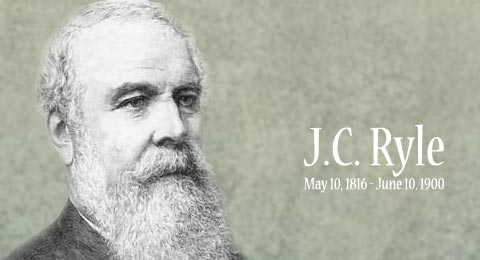
In dealing with the life and ministry of John Charles Ryle, my
hope is to clarify and commend what I mean by the value of a masculine
ministry. But before we
turn to “the frank and manly Mr. Ryle,”1 let me make some clarifying comments from the Bible.
God has revealed himself to us in the Bible pervasively as
King, not Queen, and as Father, not Mother. The second person of the
Trinity is revealed as the eternal Son. The Father and the Son created
man and woman in his image, and gave them together the name of the man, Adam (Genesis 5:2).
God appoints all the priests in Israel to be men. The Son of God comes
into the world as a man, not a woman. He chooses twelve men to be his
apostles. The apostles tell the churches that all the overseers—the
pastor/elders who teach and have authority (1 Timothy 2:12)—should
be men; and that in the home, the head who bears special responsibility
to lead, protect, and provide should be the husband (Ephesians 5:22–33).
Masculine Christianity
From all of this, I conclude that God has given Christianity a
masculine feel. And, being a God of love, he has done it for the maximum
flourishing of men and women. He did not create women to
languish, or be frustrated, or in any way to suffer or fall short of
full and lasting joy, in a masculine Christianity. She is a fellow heir
of the grace of life (1 Peter 3:7).
From which I infer that the fullest flourishing of women and men takes
place in churches and families where Christianity has this God-ordained,
masculine feel. For the sake of the glory of women, and for the sake of
the security and joy of children, God has made Christianity to have a
masculine feel. He has ordained for the church a masculine ministry.
And, of course, this is liable to serious misunderstanding and
serious abuse, because there are views of masculinity that would make
such a vision repulsive. So here is more precisely what I mean. And
words are always in adequate when describing beauty. Beauty always
thrives best when she is perceived by God-given instincts rather than by
rational definitions. But we must try. What I mean by “masculine
Christianity,” or “masculine ministry,” or “Christianity with a
masculine feel,” is this: Continue at John Piper
Monday, January 30, 2012
SERVING TWO MASTERS - J. C. Ryle

13 No servant can serve two masters, for either he will hate the one and love the other, or he will be devoted to the one and despise the other. You cannot serve God and money.” 14 The Pharisees, who were lovers of money, heard all these things, and they ridiculed him. 15 And he said to them, “You are those who justify yourselves before men, but God knows your hearts. For what is exalted among men is an abomination in the sight of God. 16 “The Law and the Prophets were until John; since then the good news of the kingdom of God is preached, and everyone forces his way into it.[a] 17 But it is easier for heaven and earth to pass away than for one dot of the Law to become void. 18 “Everyone who divorces his wife and marries another commits adultery, and he who marries a woman divorced from her husband commits adultery. These verses teach us, firstly, the uselessness of attempting to serve God with a divided heart. Our Lord Jesus Christ says, "No servant can serve two masters--for either he will hate the one and love the other--or else he will hold to the one and despise the other. You cannot serve God and mammon." Luke 16:13-18
The truth here propounded by our Lord appears, at first sight, too
obvious to admit of being disputed. And yet the very attempt which is
here declared to be useless is constantly being made by many in the
matter of their souls.
Thousands on every side are continually trying to
do the thing which Christ pronounces impossible. They are endeavoring
to be friends of the world and friends of God at the same time. Their
consciences are so far enlightened, that they feel they must have some
religion. But their affections are so chained down to earthly things,
that they never come up to the mark of being true Christians. And hence
they live in a state of constant discomfort. They have too much religion
to be happy in the world, and they have too much of the world in their
hearts to be happy in their religion. In short, they waste their time in
laboring to do that which cannot be done. They are striving to "serve
God and mammon." Continue at Reformation Theology
Wednesday, January 25, 2012

Friday, January 20, 2012
A Warning To Professing Christians
Some
thirty years ago, when I was a university student, I came across a
statement by
Bishop J C Ryle that powerfully riveted itself to my mind. I made a
small A4-size poster of it and put it up on the notice board in my room.
I lost it when I graduated from university. Since then I have looked
for it and failed to find it. I have
tried to Google it, but even that has not yielded the desired fruit. I
finally
found it today (13 January 2012).
 |
| Bishop J C Ryle |
The
first paragraph below is the statement that shocked me out of my socks some
thirty years ago. I have added a few more paragraphs to make this a fuller blog
post and to also give my readers some more of the heart of this great bishop. I
wish that all bishops today—including myself—could write and preach like this! Continue at Some
thirty years ago, when I was a university student, I came across a
statement by
Bishop J C Ryle that powerfully riveted itself to my mind. I made a
small A4-size poster of it and put it up on the notice board in my room.
I lost it when I graduated from university. Since then I have looked
for it and failed to find it. I have
tried to Google it, but even that has not yielded the desired fruit. I
finally
found it today (13 January 2012). Continue at Conrad Mbewe
Monday, October 3, 2011
Revivalism and the Danger of False Conversions — J.C. Ryle
For true revivals of religion no one can
be more deeply thankful than I am. Wherever they may take place, and by
whatever agents they may be effected, I desire to bless God for them,
with all my heart. “If Christ is preached,” I rejoice, whoever may be
the preacher. If souls are saved, I rejoice, by whatever section of the
Church the word of life has been ministered.

But it is a melancholy fact that, in a
world like this, you cannot have good without evil. I have no hesitation
in saying, that one consequence of the revival movement has been the
rise of a theological system which I feel obliged to call defective and
mischievous in the extreme.
The leading feature of the theological
system I refer to, is this: an extravagant and disproportionate
magnifying of three points in religion,-viz., instantaneous
conversion-the invitation of unconverted sinners to come to Christ,-and
the possession of inward joy and peace as a test of conversion. I repeat
that these three grand truths (for truths they are) are so incessantly
and exclusively brought forward, in some quarters, that great harm is
done.
Instantaneous conversion, no doubt, ought
to be pressed on people. But surely they ought not to be led to suppose
that there is no other sort of conversion, and that unless they are
suddenly and powerfully converted to God, they are not converted at all. Keep Reading...
Saturday, September 10, 2011
Do You Love Christ? True versus False Conversion

1. If we love a person, we like to think about him.
We do not need to be reminded of him. We do not forget his name or his appearance or his character or his opinions or his tastes or his position or his occupation. He comes up before our mind’s eye many a time in the day. Though perhaps far distant, he is often present in our thoughts. Well, it is just so between the true Christian and Christ! Christ "dwells in his heart," and is thought of more or less every day (Eph. 3:17). The true Christian does not need to be reminded that he has a crucified Master. He often thinks of Him. He never forgets that He has a day, a cause and a people, and that of His people he is one. Affection is the real secret of a good memory in religion. No worldly man can think much about Christ, unless Christ is pressed upon his notice, because he has no affection for Him. The true Christian has thoughts about Christ every day that he lives, for this one simple reason that he loves Him.
2. If we love a person, we like to hear about him. We find a pleasure in listening to those who speak of him. We feel an interest in any report which others make of him. We are all attention when others talk about him, and describe his ways, his sayings, his doings and his plans. Some may hear him mentioned with utter indifference, but our own hearts bound within us at the very sound of his name. Well, it is just so between the true Christian and Christ. The true Christian delights to hear something about his Master. He likes those sermons best which are full of Christ. He enjoys that society most in which people talk of the things which are Christ’s. I have read of an old Welsh believer, who used to walk several miles every Sunday to hear an English clergyman preach, though she did not understand a word of English. She was asked why she did so. She replied, that this clergyman named the name of Christ so often in his sermons, that it did her good. She loved even the name of her Savior. Keep Reading...
We do not need to be reminded of him. We do not forget his name or his appearance or his character or his opinions or his tastes or his position or his occupation. He comes up before our mind’s eye many a time in the day. Though perhaps far distant, he is often present in our thoughts. Well, it is just so between the true Christian and Christ! Christ "dwells in his heart," and is thought of more or less every day (Eph. 3:17). The true Christian does not need to be reminded that he has a crucified Master. He often thinks of Him. He never forgets that He has a day, a cause and a people, and that of His people he is one. Affection is the real secret of a good memory in religion. No worldly man can think much about Christ, unless Christ is pressed upon his notice, because he has no affection for Him. The true Christian has thoughts about Christ every day that he lives, for this one simple reason that he loves Him.
2. If we love a person, we like to hear about him. We find a pleasure in listening to those who speak of him. We feel an interest in any report which others make of him. We are all attention when others talk about him, and describe his ways, his sayings, his doings and his plans. Some may hear him mentioned with utter indifference, but our own hearts bound within us at the very sound of his name. Well, it is just so between the true Christian and Christ. The true Christian delights to hear something about his Master. He likes those sermons best which are full of Christ. He enjoys that society most in which people talk of the things which are Christ’s. I have read of an old Welsh believer, who used to walk several miles every Sunday to hear an English clergyman preach, though she did not understand a word of English. She was asked why she did so. She replied, that this clergyman named the name of Christ so often in his sermons, that it did her good. She loved even the name of her Savior. Keep Reading...
Thursday, August 4, 2011
J.C. Ryle on a Sinner’s Prayer
One of my favorite devotional authors is J.C. Ryle, and I have often gone to his trilogy of books, namely Practical Religion, Old Paths, and The Upper Room
for personal encouragement and rebuke. In his chapter on prayer, Ryle
addresses a sinner who has yet to come to Christ in repentance and
faith. Consider his counsel:
When does the building of the Spirit
really begin to appear in a man’s heart? It begins, so far as we can
judge, when he first pours out his heart to God in prayer.
If you desire salvation, and want to know
what to do, I advise you to go this very day to the Lord Jesus Christ,
in the first private place you can find, and earnestly and heartily
entreat him in prayer to save your soul. Keep Reading...
Tuesday, July 19, 2011
9 Lessons From God Concerning Sickness

Sickness is Meant...
1. To make us think—to remind us that we have a soul as well as a body—an immortal soul—a soul that will live forever in happiness or in misery—and that if this soul is not saved we had better never have been born.
2. To teach us that there is a world beyond the grave—and that the world we now live in is only a training-place for another dwelling, where there will be no decay, no sorrow, no tears, no misery, and no sin.
3. To make us look at our past lives honestly, fairly, and conscientiously. Am I ready for my great change if I should not get better? Do I repent truly of my sins? Are my sins forgiven and washed away in Christ’s blood? Am I prepared to meet God?
4. To make us see the emptiness of the world and its utter inability to satisfy the highest and deepest needs of the soul.
5. To send us to our Bibles. That blessed Book, in the days of health, is too often left on the shelf, becomes the safest place in which to put a bank-note, and is never opened from January to December. But sickness often brings it down from the shelf and throws new light on its pages. Keep Reading...
1. To make us think—to remind us that we have a soul as well as a body—an immortal soul—a soul that will live forever in happiness or in misery—and that if this soul is not saved we had better never have been born.
2. To teach us that there is a world beyond the grave—and that the world we now live in is only a training-place for another dwelling, where there will be no decay, no sorrow, no tears, no misery, and no sin.
3. To make us look at our past lives honestly, fairly, and conscientiously. Am I ready for my great change if I should not get better? Do I repent truly of my sins? Are my sins forgiven and washed away in Christ’s blood? Am I prepared to meet God?
4. To make us see the emptiness of the world and its utter inability to satisfy the highest and deepest needs of the soul.
5. To send us to our Bibles. That blessed Book, in the days of health, is too often left on the shelf, becomes the safest place in which to put a bank-note, and is never opened from January to December. But sickness often brings it down from the shelf and throws new light on its pages. Keep Reading...
Friday, June 10, 2011
Remember Lot’s Wife

There are few warnings in Scripture more solemn than this. The Lord Jesus Christ says to us, “Remember Lot’s wife.”
Lot’s wife was a professor of religion: her husband was a “righteous man” (II Peter 2:8). She left Sodom with him on the day when Sodom was destroyed; she looked back towards the city from behind her husband, against God’s express command; she was struck dead at once, and turned into a pillar of salt. And the Lord Jesus Christ holds her up as a beacon to His church: He says, “Remember Lot’s wife.”
It is a solemn warning, when we think of the person Jesus names. He does not bid us remember Abraham, or Isaac, or Jacob, or Sarah, or Hannah, or Ruth. No: He singles out one whose soul was lost for ever. He cries to us, “Remember Lot’s wife.”
It is a solemn warning, when we consider the subject Jesus is upon. He is speaking of His own second coming to judge the world: He is describing the awful state of unreadiness in which many will be found. The last days are on His mind, when He says, “Remember Lot’s wife.”
It is a solemn warning, when we think of the Person who gives it. The Lord Jesus is full of love, mercy, and compassion: He is One who will not break the bruised reed nor quench the smoking flax He could weep over unbelieving Jerusalem, and pray for the men that crucified Him; yet even He thinks it good to give this solemn warning and remind us of lost souls. Even He says, “Remember Lot’s wife.” Keep Reading...
Friday, May 27, 2011
Is Anybody Wrong?

J. C. Ryle wrote this around 150 years ago (though it could have been written yesterday):
“We live in an age when men profess to dislike dogmas and creeds, and are filled with a morbid dislike to controversial theology. He who dares to say of one doctrine that ‘it is true’ and of another that ‘it is false’ must expect to be called narrow-minded and uncharitable, and to lose the praise of man.”
“There is a general tendency to free thought and free inquiry in these latter days…there is a wide-spread desire to appear charitable and liberal-minded: many seem half ashamed of saying that anyone can be in the wrong.”
“There is a quantity of half-truth taught by the modern false teachers: they are incessantly using Scriptural terms and phrases in an unscriptural sense. …There is a silly readiness in every direction to believe everybody who talks cleverly, lovingly, and earnestly, and a determination to forget that Satan is often ‘transformed into an angel of light’ (2 Cor. 2:14). There is a wide-spread gullibility among professing Christians: every heretic who tells his story plausibly is sure to be believed, and everybody who doubts him is called a persecutor and a narrow-minded man.” Keep Reading...
Subscribe to:
Posts (Atom)