The purpose of this Blog is to introduce men and women all over the World to the Doctrines of Grace; the 5 Solas; Reformation Theology and the Lord and Savior Jesus Christ.
Showing posts with label John Samson. Show all posts

Friday, May 2, 2014

Vessels Prepared for Destruction

Excerpt from Dr. James White's book "The Potter's Freedom" (pages 211-214):
For the Scripture says to Pharaoh, “For this very purpose I raised you up, to demonstrate My power in you, and that My name might be proclaimed throughout the whole earth.” So then He has mercy on whom He desires, and He hardens whom He desires. Romans 9:17-18)
The example of Pharoah was well known to any person familiar with the Old Testament. God destroyed the Egyptian nation by plagues so as to demonstrate His might and power in the earth, and key to this demonstration was the hardening of Pharoah's heart. Before Moses had met with Pharoah the first time God told him:
When you go back to Egypt see that you perform before Pharaoh all the wonders which I have put in your power; but I will harden his heart so that he will not let the people go. (Exodus 4:21)
It was God's intention to bring His wrath upon the Egyptians. God's actions were not "forced" by the stubborn will of the Egyptian leader. God said He would harden Pharoah's heart, and He did. Listen to the impudent response of this pagan idolater to the command of Moses:    Continue at John Samson

Friday, December 13, 2013

Understanding 1 John 2:2

From the archives on this blog (from October 2005) by Rev. John Samson

Many of you know something of my struggle in coming to understand and appreciate the doctrines of grace. One of the biggest hurdles I encountered was my traditional understanding of 1 John 2:2. For a long time, it acted much like a roadblock in my thinking, preventing me from believing what I now consider to be the clear and consistent teaching of scripture. 

How are we to understand the verse then?

Let me start by affirming that scripture is explicit in saying that Jesus died:

for God's people ("He was cut off out of the land of the living, stricken for the transgression of My people" - Isaiah 53:8; "He shall save His people from their sins" - Matt. 1:21);

for His sheep ("I am the good shepherd. The good shepherd lays down His life for the sheep." - John 10:11 - note that Jesus categorically states that some are not His sheep - "but you do not believe because you are not My sheep." - John 10:26)

for His friends ("Greater love has no one than this, that someone lays down his life for his friends. You are My friends if you do what I command you." - John 15:13-14;

for the Church ("... the church of God, which He obtained with His own blood." - Acts 20:28; "Husbands, love your wives, as Christ loved the church and gave Himself up for her, that He might sanctify her, having cleansed her..." - Eph. 5:25, 26).  Continue at John Samson

Saturday, December 7, 2013

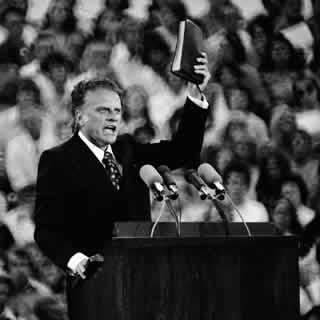
The Long History of Billy Graham’s Ecumenism

The following was first published in the out-of-print book Evangelicals and Rome in 1999:

When Did Graham’s Compromise Begin?

billyBilly Graham’s compromise and disobedience began very early in his ministry. He was born in 1918 into a Presbyterian home and traces his conversion to the preaching of evangelist Mordecai Ham in 1934. He graduated from high school in May 1936 and attended Bob Jones College (which later became Bob Jones University) in the fall but switched to Florida Bible Institute after only one semester because he did not like the strict discipline at Bob Jones. 

He notes in his biography that “one thing that thrilled me [about Florida Bible Institute] was the diversity of viewpoints we were exposed to in the classroom, a wondrous blend of ecumenical and evangelical thought that was really ahead of its time” (Graham, Just As I Am , p. 46). 

It was during his time in Florida that Graham felt the call to preach. In late 1938, he was baptized by immersion in a Baptist church, and in early 1939, he was ordained to preach by a Southern Baptist congregation.   Continue at John Samson

Tuesday, December 3, 2013

Kept and Sealed

Think about it: Do people with hearts of stone ask God to give them a different kind of heart?

Ezekiel 36:26 And I will give you a new heart, and a new spirit I will put within you. And I will remove the heart of stone from your flesh and give you a heart of flesh. 27 And I will put my Spirit within you, and cause you to walk in my statutes and be careful to obey my rules.

He promises: “I will make an everlasting covenant with them, that I will not turn away from them, to do them good; but I will put my fear in their hearts, that they shall not depart from me” (Jer. 32:40).

On the other hand, it is entirely possible for someone to have a keen interest in Christianity (say a prayer, be a member of a local Church and even be involved in Christian ministry) and never be a genuine Christian in any way at all. 

How do we know that? Well, because 1 John 2:19 explicitly says that! In referring to those who had once served alongside him in ministry, the Apostle John writes, “They went out from us, but they were not of us; for if they had been of us, they would have continued with us. But they went out, that it might become plain that they all are not of us.”    Continue at John Samson

Monday, October 7, 2013

A Church Without Masks

Matt 16:13 Now when Jesus came into the district of Caesarea Philippi, he asked his disciples, “Who do people say that the Son of Man is?”14 And they said, “Some say John the Baptist, others say Elijah, and others Jeremiah or one of the prophets.” 15 He said to them, “But who do you say that I am?” 16 Simon Peter replied, “You are the Christ, the Son of the living God.” 17 And Jesus answered him, “Blessed are you, Simon Bar-Jonah! For flesh and blood has not revealed this to you, but my Father who is in heaven. 18 And I tell you, you are Peter, and on this rock I will build my church, and the gates of hell shall not prevail against it. 

2 Cor 1: 8 For we do not want you to be unaware, brothers, of the affliction we experienced in Asia. For we were so utterly burdened beyond our strength that we despaired of life itself. 9 Indeed, we felt that we had received the sentence of death. But that was to make us rely not on ourselves but on God who raises the dead. 10 He delivered us from such a deadly peril, and he will deliver us. On him we have set our hope that he will deliver us again. 11 You also must help us by prayer, so that many will give thanks on our behalf for the blessing granted us through the prayers of many.   Continue at John Samson

Saturday, July 20, 2013

How can I Know if I am Elect?

Many persons want to know their election before they look to Christ, but that is not possible; it is only to be discovered by “looking to Jesus.”1 If you desire to ascertain your own election, after the following manner shall you assure your heart before God. 
 
Do you feel yourself to be a lost, guilty sinner? Go straight to the cross of Christ, and tell Jesus so, and tell Him that you have read in the Bible, “Whoever comes to me I will never cast out.”2 Tell Him that He has said, “The saying is trustworthy and deserving of full acceptance, that Christ Jesus came into the world to save sinners.”3 Look to Jesus and believe on Him, and you shall make proof of your election directly, for as surely as you believe, you are elect. 

If you will give yourself wholly up to Christ and trust Him, then you are one of God’s chosen ones; but if you stop and say, “I want to know first whether I am elect,” you do not know what you are asking. Go to Jesus, just as you are, in all your guilt. Leave all curious inquiry about election alone. Go straight to Christ, and hide in His wounds, and you shall know your election. The assurance of the Holy Spirit shall be given to you, so that you shall be able to say, “I know whom I have believed, and I am convinced that he is able to guard until that Day what has been entrusted to me."   Continue at John Samson

Monday, July 15, 2013

Allowing Romans 9 to Speak for Itself

bible06
As the Apostle Paul transitions into what we now call Romans 9 we should recall that there were no chapter and verse divisions in the original text. He is not starting a new theme but answering the question … if (or rather, since) God has an elect people who can never be separated from the love of God (which is what Romans 8 has just stated), what happened with the Jews? Weren’t they God’s elect people too? 

History records that most of the Jews failed to recognize their own Messiah when He came… How can what Paul has written be true if God’s own people failed to receive Messiah when He came (and therefore are unsaved - Romans 10:1)? Hasn’t God’s promise failed to materialize for these people? What about the Jews Paul?

Paul was no ivory tower academician who had merely great intellectual acumen but no heart felt concern for people. Paul had a very real sympathy and compassion for his fellow countrymen and if it were possible (which of course it was not) he would have forfeited his own salvation if it would mean that his own people would be redeemed. He felt the issue very deeply. 

Romans 9:1 I am speaking the truth in Christ—I am not lying; my conscience bears me witness in the Holy Spirit— 2 that I have great sorrow and unceasing anguish in my heart. 3 For I could wish that I myself were accursed and cut off from Christ for the sake of my brothers, my kinsmen according to the flesh.
 
The Jews had unique privileges which were enjoyed by no other people on earth. Paul lists eight distinct and unique benefits:

4 They are Israelites, and to them belong the adoption, the glory, the covenants, the giving of the law, the worship, and the promises. 5 To them belong the patriarchs, and from their race, according to the flesh, is the Christ, who is God over all, blessed forever. Amen.    Continue at John Samson

Monday, May 27, 2013

Is Divine Election Fair?

“…just as He chose us in Him before the foundation of the world, that we would be holy and blameless before Him. In love He predestined us to adoption as sons through Jesus Christ to Himself, according to the kind intention of His will, to the praise of the glory of His grace, which He freely bestowed on us in the Beloved. ” Ephesians 1:4-6

Perhaps the biggest hurdle people stumble over concerning the Biblical doctrine of Divine Election, is the idea that it just doesn’t seem fair. It is the issue I struggled with for quite some time, as like many others, I had the idea that in order for God to be fair, He has to treat all people equally. 

However, consider this: When a person gives that which he has no obligation to give, he is considered gracious in giving to other people; but he is certainly not considered unjust because he doesn’t give to an additional party. 

For example, consider a man who has a million dollars that he wants to give away and he decides to give $100,000 to ten different organizations. An eleventh organization hearing about this act of charity would not have a just case against the man if they were to make the claim that he hasn’t been fair.  Continue at John Samson

Monday, May 20, 2013

Not Just A Simple ‘Hello’

In our zeal to get to the wonders awaiting us in reading through a book of the New Testament, we often dash through the opening remarks of greeting. Yet there is a wealth of insight available to us if we would just pause and reflect on the words. 
 
In Philippians 1:2 the Apostle Paul wrote: Grace to you and peace from God our Father and the Lord Jesus Christ.

GRACE TO YOU – In every man made religion, “grace” stands ready to meet you at the top of the mountain. Once you ascend the mountain of God, His grace is waiting to meet you and to confer on you the blessings and rewards your efforts have deserved. How different this is from the Biblical picture where our problem is revealed to be a lot worse than we thought, and the solution, more dramatic and amazing than our minds could have ever conceived.

The Biblical picture is this. Man is not well, nor is He sick; He is actually dead towards God. He needs much more than a miracle healing and far more than a moral or religious pep talk. He needs life. He needs resurrection. Writing to the Christians at Ephesus, the Apostle Paul explains their former condition and what God did to remedy it:    Continue at John Samson

Wednesday, November 28, 2012

16 Rules of Bible Interpretation

Jesus, in the preamble to quoting a verse from the Old Testament said, “…have you not read what was spoken to you by God…” (Matt. 22:31). He then went on to quote a verse from the book of Genesis. Think about that for a moment. Jesus believed (and held people accountable for doing so) that when someone read a verse from the Old Testament, they were reading something spoken to them by God. That is a very high view of Scripture, to be sure. 

The testimony of Jesus and of the Bible is that “All Scripture is God breathed” (2 Tim. 3:16). Therefore, when we open up a page in our Bibles, we are treading upon holy ground. The Bible, although a book, is also unlike any other book. It is not simply a book giving facts about God. The Bible is a book written by God. Certainly, human writers were involved, but the text of Scripture is inspired or breathed out by God Himself. Just having this concept in place would greatly help us in our Bible studies. 

What do I mean by that? 

Well, many people view the interpretation of God’s Word as “no big deal” really. To them it is nothing more important than the reading of any other book, at least in their methodology. Continue at John Samson


Saturday, November 3, 2012

The One Another’s of New Testament Christianity

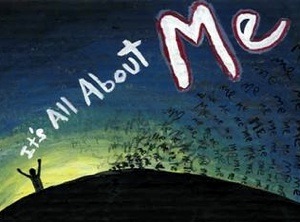
To be a Christian is to be part of God’s family. It involves having a relationship with God and with His people. In fact, the New Testament does not know of a Christian who is not part of a local assembly of believers, in other words, a local Church. When the Holy Spirit inspired letters for God’s people, they were addressed not to individual members in their homes but to local Churches. It was simply assumed that when the letter was read to the gathered Church, the people of God would be there to hear it. Christianity is not just all about you; nor is it just about you and Jesus; its about you, Jesus and all of God’s people

To be an obedient Christian, one needs to foster relationships with God’s people. None of us can DO Christianity by ourselves. We need one another. Here are 40 New Testament verses which cannot be obeyed in isolation from the Body of Christ:

Stimulate one another to love and good deeds (Heb 10:24)
Confess your sins to one another (James 5:16)
Build up one another (1 Thess 5:11)
Be of the same mind as one another (Romans 12:13, 15:5)
Comfort one another in the face of death (1 Thess 4:18)
Employ your spiritual gifts in serving one another (1 Peter 4:10)


Continue at John Samson

Monday, October 29, 2012

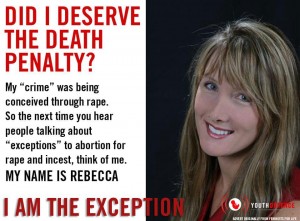
Legitimate Exceptions for Abortion?

Justin Taylor has put together an article entitled “Exceptions for Abortion?” which contains much wisdom about this very sensitive subject. He writes:


I assume by now that most readers are aware of the controversy regarding comments by candidate Richard Mourdock, who is running for Senate, regarding rape not being an exception for abortion. In a recent debate, when asked about the issue, he responded:
This is that issue that every candidate for federal, or even state, office faces, and I too stand for life. I know there are some who disagree and I respect their point of view and I believe that life begins at conception. The only exception I have [for abortion] is in that case [where] the life of the mother [is threatened]. I struggled with it for a long time, but I came to realize that life is a gift from God. And I think even when life begins in that horrible situation of rape that it is something that God intended to happen.
President Obama, through a spokesperson, “felt those comments were outrageous and demeaning to women.”

There are many angles to this story, including media ignorance, media malfeasance, political clumsiness, bioethics, and Christian witness.

Many members of the media pounced on the story, reporting that Mr. Murdock said that rapes were intended by God. Al Mohler has an important commentary on this today. He writes:
The controversy over his statements reveals the irresponsibility of so many in the media and the political arena. The characterizations and willful distortions of Mourdock’s words amount to nothing less than lies.  Continue at John Samson

Saturday, October 20, 2012

God Ordains Both the Ends and the Means

Dan Phillips, at the Pyromaniacs blog site wrote a short article entitled, “A stick, salt water, salvation — and us.”

“God works through means,” we say. 
And it’s true. In fact, He usually works through means. That is to say, God uses some portion of His creation to affect some other portion of His creation.
This is maybe better understood if we think of the one occasion in which God used no means: the creation of the universe. Unless you wish to press the thought that God used His word (Ps. 33:6), God did not create the universe by means of anything in the universe. One timeless moment; the triune God alone; the next (first!) moment, a word, and bam! — the universe.
Otherwise, He uses means. Adam must feed himself, must build a shelter. Eve must make clothes. Noah has to cut down a lot of trees. And so on.
Now, sometimes the means are plain and proportionate. Right now, I’m tapping keys, and letters are appearing on the screen. No letter appears without a tap; a tap produces a letter. Or a space. Means, simple and straightforward.  Continue at John Samson

Friday, October 19, 2012

Five Big Myths About Calvinism

I speak for many when I say that I have not always embraced the doctrines of grace or what is commonly called Calvinism. Its actually unfortunate that a man’s name is associated with the doctrines that came out of the Protestant Reformation. Calvin was not the first to articulate these truths, but merely was the chief systematizer of such doctrines. There was actually nothing in Calvin that was not first seen in Luther, and much of Luther was first found in Augustine. Luther was an Augustinian monk, of course. We would also naturally affirm that there was nothing in any of these men that was not first found in Paul and Peter and John in the New Testament.

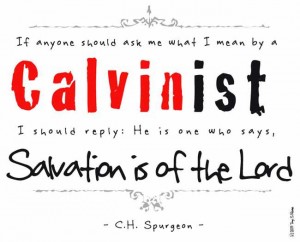
Even now, I have no desire to be a Calvinist in the Corinthian sense of the word – a follower of John Calvin, per say. Though I believe Calvin was a tremendous expositor of the Scriptures and had many great insights, I am not someone who believes he was in any way infallible. I am with Spurgeon who declared, “There is no soul living who holds more firmly to the doctrines of grace than I do, and if any man asks me whether I am ashamed to be called a Calvinist, I answer – I wish to be called nothing but a Christian; but if you ask me, do I hold the doctrinal views which were held by John Calvin, I reply, I do in the main hold them, and rejoice to avow it.” (C. H. Spurgeon, a Defense of Calvinism)   Continue at John Samson

Tuesday, October 2, 2012

Degrees of Sin

It is not uncommon to hear Christians suggesting that every sin is equal in God’s sight. Perhaps you have heard someone say something such as, “sin is sin – whether you hate someone or murder someone, it is both just the same to God.” Perhaps you have even said this sort of thing yourself. This popular idea is based on a misunderstanding of the passage in the Sermon on the Mount where Jesus said:

“You have heard that it was said to those of old, ‘You shall not murder; and whoever murders will be liable to judgment.’ But I say to you that everyone who is angry with his brother will be liable to judgment; whoever insults his brother will be liable to the council; and whoever says, ‘You fool!’ will be liable to the hell of fire…. “You have heard that it was said, ‘You shall not commit adultery.’ But I say to you that everyone who looks at a woman with lustful intent has already committed adultery with her in his heart. If your right eye causes you to sin, tear it out and throw it away. For it is better that you lose one of your members than that your whole body be thrown into hell. And if your right hand causes you to sin, cut it off and throw it away. For it is better that you lose one of your members than that your whole body go into hell.” – Matthew 5:21, 22, 27-30 ESV

Dr. R. C. Sproul in his book “The Holiness of God” explains why the concept that all sins are equal in God’s sight, is actually incorrect. He writes:  Continue at John Samson
Tuesday, September 25, 2012

The Sufficiency of Scripture

I took the few minutes needed to read this sermon today. It did my heart much good. 

The 25th Anniversary Sermon, May 23, 1993 by Dr. James Montgomery Boice

THE SUFFICIENCY OF SCRIPTURE

On a morning like this it is a temptation to reminisce over the quarter century of ministry I have had at Tenth Presbyterian Church. And I would do it, except for the fact that others have been doing it all weekend and in a much more complimentary way than I could myself— at least if I were to be honest. I could reveal a lot of things that the others are not aware of, including the disappointments and failures. But that would spoil things, and it is not what this weekend is about. It is certainly not what a worship service such as this should accomplish.

I remember that when John, the author of Revelation, fell at the feet of the angel of God to worship him, the angel replied, “Do not do it! I am a fellow servant with you and with your brothers who hold to the testimony of Jesus. Worship God!” (Revelation 19:10). So I remind you and myself that this is what we are about this morning.

And I direct you to God’s Word.

Our text is 2 Timothy 3:14, 15. “But as for you, continue in what you have learned and have become convinced of, because you know those from whom you learned it, and how from infancy you have known the holy Scriptures, which are able to make you wise for salvation through faith in Christ Jesus.”  Continue at John Samson
Wednesday, September 19, 2012

Christianity Light!

Christianity Light – not enough truth to save you, but just enough to innoculate you against the real thing!
 
No mention of the holiness of God, the sovereignty of God, the depravity of man, that sin is cosmic treason against supreme Majesty, man’s slavery and bondage to sin, his inability to even come to Christ without Divine enablement, his desperate need of forgiveness and atonement, the claims of Christ as Lord as well as Savior, repentance, justification by grace alone through faith in Christ alone, discipleship, submission to the word of God, active membership in a local church where time, talents and treasure are used to love and serve the people of God and advance His gospel. 

I know you have seen and heard it… Christianity Light (at a Church or Christian TV/Radio station near you).  Continue at John Samson

Monday, August 13, 2012

Are you Reformed?

Richard Lucas is a Resident with The NETS Institute for Church Planting and a Ph.D. candidate in New Testament at The Southern Baptist Theological Seminary. He has writen two excellent articles describing the theological map of Reformed thought:

Source: 

Perhaps the question has been posed to you at one time or another. The appropriate answer it seems depends almost as much on the questioner as the one replying. For those in the emerging “Young, Restless, and Reformed” category, they might not realize that not everyone else understands the self-describing moniker of “Reformed” in quite the same way.

I have two goals for these blog posts: 

1) to sketch out something of the landscape of those who consider themselves “Reformed”; and 

2) to provide some historical perspective to the development of the T.U.L.I.P. acronym in an effort to perhaps curb some misplaced enthusiasm.

Map of the Reformed Landscape

Here I’m merely surveying from my limited experience those who I’ve run into in the modern American Evangelical landscape. I also will focus on those groups most likely to interest readers of this blog, which is “self-consciously Evangelical, Reformational, and Baptistic.” My sympathies will become apparent as I don’t withhold my own biases along the way.  Continue at John Samson

Monday, June 18, 2012

The Illusion of an Infallible Magisterium

In an article entitled, “Who’s in Charge Here? The Illusions of Church Infallibility” Dr. Michael Horton writes:

In my experience with those who wrestle with conversion to Roman Catholicism—at least those who have professed faith in the gospel, the driving theological issue is authority. How can I be certain that what I believe is true? The gospel of free grace through the justification of sinners in Christ alone moves to the back seat. Instead of the horse, it becomes the cart. Adjustments are made in their understanding of the gospel after accepting Rome’s arguments against sola scriptura. I address these remarks to friends struggling with that issue.

Reformation Christians can agree with Augustine when he said that he would never have known the truth of God’s Word apart from the catholic church. As the minister of salvation, the church is the context and means through which we come to faith and are kept in the faith to the end. When Philip found an Ethiopian treasury secretary returning from Jerusalem reading Isaiah 53, he inquired, “Do you understand what you are reading?” “How can I,” the official replied, “unless someone guides me?” (Ac 8:30-31). Explaining the passage in the light of its fulfillment in Christ, Philip baptized the man who then “went on his way rejoicing” (v 39). 

Philip did not have to be infallible; he only had to communicate with sufficient truth and clarity the infallible Word.

For many, this kind of certainty, based on a text, is not adequate. We have to know—really know—that what we believe is an infallible interpretation of an ultimate authority. The churches of the Reformation confess that even though some passages are more difficult to understand, the basic narratives, doctrines and commands of Scripture—especially the message of Christ as that unfolds from Genesis to Revelation—is so clearly evident that even the unlearned can grasp it.   Continue at John Samson

Thursday, May 17, 2012

Well Done Phil Johnson!

This is a repost but something we should all be reminded of:
 
I loved reading Phil Johnson’s response to a comment at his Pyromaniacs blog site who wrote…
Your identity as a “Baptist”; your endless quotations from Charles Spurgeon; your faithful devotion to John MacArthur; and especially your willingness to call yourself a “Calvinist” are all huge red flags that tell me something is seriously wrong with your theology. Why do you teach a system of doctrine that is named after a mere man? Why are you following human teachers instead of going to the Bible alone? After all, 1 John 2:27 says, “The anointing which ye have received of him abideth in you, and ye need not that any man teach you.” We ought to go to Scripture alone to establish our doctrine! The truth is in God’s Holy word, not in any theological system or theology textbook developed by mere men. Isn’t that principle what the Reformation was originally about? Sola Scriptura? Didn’t even Calvin himself go to Scripture for the truth instead of reading other men? I believe that if Calvin himself wrote for this blog, he would point people to the truth in God’s Holy word, not to a theology developed by some other man.
Phil’s reply: You have seriously misunderstood sola Scriptura if you really imagine that it rules out human teachers or eliminates systematic theology. The Reformers (including Calvin) often cited the works of Augustine, Tertullian, Jerome, Cyprian, Ambrose, and others-ranging from the early church fathers through Aquinas. They didn’t follow any of them slavishly, of course, but they certainly took them seriously. Not one of the major Reformers would have tolerated the claim that because the Church Fathers were mere men they were therefore irrelevant or incapable of shedding any helpful light on tough theological questions.   Continue at John Samson