The purpose of this Blog is to introduce men and women all over the World to the Doctrines of Grace; the 5 Solas; Reformation Theology and the Lord and Savior Jesus Christ.
Showing posts with label Roman Catholicism. Show all posts

Thursday, April 17, 2014

The False Teachers: Pope Francis

A few weeks ago I set out on a series of articles through which I am scanning the history of the church—from its earliest days all the way to the present time—to examine some of Christianity’s most notable false teachers. Along the way we have visited such figures as Arius, Joseph Smith, Ellen G. White and Norman Vincent Peale. Today we will look at a man who commands more followers than perhaps any other person in the world: Jorge Mario Bergoglio, known also as Pope Francis.

Pope Francis


Jorge Mario Bergoglio was born in Buenos Aires, Argentina, on December 17, 1936, the first child of Italian immigrants Mario and Regina. He graduated from college as a chemical technician and pursued that career for a short time before entering seminary at the Diocesan Seminary of Villa Devoto. On March 11, 1958 he entered the novitiate of the Society of Jesus and over the next decade studied and taught in a variety of disciplines. He was ordained a priest in December 1969 and made his final profession with the Jesuits in April 1973.   Continue at Tim Challies

See also:  Tim Challies versus Russell Moore on Pope Francis

Friday, April 11, 2014

Is the Date of Easter of Pagan Origin?

You may have heard the claim that Christians should not celebrate Easter because of its origins. Many believe that what we call Easter today was developed as Roman Catholicism co-opted pagan festivals celebrated in different regions in honor of various false gods and goddesses. The claims are laced with names of scholars who have made connections between the names of the festivals and goddesses, the timing of the celebration, and the symbols used.

To take these scholars at their word seems charitable, but I question the wisdom of such wholesale abandonment of a celebration that is at the very heart of the Christian community and faith. Three separate issues need to be identified and evaluated: the date of the celebration, the name of the celebration, and the symbols employed in the celebration. My goal is to examine each of these ideas separately so we might understand the issue more fully, repenting of what is erroneous and embracing what is true.    Continue at Roger Patterson

Wednesday, March 12, 2014

If it Looks Like Rome …

I’ve been noticing a trend within the Reformed Presbyterian world. Many churches seem to be drawn to practices that have more in common with Rome than with Geneva. I’m not really sure what exactly the attraction is, but here are some of the things I’ve noticed, in no particular order:
  • Eucharistic liturgy
  • Intinction
  • Monastic Retreats
  • Contemplative prayer
  • Vestments
  • Observance of Ash Wednesday/Lent
It seems worthwhile, given the current fascination, to consider these practices and to ask whether they are in keeping with Scripture and our Reformed Presbyterian heritage.

First, while there are many opinions and preferences on liturgical style in worship, there is more going on here than simply responsive readings. Some churches have begun to borrow liturgy from the Catholic Eucharist mass to use in their own communion services. Most often what is used is the “mysterium fidei”   Continue at Rachel Miller

Thursday, December 12, 2013

The People's Pope, The Man of the Year

Once there was a boy so meek and modest, he was awarded a Most Humble badge. The next day, it was taken away because he wore it. Here endeth the lesson.” And here endeth the opening quote from TIME’s story to announce Pope Francis as the Person of the Year for 2013. Nancy Gibbs continues:
How do you practice humility from the most exalted throne on earth? Rarely has a new player on the world stage captured so much attention so quickly—young and old, faithful and cynical—as has Pope Francis. In his nine months in office, he has placed himself at the very center of the central conversations of our time: about wealth and poverty, fairness and justice, transparency, modernity, globalization, the role of women, the nature of marriage, the temptations of power.
For all of these reasons and more, he is a natural and obvious choice for this distinction.   Continue at Tim Challies

Wednesday, October 2, 2013

Some Thoughts on Pope Francis

It’s another week and thus another interview with Pope Francis. This one, I’m sorry to say, is more than just confusing. It’s a theological wreck.
 
In an interview with La Repubblica, in response to a question about whether there is a “single vision of good,” the Pope said, “Everyone has his own idea of good and evil and must choose to follow the good and fight evil as he conceives them. That would be enough to make the world a better place,” and “The Son of God became incarnate in the souls of men to instill the feeling of brotherhood.” When the reporter commented, “Some of my colleagues who know you told me that you will try to convert me,” the Pope also said “Proselytism is solemn nonsense, it makes no sense. We need to get to know each other, listen to each other and improve our knowledge of the world around us.”

From Augustine’s Confessions to “Well, everyone has his own ideas about good and bad…” is a mighty long path.   Continue at Russell D. Moore

Wednesday, July 31, 2013

Who Am I to Judge? The Pope, the Press, and the Predicament

Pope Francis pulled a surprise on reporters when he walked back to the press section of his Alitalia papal flight from Brazil and entered into an open press conference that lasted more than an hour. The Pope gave the press what Ronald Reagan and Bill Clinton offered as presidents—a casual question and answer session that was on the record.

The biggest headline from the Pope’s remarks was not what he had to say about the scandals at the Vatican Bank, but what he said about homosexuality and, in particular, homosexuals in the priesthood. The key sentence in the Pope’s remarks is this: “If a person is gay and seeks the Lord and has good will, who am I to judge that person?”

The papal remarks put the international press into a frenzy. Headlines across the world announced a revolution in Roman Catholic moral teaching, a changed position on homosexuality, or at least an historic “new openness” on the issue of homosexuality.   Continue at Al Mohler

Tuesday, May 28, 2013

Is the Pope Christian?

Last week Pope Francis ventured above his his pay grade with a fallible gaff of historic proportions. In his Wednesday public homily, which usually includes unscripted comments, the Pope announced for the first time in Catholic history, that even atheists can go to heaven by doing good works.

Pope gives thumbs upAdmittedly, this pontification wasn’t pronounced ex cathedra, meaning he wasn’t sitting in his “I’m infallible, so this is God’s truth even if it contradicts the Bible” seat, but still, one would expect the leader of a religion to preach a message congruent with the most elementary tenets of his own faith.

I understand that in Catholic doctrine the Pope holds the keys to the kingdom and that whatever he binds on earth is bound in heaven. But contemplate the implications for a moment. On Wednesday (May 22, 2013), heaven suddenly got bound into admitting entry to atheists. Historically, not even Baptists got into heaven, but apparently now God is obligated to let any do-gooder in, even those who don’t acknowledge Jesus at all. How ironic that he declared this on the Feast of St Rita (the patron saint of impossible things).

Here’s a quote from his sermon…    Continue at Clint Archer

Thursday, April 18, 2013

The Humble Pope

If you know anything at all about the new Pope, Pope Francis, you must know this: he is the humble Pope. From the day of his election he has been widely praised for his humility. A recent article from The Washington Post is representative, lauding him for his humble deeds.  

Over the past two weeks, with one act of humility after another, Pope Francis has proven he's willing to break with tradition. Just after being named the new pontiff, he asked the faithful to pray for him, rather than the other way around. He's refused to stand on the customary platform above other archbishops and dressed himself in simpler vestments than his predecessors. He's made a practice of shunning the rich trappings of the position, from paying his own hotel bill to opting out of the palatial apartment popes have lived in for a century in favor of simpler digs.

On Maundy Thursday it is traditional for the Pope to wash the feet of a dozen people. Where Popes have traditionally washed the feet of priests, Francis chose to wash the feet of twelve juvenile inmates. Such deeds are consistent with his legacy from Argentina where he was reputed to fly coach instead of first class and to ride public transit between home and office. These are the deeds that have proven so attractive and that stand in stark contrast to many of his predecessors.  Continue at Tim Challies

Friday, March 1, 2013

Exposing the Heresies of the Catholic Church: The Mass

The writer of Hebrews is inescapably clear about the singular nature of Christ’s sacrifice.
For Christ did not enter a holy place made with hands, a mere copy of the true one, but into heaven itself, now to appear in the presence of God for us; nor was it that He would offer Himself often, as the high priest enters the holy place year by year with blood that is not his own. Otherwise, He would have needed to suffer often since the foundation of the world; but now once at the consummation of the ages He has been manifested to put away sin by the sacrifice of Himself. And inasmuch as it is appointed for men to die once and after this comes judgment, so Christ also, having been offered once to bear the sins of many, will appear a second time for salvation without reference to sin, to those who eagerly await Him. (Hebrews 9:24-28, emphasis added)
Scripture does not waver on the finality of Christ’s sacrifice on our behalf. He came to make a one-time offering for sin, never to be repeated. It was a contrast to the Mosaic covenant, which necessitated a system of near-constant sacrifices. But none of the Old Testament sacrifices could actually atone for sin. They could only serve as a reminder of God’s deliverance and foreshadow Christ’s final sacrifice which would conquer sin.

In the practice of the mass, the Roman Catholic Church has reinstituted an unbiblical system of repeated sacrifices, blaspheming Christ and perverting His work on the cross.

How important is the mass to Catholicism? The Catechism of the Catholic Church refers to it as “the source and summit of the Christian life.” That is to say, it is the origin and the high point of the Catholic faith. It’s not peripheral—it’s the heart and soul of the entire system.    Continue at John F. MacArthur Jr.

IMAGE

Thursday, February 28, 2013

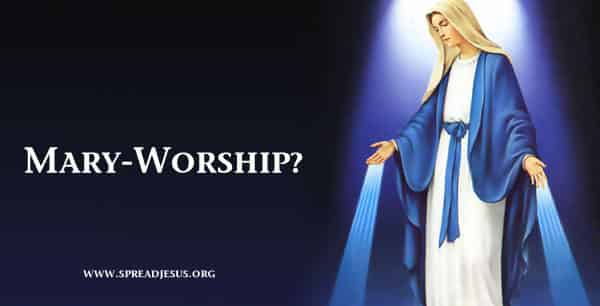
Exposing the Heresies of the Catholic Church: Mary Worship

After his prophetic vision of the eternal glories of heaven at the end of the book of Revelation, the apostle John described how he was overwhelmed by what he’d seen.
And when I heard and saw, I fell down to worship at the feet of the angel who showed me these things. But he said to me, “Do not do that. I am a fellow servant of yours and of your brethren the prophets and of those who heed the words of this book. Worship God.” (Revelation22:8-9)
The Roman Catholic Church has committed the same error as John, promoting a mere citizen of heaven to an improper place of authority and honor. Despite the overwhelming testimony of Scripture, the Catholic Church has elevated Mary—a self-described servant of the Lord (Luke 1:38)—to the same level as God, if not higher.

In his Ineffabilis Deus in 1854, Pope Pius IX established as dogma the immaculate conception of Mary, which preserved her from inheriting original sin. His concluding statements provide a good summary of the Catholic view of Mary.
Let all the children of the Catholic Church, who are so very dear to us, hear these words of ours. With a still more ardent zeal for piety, religion and love, let them continue to venerate, invoke and pray to the most Blessed Virgin Mary, Mother of God, conceived without original sin. Let them fly with utter confidence to this most sweet Mother of mercy and grace in all dangers, difficulties, needs, doubts and fears. Under her guidance, under her patronage, under her kindness and protection, nothing is to be feared; nothing is hopeless. Because, while bearing toward us a truly motherly affection and having in her care the work of our salvation, she is solicitous about the whole human race. And since she has been appointed by God to be the Queen of heaven and earth, and is exalted above all the choirs of angels and saints, and even stands at the right hand of her only-begotten Son, Jesus Christ our Lord, she presents our petitions in a most efficacious manner. What she asks, she obtains. Her pleas can never be unheard.
Those words are echoed and expanded on throughout Roman Catholic history. Tradition dictates that Mary is part of the monarchy of heaven, soliciting grace and mercy from the Lord on behalf of sinners, and covering sin by distributing from her Treasury of Merit. She became a co-redeemer with Christ in His suffering on the cross, and is now a co-mediator alongside Him in heaven—essentially an alternative avenue of access to God. She replaces the Holy Spirit in bestowing aid and comfort to believers. In effect, she becomes an additional member of the Trinity.

That blasphemy stands in sharp contrast to what Scripture actually says about Mary, and even what she says about herself. Luke 1:46-55 records her humble reaction to the news that she would give birth to the Son of God.    Continue at John F. MacArthur Jr.

Wednesday, February 27, 2013

Exposing the Heresies of the Catholic Church: The Pope

One of the major, early catalysts in the Protestant Reformation was a book by Jan Hus, a Bohemian Christian who preceded Martin Luther by a full century. The book was De Ecclesia (The Church), and one of Hus’s most profound points was proclaimed in the title of his fourth chapter: “Christ the Only Head of the Church.”

Hus wrote, “Neither is the pope the head nor are the cardinals the whole body of the holy, universal, catholic [i.e., true] church. For Christ alone is the head of that church.” Pointing out that most church leaders in his era actually despised the lordship of Christ, Hus said, “To such a low pitch is the clergy come that they hate those who preach often and call Jesus Christ Lord.”

Hus’s candor cost him his life. He was declared a heretic and burned at the stake in 1415.

More than a hundred years later, and already at odds with the papal establishment, Martin Luther read De Ecclesia. After finishing the book, he wrote to a friend, “I have hitherto taught and held all the opinions of Jan Hus unawares; so did John Staupitz. In short, we are all Hussites without knowing it.”

As the head of the Roman Catholic Church, the pope is often called the “Holy Father” and the “Vicar of Christ”—names and roles that only apply to God. He claims the ability to speak ex cathedra, exercising Godlike infallibility to add to and augment Scripture (Revelation 22:18). He wields unbiblical, unholy authority over his followers, usurping the headship of Christ and perverting the work of the Holy Spirit.

The Reformers understood that and declared it with unashamed boldness. As Martin Luther wrote to a friend, “We here are of the conviction that the papacy is the seat of the true and real Antichrist. . . . Personally I declare that I owe the Pope no other obedience than that to Antichrist.”

In his Institutes of the Christian Religion, John Calvin said:    Continue at John F. MacArthur Jr.

Tuesday, February 26, 2013

Exposing the Heresies of the Catholic Church: Grace vs. Works

The New Testament is clear about the nature of saving faith. “For we maintain that a man is justified by faith apart from works of the Law” (Romans 3:28). “A man is not justified by the works of the Law but through faith in Christ Jesus . . . since by the works of the Law no flesh will be justified” (Galatians 2:16). “But when the kindness of God our Savior and His love for mankind appeared, He saved us, not on the basis of deeds which we have done in righteousness, but according to His mercy, by the washing of regeneration and renewing by the Holy Spirit” (Titus 3:4-5).

According to Scripture, salvation is by faith in Christ alone through God’s grace alone.

When you put your trust in Jesus Christ He declares you righteous—not because you are, but because He imputes His righteousness to you, and because He paid the penalty for your sin. Christ bears our sin and we receive His righteousness. That is the indescribable glory of the doctrine of justification (2 Corinthians 5:21).

The teaching of the Roman Catholic Church stands in stark opposition to that biblical understanding. Rather than salvation by grace through faith, they preach a false gospel of works.

The words of the Council of Trent—convened to affirm and codify the teaching of the Catholic Church in response to the Reformation—clearly spell out the Catholic version of justification that still stands today. “Hence, to those who work well unto the end and trust in God, eternal life is to be offered, both as a grace mercifully promised to the sons of God through Christ Jesus, and as a reward promised by God himself, to be faithfully given to their good works and merits.” Salvation in the Catholic system is something you earn “by those very works which have been done in God, fully satisfied the divine law according to the state of this life and to have truly merited eternal life.”    Continue at John F. MacArthur Jr.

Friday, February 22, 2013

A Timely Critique of the Catholic Church

Last week Pope Benedict XVI made the historic and unexpected announcement that he will soon retire. As a result, we’re about to be inundated with a massive wave of news coverage and public discussion about the Roman Catholic Church, and specifically the search for the new pope.

In the coming days and weeks, you’re likely to find yourself in a variety of conversations about the Catholic Church with friends, family, co-workers, and neighbors—each one an opportunity to shed biblical light on a topic that everyone will be talking about. And when the Lord brings those opportunities, I want you to be able to speak with clarity and authority regarding the truth of God’s Word and the corrupt idolatry of Roman Catholicism.

The current attitude throughout much of the evangelical church is that we ought to embrace Catholics as true believers in Christ. And it’s safe to assume we’ll hear even more calls for unity and partnership with the Catholic Church in the days to come.

But reclassifying the pope, the worship of Mary, the idolatry of the mass, and the entire Roman Catholic system as authentic, biblical Christianity isn’t that simple. It has massive implications, including overturning centuries of church history, missionary effort, and martyrdom.

The fact is, the most formidable, relentless, and deceptive enemy in Satan’s long war on the truth has been Roman Catholicism. It’s an apostate, corrupt, heretical, false Christianity—a thinly veiled façade for the kingdom of Satan.   Continue at John F. MacArthur

Friday, February 15, 2013

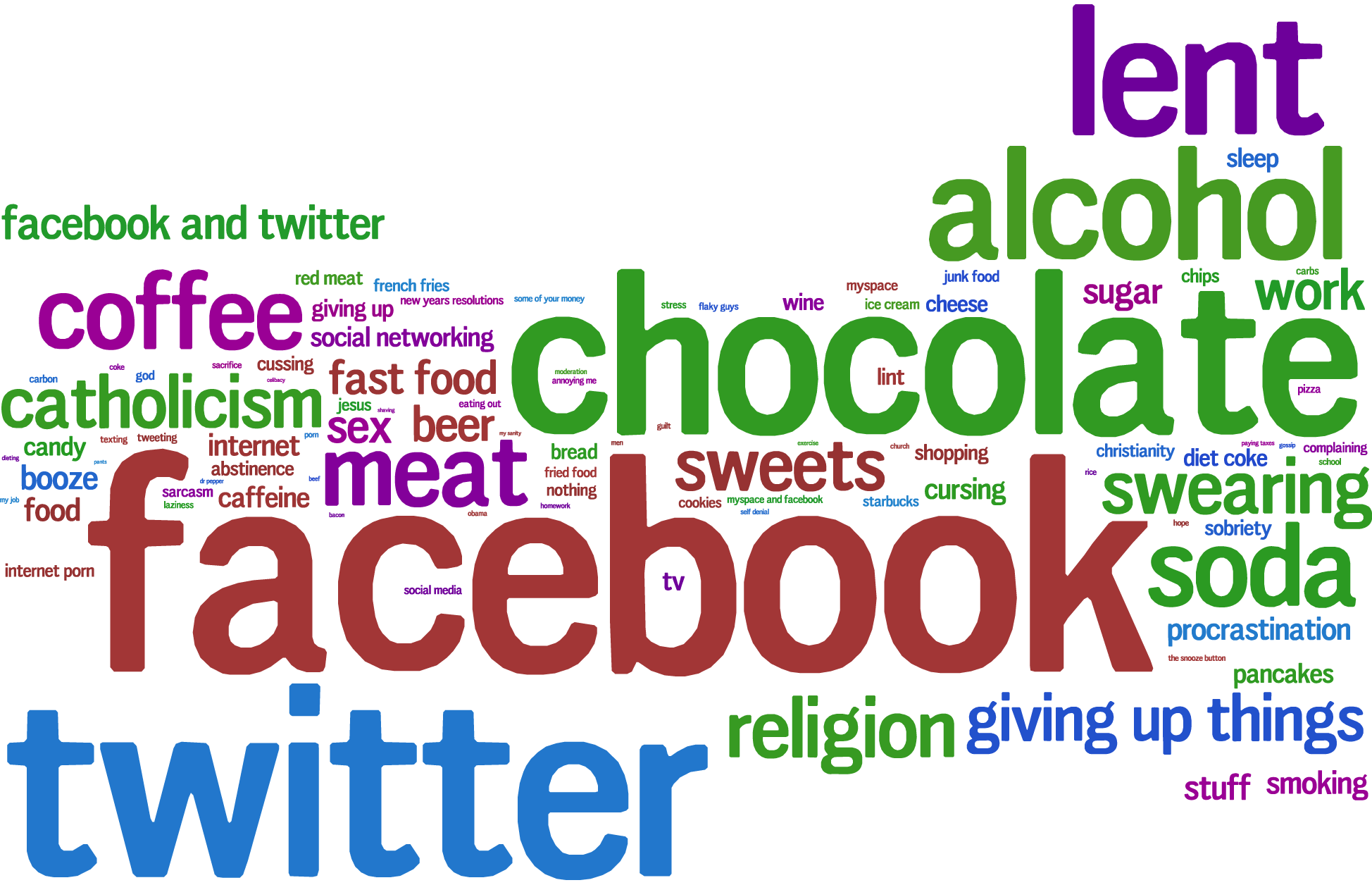
This Lent I am Giving Up . . . Reticence

I will make no bones about it: I am an Old World (for which please read 'continental European') Christian, of Puritan inclination, and a Dissenter - specifically, a Particular or Reformed Baptist. That means several things. By conviction and heritage I belong to those who left the Anglican communion as a matter of conscience, sick of its halfway reformation and unwilling to conform to the general shabbiness and unscriptural demands of the Act of Uniformity. My conscience with regard to the extra-Biblical trappings of mere religiosity is tender. My attachment to simplicity of worship as a gathered church is sincere. I am sensitive to those doctrines and practices over which my forefathers spent their energies and shed their tears and sometimes their blood, both from within and then from without the established folds of their day. I see things with an awareness tuned by walking the streets, graveyards and memorials of men and women who suffered and sometimes died for conscience' sake.

Out of such an atmosphere I cannot help but be sickened by the seeming obsession with Lent and Easter at this time of year, and Christmas at the end of the year. Please do not misunderstand me: conscience also demands that - where the cultural vestiges of a more religious society patterned to some extent on the significant events of the life of Christ provide for it - I take every legitimate opportunity to make Christ known. If an ear is even half-opened by circumstance, I willingly and cheerfully speak into it, and seek to make of it a door for the gospel. I do not see the point of making a point by not preaching about the crucifixion and resurrection of the Lord if some benighted soul wanders into the church with at least some expectation of hearing about his humiliation and exaltation.  Continue at Jeremy Walker


Tuesday, February 12, 2013

What is the Greatest of All Protestant “Heresies”?

Let us begin with a church history exam question. Cardinal Robert Bellarmine (1542–1621) was a figure not to be taken lightly. He was Pope Clement VIII’s personal theologian and one of the most able figures in the Counter-Reformation movement within sixteenth-century Roman Catholicism. On one occasion, he wrote: “The greatest of all Protestant heresies is _______ .” Complete, explain, and discuss Bellarmine’s statement.

How would you answer? What is the greatest of all Protestant heresies? Perhaps justification by faith? Perhaps Scripture alone, or one of the other Reformation watchwords?

Those answers make logical sense. But none of them completes Bellarmine’s sentence. What he wrote was: “The greatest of all Protestant heresies is assurance.”

A moment’s reflection explains why. If justification is not by faith alone, in Christ alone, by grace alone — if faith needs to be completed by works; if Christ’s work is somehow repeated; if grace is not free and sovereign, then something always needs to be done, to be “added” for final justification to be ours. That is exactly the problem. If final justification is dependent on something we have to complete it is not possible to enjoy assurance of salvation. For then, theologically, final justification is contingent and uncertain, and it is impossible for anyone (apart from special revelation, Rome conceded) to be sure of salvation. But if Christ has done everything, if justification is by grace, without contributory works; it is received by faith’s empty hands — then assurance, even “full assurance” is possible for every believer.   Continue at Sinclair Ferguson

Wednesday, January 9, 2013

Before the Word-Faith Hucksters

Before the modern Word-Faith (“name it and claim it” or “health and wealth”) preachers there was a huckster named Johann Tetzel (1465–1519). He is famous for his marketing of the medieval practice of selling indulgences with the jingle, “When the coin in the coffer rings, the soul from purgatory springs.”

What is an indulgence? According to Roman Canon Law,
An indulgence is a remission before God of the temporal punishment due to sins whose guilt has already been forgiven, which the faithful Christian who is duly disposed gains under certain prescribed conditions through the action of the Church which, as the minister of redemption, dispenses and applies with authority the treasury of the satisfactions of Christ and the saints.
According to Reinold Kiermayr, Thomas taught indulgences.
In the sixteenth century, and even well before, indulgences no longer reflected that lofty dogmatic purpose given them St. Thomas Aquinas; the medieval institution had taken on a purely revenue generating character. The theological context of indulgences or their dogmatic validity were no longer the subject of much public discussion; attention focused on their financial aspects and quite naturally their abuses (304) [Reinhold Kiermayr, “How Much Money Was Actually in the Indulgence Chest?,” Sixteenth-Century Journal 17.3 (1986): 303-18].
In the Papal Bull, Unigenitus Dei (1343) promulgated by Clement VI (an Avignon pope!), decreed both “partial” and “general” remission of temporal punishments, according to the discretion of the church.   Continue at Heidelblog

Monday, November 5, 2012

Spiritual Formation at Worship

Within spiritual formation and similar circles, there has been much criticism of worship as found in evangelical Protestantism.  Much of this criticism is aimed at the seeker-sensitive churches with their push for polished performances, entertainment, and the desire to keep the seeker (i.e. unsaved people who are attending the services) as comfortable as possible by offering them an environment and experience similar to what they would encounter at a secular gathering or concert.  The idea is that people unfamiliar with church life feel more at home and will be more likely to return if they do not encounter something foreign or “weird” in the form of worship.  This approach is obviously working, if one evaluates a church on the basis of nickels and noses, as the largest churches in the world have adopted this philosophy.   But there has been a considerable push back against this viewpoint within not only more conservative evangelical churches but also from the emergent and spiritual formation camps.  Mike King believes the church should offer an alternative experience and states, “It should be a bit odd and peculiar for visitors to enter our sanctuaries and engage in worship.  This isn’t bad.  It’s good.  It shows that we are a subculture that’s distinct.”[1]And Dan Kimball observes that “many of these very things [methods promoted by the seeker-sensitive movement] are contrary to what emerging generations value and are seeking in their spiritual experience...The things that seeker-sensitive churches removed from their churches are the very things nonbelievs want to experience if they attend a worship service.  So I don’t think there will be much controversy about bringing back all the spiritual elements and going deeper with our teaching!”[2]

It would be hoped that many who have grown tired of the splash and show of consumer-oriented, market-driven strategy would seek out biblically-based churches that major on Christ, the gospel and Scripture.  There are many churches throughout the world that are seeking to please the Lord, not the consumer, and that draw their marching orders from Scripture and not from the culture.  Some reacting to the seeker-model will head for these churches and be discipled according to biblical principles.  Continue at Gary Gilley
 

Tuesday, October 30, 2012

What Is a Cult?


 As I write about the theological characteristics of cults, I think of my own ten-year involvement in the Jehovah’s Witnesses. Deliverance from the organization and salvation came when I acknowledged my spiritual condition (Rom. 3:23; Eph. 2:1) and placed my faith in the Christ of the Bible (John 20:28). Assurance of eternal life was found in Him alone (1 John 5:10–13). I also am reminded of many friends who have been delivered from the Jehovah’s Witnesses and other cults.


How many cults there are today cannot be stated precisely. It has been estimated that there could be as many as five thousand worldwide, with 150 million adherents (The Encyclopedia of Cults and New Religions, Harvest House Publishers, 1999, p. xvii).

With these statistics, Christians certainly cannot ignore the existence of cults, and their adherents should be viewed as a significant mission field. Many persons in these groups once attended, or were members of, mainstream Christian churches.

What Is a Cult?

The term cult has different meanings. How is it used in this article? Dr. Ronald Enroth explains that “we define the word ‘cult’ to mean a group of religious people whose belief system and practices deviate significantly from and often contradict the Holy Scriptures as interpreted by orthodox, biblical Christianity and as expressed in such statements as the Apostles’ Creed” (Evangelizing the Cults, Servant Publications, 1990, p. 11).

Judgment and Scriptural Warnings
For many, the exposure of religious error is not popular and is often criticized as being negative, but Scripture is clear regarding the responsibility that Christians have. In place of the often misused, “Judge not” (Matt. 7:1 KJV) — hypocritical judgment — this portion of the Sermon on the Mount requires one to judge (Matt. 7:6,15–20). It is mandated and necessary.  Continue at  Edmond Gruss

Thursday, October 25, 2012

Misunderstanding Vatican II


I think Evangelicals and Catholics Together (ECT) and similar efforts to make common cause with Roman Catholics are based on a fundamental misunderstanding of where the Roman Catholic Church is theologically and what it actually teaches. There is no question that the Roman Catholic Church has changed since the sixteenth century. But the changes have not closed the gap between Rome and Protestantism. Indeed, the differences are greater now. For instance, the formally defined proclamation of the infallibility of the pope and all of the Mariology statements have come since the Reformation. Neither has Rome backed down from any of the positions it took in the sixteenth-century debate. In the updated Catechism of the Catholic Church, released in the mid-1990s, the treasury of merit, purgatory, indulgences, justification through the sacraments, and other doctrines were reaffirmed.

I think this misunderstanding has been driven primarily by confusion over the significance of Vatican Council II (1962–65). It was only the second ecumenical council of the Roman Catholic Church since Trent, the other being Vatican Council I (1869–70). So, these councils are rare events, and the church and the world were surprised when Pope John XXIII convened Vatican II.

The statements produced by Vatican I referred to Protestants as schismatics and heretics. In marked contrast, the rhetoric of Vatican II was kind, warm, and appeasing. Protestants were called “separated brethren.” John’s passion, which he set forth in a pastoral letter, was that the Lord’s sheepfold would be one. There should be unity under one shepherd, he said, with all Christians returning to Holy Mother Church under the Roman pontiff. John was seen as kind, avuncular, and warm, so people jumped to the conclusion that Rome had changed its theology. However, many overlooked the fact that John ruled out any debate about justification at Vatican II.  Continue at R. C. Sproul

Friday, October 12, 2012

What Happened at Vatican II (And How to Pray 50 Years Later)


It was fifty years ago today that Roman Catholicism launched what many consider to be the most ambitious of its 21 ecumenical councils. Called the Second Vatican Council, or Vatican II, the three-plus-year series of gatherings began under Pope John XXIII on October 11, 1962, and concluded under Pope Paul VI on December 8, 1965. Half a century later, Vatican II remains the most recent of Catholicism’s official worldwide councils.

For those of us younger than 50, all we’ve experienced of Roman Catholicism, whether from within or without, comes to us through the lens and practices of Vatican II. It’s an important reality to be aware of as we try to make sense of the (appropriately) deep rift between Protestants and Catholics on many central issues, and as we learn to get over our chronological snobbery and become aware of the full history of the church in her first fifteen centuries, and her unusual last half millennium.

Why Vatican II?


In October 1958, Italian cardinal Angelo Giuseppe Roncalli was elected pope at the age of 77. Ascending to the papacy at such an old age, he was expected to be a mere caretaker and bridge the short gap to the next ecclesiastical head. But less than three months into office, in January of 1959, he surprised many by calling for the convening of an ecumenical council. Over two years of formal preparations went into launching the meetings on October 11, 1962. It was the first council to be called in almost a century (Vatican I ended in 1870), and only the third since the Reformation (the Council of Trent spanned 1545 to 1563).

Many have summarized the core purpose of the council as adapting Roman Catholicism to the modern world. Summoning and beginning the council proved to be John XXIII’s most significant work as pope, as he died midway through the council on June 3, 1963.   Continue at David Mathis