The purpose of this Blog is to introduce men and women all over the World to the Doctrines of Grace; the 5 Solas; Reformation Theology and the Lord and Savior Jesus Christ.
Showing posts with label Holiness. Show all posts

Tuesday, November 26, 2013

Are You Chasing Happiness or Holiness?

Permalink
Such a question actually reveals a common mistake of pitting holiness and happiness against each other. “God is more interested in you being holy than happy,” so the line goes.

One of my favorite theologians falls prey to this subtle dichotomy in a book to be released next year. Overall it’s a great book (with plenty of strengths to commend later), but here I want to make a friendly amendment to these few paragraphs from it:

In this psychological world, the God of love is a God of love precisely and only because he offers us inward balm. Empty, distracted, meandering, and dissatisfied, we come to him for help. Fill us, we ask, with a sense of completeness! Fill our emptiness! Give us a sense of direction amid the mass of competing ways and voices in the modern world! Fill the aching emptiness within!

This is how many in the church today, especially in the evangelical church, are thinking. It is how they are praying. They are yearning for something more real within themselves than what they currently have. This is true of adults and of teenagers as well. Yes, we say earnestly, hopefully, maybe even a little wistfully, be to us the God of love!

Those who live in this psychological world think differently from those who inhabit a moral world. In a psychological world, we want therapy; in a moral world, a world of right and wrong and good and evil, we want redemption. In a psychological world, we want to be happy. In a moral world, we want to be holy. In the one, we want to feel good but in the other we want to be good.   Continue at Tony Reinke

Tuesday, November 12, 2013

Where Have all the Godly Men Gone?


Where have all the godly men gone? These days I ponder that question with increased frequency and concern. If the lack of godly men were only a matter of personality or ministerial preference, then little would be lost. Such is not the case, though. The church is in great need of awakening and renewal; and, in the spirit of Richard Baxter, its greatest need might well be godly men.

Not that long ago, “man of God” was a common and honored descriptor in the church. The phrase ranked alongside “great preacher,” “brilliant theologian,” or “gifted writer” in frequency and surpassed them in value. Now, it seems as though the designation “man of God” has gone the way of the bus ministry and the youth choir—a largely passé referent to a bygone era of church life.

It is as though someone snuck into the shopping mall of the Kingdom and changed all the price tags, upsetting and inverting God’s value system. We have increased the mundane and ancillary aspects of Christian ministry, all the while cheapening its true virtues and values. In God’s economy, though, character is valued over talent, and holiness over giftedness.  Continue at Jason K. Allen

Monday, November 11, 2013

The Nature of Sanctification and Gospel Holiness

Paul's prayer for Christians is that the God of peace would sanctify them completely (1 Thess. 5:23). His assurance is that 'he is faithful, who will do it' (v. 24). 

From this prayer we learn firstly, that the one who sanctifies us is God. As God gave us our beings, so he gives us our holiness. It is not by nature but by grace that we are made holy. Secondly, we learn that the one who sanctifies us is emphatically declared to be God himself. If God does not do it, no?one else will. And thirdly, we learn that the one who sanctifies us is the 'God of peace' (Rom. 15:33; 16:20; 2 Cor. 13:11; Phil. 4:9; Hel). 13:20). 

Sanctified by the God of peace

Sanctification is a fruit of that peace with God which he has made and prepared for us byJesus Christ. 'God was in Christ reconciling the world to himself' (2 Con. 5:19).

God, by sanctifying our natures, keeps that peace which we have with him. It is holiness that keeps up a sense of peace with God, and prevents those spiritual sins which still tend to break out from the corrupt nature still left within us. So God, as the author of our peace, is also the author of our holiness.  Continue at Banner of Truth

Thursday, September 19, 2013

Biblical Holiness

21 Therefore what benefit were you then deriving from the things of which you are now ashamed? For the outcome of those things is death. 22 But now having been freed from sin and enslaved to God, you derive your benefit, resulting in sanctification, and the outcome, eternal life. 23 For the wages of sin is death, but the free gift of God is eternal life in Christ Jesus our Lord.  (Romans 6:21-23 NASB)
Holiness is one of those subjects that everyone seems to know everything it pertains to, but no one knows how to define. What is it? If you look up “Holiness” in a dictionary, it will tell you that it means to be “Holy.” That is not a lot of help is it? What does the word “Holy” mean? One dictionary definition is, “exalted or worthy of complete devotion as one perfect in goodness and righteousness.” Of course, that could only be speaking of God.

A synonym for “Holiness” is “Sanctification.” If we look it up, it is defined as “the state of growing in divine grace as a result of Christian commitment after baptism or conversion.” That’s close. A believer’s holiness comes as he or she matures in Christ through grace. It comes from there, but what are its qualities? As a believer’s mature they begin to take on Christ’s very character. They become Christ-like. One of the “fruits” of salvation, a huge part of the godly treasury of the Heart, is separation from the World. What does this mean?   Continue at Mike Ratliff

Thursday, June 27, 2013

The Joy of Not Sinning

I think it is a question every Christian would all like to ask God, given the opportunity. It is an honest question. A humble one, I hope. If you have the ability to immediately destroy and remove all of a Christian’s sin the very moment he puts his faith in Jesus Christ, why don’t you? Why didn’t you?

There is always a good bit of debate in the Christian world about exactly how God sanctifies us and how human effort relates to divine work. Whatever we believe about sanctification, we know it is a lifelong battle and we know it is a difficult one. The difficulty is related to the extent of our depravity, the fact that the effects of sin extend to our every part, to our minds, our hearts, our wills, even our bodies. We could give every moment of every day to the battle against sin and still die as deeply sinful people. Every Christian will die much more holy than he was when he first put his faith in Jesus Christ, but a lot less holy than he would like and probably a lot less holy than he would have imagined.  Continue at Tim Challies

Friday, June 21, 2013

Changed From the Inside Out

Although heaven will be our first encounter with true, complete perfection, the Lord is already at work in the lives of His people preparing us for that perfection.

God begins the process of perfecting us from the moment we are converted from unbelief to faith in Christ. The Holy Spirit regenerates us. He gives us new hearts with new, holy desires (Ezekiel 36:26). He transforms our stubborn wills. He opens our hearts to embrace the truth rather than reject it, to believe rather than doubt. He gives us a hunger for righteousness and a desire for Him. Thus the new birth transforms the inner person. From that point, everything that occurs in our lives—good or bad—God uses to make us like Christ (Romans 8:28–30).

In terms of our moral and legal status, believers are judged perfect immediately—not on the basis of who we are or what we have done, but because of what Christ has done for us. We are forgiven of all our sin. We are clothed with a perfect righteousness (Isaiah 61:10; Romans 4:5), which instantly gives us a standing before God without any fear of condemnation (Romans 5:1; 8:1). And when Paul writes that God has “raised us up with Him, and seated us with Him in the heavenly places in Christ Jesus” (Ephesians 2:6), he is again speaking of this position of favor with God that we have been granted by grace alone.

We are not literally, physically seated with Christ in the heavenlies, of course. We are not mystically present there through some kind of spiritual telepathy. But legally, in the eternal court of God, we have been granted full rights to heaven. That is the high legal standing we enjoy even now, on this side of heaven.    Continue at John F. MacArthur

IMAGE

Tuesday, June 18, 2013

The Pitfalls and Joys of "Trying Harder"

I recently wrote a brief defense of the importance of personal effort (or “trying harder”) in God’s gracious design to transform His saints. My central claim was that we put ourselves at odds with the NT if we understand or teach the dynamic of sanctification in a way that devalues or strongly cautions against hard work.

But that doesn’t mean emphasizing hard work has no attendant hazards.

Bob Hayton wrote of one of these pitfalls in a post last summer: Particular Pitfalls of Independent Baptists: Performance-Based Sanctification.
Work hard, feel good; blow it and feel terrible. Where is the
confidence in God’s grace in this model? The secret to living victoriously for Christ is gritting your teeth, doing more, and not doing the things you shouldn’t do. Try, try, try. Harder, harder, harder! Don’t quit. Keep going. We say that salvation is by grace, but growing in Christ is about the will power, the commitment and the determination.
This can lead to despair or a terrible form of pride.
The solution Bob advocates (citing Terry Rayburn and Tim Kellar, in part) is to reject trying harder, and focus exclusively on faith. Several Reformed leaders have emphasized a similar perspective in recent years (with a burst of back and forth on the Web beginning in the summer of 2011, see the table posting tomorrow), Tullian Tchividjian and Sean Lucas among them.

My purpose here is to explore the problem Bob and others have described. Perhaps we can come to more fully understand it.

The “just preach the gospel to yourself” view of sanctification has a legitimate complaint when it describes the despair-pride yo-yo experience many believers go through. I’ve not only met Christians like this but have done my share of bouncing up down as well. Whatever might be lacking in the “just preach to yourself” or “gospel centered” model, it’s advocates are right that a state of alternating inner turmoil and arrogance cannot be what Christ and the apostles had in mind in the New Testament.   Continue at Aaron Blumer

Saturday, May 11, 2013

The Heresy of Perfectionism

An ancient heresy of the distinction between two types of Christians, carnal and Spirit-filled, is the heresy of perfectionism. Perfectionism teaches that there is a class of Christians who achieve moral perfection in this life. To be sure, credit is given to the Holy Spirit as the agent who brings total victory over sin to the Christian. But there is a kind of elitism in perfectionism, a feeling that those who have achieved perfection are somehow greater than other Christians. The “perfect” ones do not officially—take credit for their state, but smugness and pride have a way of creeping in.
The peril of perfectionism is that it seriously distorts the human mind. Imagine the contortions through which we must put ourselves to delude us into thinking that we have in fact achieved a state of sinlessness.


Inevitably the error of perfectionism breeds one, or usually two, deadly delusions. To convince ourselves that we have achieved sinlessness, we must either suffer from a radical overestimation of our moral performance or we must seriously underestimate the requirements of God’s law. The irony of perfectionism is this: Though it seeks to distance itself from antinomianism, it relentlessly and inevitably comes full circle to the same error.    Continue at R. C. Sproul

Monday, December 24, 2012

How Could I Sin?

Father, how could I sin?

Having seen your hatred for sin and your love for righteousness, how could I sin?

I have seen the fullness of your just anger borne by Christ for me. How could I be speak angrily to others?
cross

I have seen your patience with me through decades of rebellion. How could I be impatient with others?

I have seen how you work the evil of others for good. How could I be bitter?

I have seen your seeking, adopting, pursuing, and wooing love. How could I turn a blind eye to those seeking love from me?

I have seen your mercy, compassion, and willingness to condescend to help me. How could I stand over others and judge?

I have seen Jesus, the King of Creation, receiving insults and mocking. How could I live for the approval of other people?

I have seen Jesus drinking a cup of wrath from your hand when all he deserved was worship from our mouths. How could I covet something better than what I’ve been given?

I have seen my dying Saviour, and in that moment, I saw what I deserved. How could I complain against your providence in my life?

I have seen the agony of your Son. How could I delight in what caused it?   Continue at Julian Freeman

Saturday, December 1, 2012

Striving After Godliness Should Not Be So Controversial: Responding to the CT Reviews

I was surprised to learn on Monday that Christianity Today was running four reviews of my new book The Hole in Our Holiness. I consider it a sign of respect that they think the book deserving of this kind of analysis. I’m grateful too for the invitation to round out this week of reviews with a response of my own. Though I’m hesitant to respond—because rejoinders often appear (or are!) defensive and thin-skinned—I’ll venture a few thoughts on each review.

Erik Raymond has written the sort of review every author enjoys. He understands the book, appreciates the book, and recommends the book. I’m particularly grateful that Raymond sees, and agrees with, my emphasis on grace-based effort and my use of various confessions. Since both of these points were criticized by others in this series, it’s good to see not everyone considered these elements to be mistaken. I’m thankful for Raymond’s kind, encouraging review.

Mark Labberton and Tyler Braun hit on different themes, but both have written the same sort of review. They like a lot about the book, but would have said more or less in some areas. Since the book was short, 146 under-sized pages, there is certainly more that could have been said about a number of important issues. Labberton wishes I would have said more about what lies beneath the biblical call to holiness (and our dismissal of it) and the public implications of a holy life. It’s hard to know how to respond to this criticism except to say I addressed some of both, but could have done more. I could have talked more about consumerism and social justice and (especially) the kingdom, as Labberton suggests. I also could have talked more about abortion, statism, and religious liberty. Holiness touches on all of life, so almost any topic would have been fair game. As a pastor, I addressed the sorts of issues I see people struggling with most and the issues talked about most directly and most frequently in the New Testament. That leads us to recurring concerns with sexual immorality, relational sins, and vices associated with the breaking of the Ten Commandments.   Continue at Kevin DeYoung

Thank God that Christians Are Not Totally Depraved

One of the most pressing concerns in Reformed churches today is the importance of getting the gospel right. Recently, Reformed churches have had to oppose the Federal Vision theology, which compromises justification by inserting good works into the definition of faith.  Unfortunately, Christians tend to defend doctrines by erring in the opposite direction. So it is that Reformed churches are presently facing a corruption of the gospel by the virtual denial of sanctification and good works.

In the context of this situation, Tullian Tchividjian has written a blog post addressing the first of the five points of Calvinism, total depravity, which defines the full extent of man's problem in sin. Tchividjian asks, "Are Christians Totally Depraved?" and answers, Yes.  Regenerate believers in Christ are, he says, totally depraved. It is true, he admits, that Christians differ from unbelievers in that God's grace has enabled us to believe the gospel, yet total depravity describes both believers and unbelievers with respect to our inability to live so as to please God. He concludes his post with a punchy summary: "Because of total depravity, you and I were desperate for God's grace before we were saved. Because of total depravity, you and I remain desperate for God's grace even after we're saved."

What's wrong with a statement like this, the point of which is to exalt God's grace? The problem is that Tchividjian teaches that, apart from our change in legal status through justification, Christians are in the same spiritual condition after regeneration as before. Unbelievers are totally depraved and Christians are totally depraved; the same condition describes them both.   Continue at Rick Phillips

Wednesday, November 28, 2012

Deconstructing Puritanism

My friend Tullian picks up on a post by Trevin Wax, “Beware the Puritan Paralysis” in which the latter cautions us about a tendency to introspection. He makes a very important point:
Too many times, we dress up our introspection with flowery terms like “accountability” and “mortification” and “gospel-centered change.” Even if all these terms and concepts are good and needed, if our gaze is constantly inward-focused, then we are as self-centered as the Christian who is consumed with seeking personal pleasure apart from God.
To this we should all say “Amen!” Where we should dissent, however, is the broad brush with which British Reformed theology of the 16th and 17th centuries is painted.

The first problem is terminological. It was one thing for British Reformed writers to speak of themselves as “Puritans” and another for us to do it. Consider how difficult it is for us to define the noun “evangelical.” In Deconstructing Evangelicalism Darryl Hart has argued that there isn’t any such thing as “evangelicalism,” that there isn’t a sufficient number of commonalities to add up to a unified thing “evangelicalism.” If one wants to start an argument at the Evangelical Theological Society just give a paper reading popular “evangelicals” out of “the evangelical movement.” It was controversial to say that Clark Pinnock (who taught, among other things, that the future is genuinely open to God) is not an “evangelical.”   Continue at R. Scott Clark

Saturday, November 24, 2012

Beware the Puritan Paralysis


Hyper-introspection is just a spiritualized way of being self-centered.

I spoke at a leadership conference recently, and one of the points I made was The ministry is not about you. In the Q&A, there was some discussion about how pastors can focus attention making sure it’s not about them. At that point, I said, ”If you focus all your energy on making sure it’s not about you, then it is still about you.” 

The key for a gospel-driven leader is this: remember to forget yourself.

Too many times, we dress up our introspection with flowery terms like “accountability” and “mortification” and “gospel-centered change.” Even if all these terms and concepts are good and needed, if our gaze is constantly inward-focused, then we are as self-centered as the Christian who is consumed with seeking personal pleasure apart from God.

We can avoid this type of introspection by avoiding the pitfalls of some of the Puritans. Though the Reformers sought to emphasize the assurance we can have because of God’s grace in election and salvation, their descendants sometimes undercut the beauty of assurance by stressing the fruit of sanctification more than the fact of justification. Self-examination was a “descending into our own hearts” to root out every possible sinful tendency and desire.

Beware the paralysis that comes from this type of introspection. If our goal is to discover, analyze, and root out every aspect of sinfulness in our hearts, then we will never come to the end of the task.    Continue at Trevin Wax

Wednesday, November 21, 2012

Soli Deo Gloria

We use the phrase glory of God so often that it tends to lose its biblical force. But this glory, like the sun, is no less blazing— and no less beneficial—because people ignore it. Yet, God hates to be ignored. “Mark this, then, you who forget God, lest I tear you apart, and there be none to deliver!” (Ps. 50:22). So let’s focus again on the glory of God. What is God’s glory, and how important is it?

What Is the Glory of God?

The glory of God is the holiness of God put on display. That is, it is the infinite worth of God made manifest. Notice how Isaiah shifts from “holy” to “glory”: “Holy, holy, holy is the Lord of hosts; the whole earth is full of his glory!” (Isa. 6:3). When the holiness of God fills the earth for people to see, it is called glory.

The basic meaning of holy is “separated from the common.” Thus, the holiness of God is His infinite “separation” from all that is common. It is what makes Him the infinite “one of a kind”—like the rarest and most perfect diamond in the world—only there are no other diamond-gods. God’s uniqueness as the only God—His “Godness”— makes Him infinitely valuable, or holy.

In speaking of God’s glory, the Bible assumes that this infinite value has entered creation. It has, as it were, shined. God’s glory is the radiance of His holiness, the out-streaming of His infinite value. And when it streams out, it is seen as beautiful and great. It has both infinite quality and magnitude. So, we may define God’s glory as the beauty and greatness of His manifold perfections.

I say “manifold perfections” because specific aspects of God’s being are said to have glory. For example, we read of “the glory of his grace” (Eph. 1:6) and “the glory of his might” (2 Thess. 1:9). God Himself is glorious because He is the perfect unity of all His manifold and glorious perfections.   Continue at John Piper

Saturday, November 17, 2012

How to Rout Sin


The truth is that we all sin. But it’s also true that we have the power to overcome sin. Consider Paul’s argument in Romans 6. He tells us that we have died to sin (Rom 6:2) and that the body of sin has been brought to nothing (Rom 6:6). He argues further that we are free from sin (Rom 6:7) and that sin will have no dominion over our bodies (Rom 6:14). This happened, says Paul, when we believed in Christ. Thus, we died with him in a death like his and were raised in a resurrection like his (Rom 6:3–5). In short, sin died when you believed.

Still, no one is sinless (1 John 1:10; cf. Rom 7). Remarkably, we both live with the power to overcome sin and yet daily battle sin. The tension between these two opposing principles will not disappear this side of eternity. Sin and the power to overcome it through the Spirit (Rom 8:4) describe the our life-long dual. This rough fabric of sin rubs against our flesh, causing all sorts discomfort and pain. At the same time, the smooth silk of holiness is a balm and refreshment to us. We wear a garment sewn with both cloths, though we true believers only want the garment of holiness.

It is because of this tension that believers must learn to rout sin. After all, if we have the power to overcome sin, we had better learn to use that power. A major reason why our fight against sin seems powerless is because we have wrong views of sanctification. There are about four ways people try to rout sin. The first three ways unconsciously weave sin into our coats, while the last way allows believers wear a a coat of holiness. To be clear, I am not advocating a sinless existence before Christ returns, but I am advocating that through the Spirit we can put to death the deeds of the flesh (Rom 8:13).   Continue at Wyatt Graham

Wednesday, November 14, 2012

The Biggest Lie About Law?

One of the commonest errors about law relative to Christian conduct is that God no longer uses fear or laws to promote Christian conduct.

I was born and raised in a fundamentalist milieu that was at times excessive in its proliferation of rules and regulations. I recognize quite freely that this tendency, while commencing as a well-intentioned pursuit of godliness, in many instances offered fertile soil for the wickedness of self-aggrandizing Pharisaism, fear-driven authoritariainism, and the diminution of the gospel of the grace of God.

Still, I was uncomfortable when I read recently that “rules and regulations…bring about a kind of religious moralism that is very far from genuine Christianity” and, further, that such rules de facto reflect a sort of fear that is incompatible with faith.

Why was I uncomfortable? Well, because the New Testament is filled with fear-motivated rules and regulations that function as legitimate self-disciplinary tools for the promotion of true Christian godliness. Note the following:
  • “Great fear” induced the early church not to lie (Acts 5:5, 11 cf. 19:17ff).
  • Paul exhorts us as believers to “purify ourselves from everything that contaminates body and spirit, perfecting holiness out of fear for God” (2 Cor 7:1).
  • Paul tells slaves to “be obedient to those who are your masters according to the flesh, with fear and trembling, in the sincerity of your heart, as to Christ” (Eph 6:5).
  • Paul tells his readers, “As you have always obeyed—not only in my presence, but now much more in my absence—continue to work out your salvation with fear and trembling” (Phil 2:12).   Continue at Mark Snoeberger

Friday, November 2, 2012

The Discipline of Adversity

Over the past couple of months, I have been writing a series of reflections on Jerry Bridges’ book The Discipline of Grace. This is such an important book—a true contemporary classic—that teaches the centrality of the gospel in the life of the Christian. Bridges was writing about gospel-centeredness long before gospel-centeredness was all the rage.

All throughout the book Bridges has shared a series of disciplines the Christian must develop as he pursues holiness. “We have seen that we must behold Christ in the gospel, we must learn the proper relationship of dependence and personal discipline, we must make a commitment to holiness, and we must develop Bible-based convictions. In the everyday application of Scripture we must learn to make the right choices, to mortify sin, and to watch against temptation.” These are all things we must do if we are to make progress in the pursuit of holiness. Though we maintain dependence upon the Holy Spirit to grow in holiness, still we must act and still we must discipline ourselves.

But there is one discipline that we do not undertake ourselves. Instead, the Lord imposes it upon us as  a means of spiritual growth. This is the discipline of adversity. In the final chapter Bridges looks to Hebrews 12:4-13, a classic passage on how the Lord disciplines us for our good. It is noteworthy that a passage on the Lord’s discipline begins with an encouragement. The author of the letter to the Hebrews encourages the recipients of the letter by telling them that the Lord disciplines the ones he loves, just as a father lovingly disciplines his own children. Says Bridges, “We should realize that God’s discipline, which comes to us in the form of adversity or hardship, is an indication of His loving care, not a token of His disfavor.”   Continue at Tim Challies

Friday, October 19, 2012

Five Big Myths About Calvinism

I speak for many when I say that I have not always embraced the doctrines of grace or what is commonly called Calvinism. Its actually unfortunate that a man’s name is associated with the doctrines that came out of the Protestant Reformation. Calvin was not the first to articulate these truths, but merely was the chief systematizer of such doctrines. There was actually nothing in Calvin that was not first seen in Luther, and much of Luther was first found in Augustine. Luther was an Augustinian monk, of course. We would also naturally affirm that there was nothing in any of these men that was not first found in Paul and Peter and John in the New Testament.

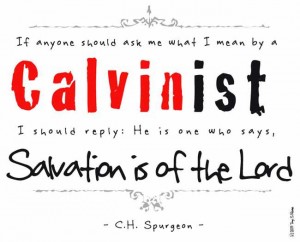
Even now, I have no desire to be a Calvinist in the Corinthian sense of the word – a follower of John Calvin, per say. Though I believe Calvin was a tremendous expositor of the Scriptures and had many great insights, I am not someone who believes he was in any way infallible. I am with Spurgeon who declared, “There is no soul living who holds more firmly to the doctrines of grace than I do, and if any man asks me whether I am ashamed to be called a Calvinist, I answer – I wish to be called nothing but a Christian; but if you ask me, do I hold the doctrinal views which were held by John Calvin, I reply, I do in the main hold them, and rejoice to avow it.” (C. H. Spurgeon, a Defense of Calvinism)   Continue at John Samson

Wednesday, October 17, 2012

25 Marks of a Backslidden Christian


I don’t hear much about the danger of “backsliding” these days. It seems that was something my friends and I were concerned about 20 years ago. We talked about it, prayed against it, and sought to keep Jesus always before us as our greatest hope and satisfaction. It wasn’t like we were about to fall right off the spiritual map by denying Jesus and jumping into scandalous sin, but we knew that we do in fact have hearts that are, as the hymn says, “prone to wander.” And I am no better today.
If there is one consideration more humbling than another to a spiritually-minded believer, it is, after all God has done for him,–after all the rich displays of his grace, the patience and tenderness of his instructions, the repeated discipline of his covenant, the tokens of love received, and the lessons of experience learned, there should still exist in the heart a principle, the tendency which is to secret, perpetual, and alarming departure from God.
- Octavius Winslow, Personal Declension
But even if we acknowledge that we remain sinners and can find ourselves in a dangerous spiritual state, do we know what such a state really looks like? I’m not so sure. Some liken it to big public failure, and this leaves them thinking they are safe when in fact they may be in a very bad way. In the classic Vital Godliness, William Plumer said, “Many are kept from owning their backslidings, because they are mercifully restrained from open sins. Had they publicly fallen into overt iniquity, they would blush, and be ashamed; they would bewail their wickedness before God and men. But as yet all is secret. They are merely backsliders in heart.”

What Does Backsliding Look Like?

In his book, Revival, Richard Owen Robert lays 25 evidences of a backslidden condition. He expounds on each, but I’ll just give you the points here. Consider them seriously.

1. When prayer ceases to be a vital part of a professing Christian’s life, backsliding is present.

2. When the quest for biblical truth ceases and one grows content with the knowledge of eternal things already acquired, there can be no mistaking the presence of backsliding.   Continue at Joe Thorn

Wednesday, October 3, 2012

Vital Union with Christ and Sanctification in Jonathan Edwards

One of the interesting connections Edwards makes on the topic of sanctification is found in his sermon on 2 Corinthians 5:8 delivered at David Brainerd’s funeral on October 12, 1747. There, in one section, Edwards connects sanctification within his broad (and glorious) worldview. Edwards makes the following points:
  • Sanctification is the progressive emerging of Christ’s holiness in our lives through (a) our vision of Christ’s glory, and (b) our union with Christ by the Spirit.
  • We see Christ’s glory partially now, therefore our transformation can only be incomplete in this life.
  • We experience vital union with Christ partially now, therefore our holiness will never fully emerge in this life.
  • In death we behold Christ’s full glory (beatific vision), and there our sanctification is complete (glorification).
  • In death all hindrances to experiencing vital union with Christ are removed, and there our sanctification is complete (glorification).
It’s interesting how Edwards merges here two key themes of sanctification: (1) vital union with Christ in progressive sanctification, and (2) our sight of Christ’s glory in progressive sanctification. Those two realities are really one reality for Edwards. To see Christ’s glory is to experience unhindered union with Him. The beatific vision of Christ perfects our vital union with Christ. And it’s at that point his holiness will then flow unhindered in our lives, to our delight and to God’s glory.

All that may be a little more than we would wish to hear at a funeral sermon, but nevertheless it’s here in Edwards, and here it is in his own words (Works, 25:230–232):

III. The souls of true saints, when absent from the body, go to be with Jesus Christ, as they are brought into a most perfect conformity to, and union with him. Their spiritual conformity is begun while they are in the body; here beholding as in a glass, the glory of the Lord, they are changed into the same image: but when they come to see him as he is, in heaven, then they become like him, in another manner. That perfect right will abolish all remains of deformity, disagreement and sinful unlikeness; as all darkness is abolished before the full blaze of the sun’s meridian light: it is impossible that the least degree of obscurity should remain before such light. So it is impossible the least degree of sin and spiritual deformity should remain, in such a view of the spiritual beauty and glory of Christ, as the saints enjoy in heaven when they see that Sun of righteousness without a cloud; they themselves shine forth as the sun, and shall be as little suns, without a spot.   Continue at Tony