The purpose of this Blog is to introduce men and women all over the World to the Doctrines of Grace; the 5 Solas; Reformation Theology and the Lord and Savior Jesus Christ.
Showing posts with label Infallibility. Show all posts

Wednesday, November 28, 2012

16 Rules of Bible Interpretation

Jesus, in the preamble to quoting a verse from the Old Testament said, “…have you not read what was spoken to you by God…” (Matt. 22:31). He then went on to quote a verse from the book of Genesis. Think about that for a moment. Jesus believed (and held people accountable for doing so) that when someone read a verse from the Old Testament, they were reading something spoken to them by God. That is a very high view of Scripture, to be sure. 

The testimony of Jesus and of the Bible is that “All Scripture is God breathed” (2 Tim. 3:16). Therefore, when we open up a page in our Bibles, we are treading upon holy ground. The Bible, although a book, is also unlike any other book. It is not simply a book giving facts about God. The Bible is a book written by God. Certainly, human writers were involved, but the text of Scripture is inspired or breathed out by God Himself. Just having this concept in place would greatly help us in our Bible studies. 

What do I mean by that? 

Well, many people view the interpretation of God’s Word as “no big deal” really. To them it is nothing more important than the reading of any other book, at least in their methodology. Continue at John Samson


Thursday, April 26, 2012

Is Only the King James Version the Word of God?

The King James-only movement refuses to recognize any other translation in English as the Word of God. As I noted in previous posts (here and here), the Preface to the 1611 KJV is an embarrassment to the KJV-only position because in the Preface the translators themselves absolutely reject the erroneous idea that any translation has such a unique position. Unlike modern KJV-only advocates, the translators them­selves admired the work of previous translators of the English Bible.
And to the same effect say we, that we are so far off from condemning any of their labours that travailed before us in this kind, either in this land, or beyond sea, either in King Henry’s time, or King Edward’s, (if there were any translation, or correction of a translation, in his time) or Queen Elizabeth’s of ever renowned memory, that we acknowledge them to have been raised up of God for the building and furnishing of his Church, and that they deserve to be had of us and of posterity in everlasting remem­brance.
The preface goes on to declare that other translations are also the Word of God, even if they contain minor errors. In fact, they acknowl­edge that errorless translation is impossible since translators are not like the apostles, who were superintended by the Holy Spirit in their writing.
Now to the latter we answer, that we do not deny, nay, we affirm and avow, that the very meanest [worst] translation of the Bible in English set forth by men of our profession…containeth the word of God, nay, is the word of God: as the King’s speech which he uttered in Parliament, being translated into French, Dutch, Italian, and Latin, is still the King’s speech, though it be not interpreted by every translator with the like grace, nor peradventure so fitly for phrase, nor so expressly for sense, every where.…A man may be counted a virtuous man, though he have made many slips in his life, (else there were none virtuous, for in many things we offend all) also a comely man and lovely, though he have some warts upon his hand, yea, not only freckles upon his face, but also scars. No cause therefore why the word translated should be denied to be the word, or forbidden to be current, notwithstanding that some imperfections and blemishes may be noted in the setting forth of it. For whatever was perfect under the sun, where Apostles or apostolick men, that is, men endued with an extraordinary measure of God’s Spirit, and privileged with the privilege of infallibility, had not their hand?
So according to the translators there is no justifiable reason why any good-faith translation should not be considered the Word of God, yet KJV-only proponents have denied that any English translation since 1611 is the Word of God.  Continue at Bill Combs

Friday, November 4, 2011

The Question of Canonicity

In my seminary classes this week, we have been covering the topic of canonicity. In today’s post I include just a brief portion of our class discussion.
 
Why do we consider the 66 books that make up our Bibles to be the inspired and authoritative Word of God?

While we could easily write many pages in response to this question, I believe the answer is ultimately a simple one. As Christians, we submit to the inspiration and authority of the Old Testament because Jesus Christ affirmed it as God’s Word. And, we submit to the inspiration and authority of the New Testament because Jesus Christ authorized His apostles to reveal His truth to His church.

The short answer to the canonicity question, then, is Jesus Christ. He determined the canon for us when He affirmed the Old Testament and authorized the New.

What follows is an introductory framework that fleshes this out in a little more detail:

1. By definition, the written Word of God consists of that which God has revealed through the inspiration of the Holy Spirit.

2 Peter 1:20–21 – “But know this first of all, that no prophecy of Scripture is a matter of one’s own interpretation [creation or origination], for no prophecy was ever made by an act of human will, but men moved by the Holy Spirit spoke from God.”    Keep Reading >>>

Friday, September 2, 2011

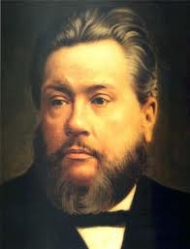
Spurgeon In Defense of Commentaries

I love Bible commentaries. And it never ceases to amaze me how often people criticize the use of commentaries in the study of God’s word, as if Heaven simply opens and pours in knowledge without any study. With this in mind, I offer the following comments from the “Prince of Preachers” himself, Mr. Charles Spurgeon:

“In order to be able to expound the Scriptures, and as an aid to your pulpit studies, you will need to be familiar with the commentators: a glorious army, let me tell you, whose acquaintance will be your delight and profit. Of course, you are not such wiseacres as to think or say that you can expound Scripture without assistance from the works of divines and learned men who have laboured before you in the field of exposition. If you are of that opinion, pray remain so, for you are not worth the trouble of conversion, and like a little coterie who think with you, would resent the attempt as an insult to your infallibility. It seems odd, that certain men who talk so much of what the Holy Spirit reveals to themselves, should think so little of what he has revealed to others. My chat this afternoon is not for these great originals, but for you who are content to learn of holy men, taught of God, and mighty in the Scriptures. It has been the fashion of late years to speak against the use of commentaries. If there were any fear that the expositions of Matthew Henry, Gill, Scott, and others, would be exalted into Christian Targums, we would join the chorus of objectors, but the existence or approach of such a danger we do not suspect. The temptations of our times lie rather in empty pretensions to novelty of sentiment, than in a slavish following of accepted guides. A respectable acquaintance with the opinions of the giants of the past, might have saved many an erratic thinker from wild interpretations and outrageous inferences. Usually, we have found the despisers of commentaries to be men who have no sort of acquaintance with them; in their case, it is the opposite of familiarity which has bred contempt.” ~ Charles Spurgeon      Grace Online