The purpose of this Blog is to introduce men and women all over the World to the Doctrines of Grace; the 5 Solas; Reformation Theology and the Lord and Savior Jesus Christ.
Showing posts with label Heaven. Show all posts

Saturday, January 11, 2014

Eagerly Awaiting the Savior

Citizens of Heaven_T_NVFor our citizenship is in heaven, from which also we eagerly wait for a Savior, the Lord Jesus Christ.

– Philippians 3:20 –

This verse teaches us that the posture of the heavenly citizen is one of patient, eager anticipation of the return of the Lord Jesus Christ. While we usually think of “waiting” and “anticipating” as generally being passive endeavors, the Greek word apekdechomai has a much more active force. The great 19th-century Scottish expositor, Alexander MacLaren, commenting on this verse, wrote, “The eagerness of the waiting which should characterize the expectant citizens is wonderfully described by the Apostle’s expression for it, which literally means ‘to look away out’ … like a sentry on the walls of a besieged city whose eyes are ever fixed on the pass amongst the hills through which the relieving forces are to come.” This eager anticipation is nothing less than the active fastening of one’s gaze and attention on a dearly desired end.

This is how the New Testament speaks of the Christian’s enthusiastic anticipation of the return of Christ. Continue at Mike Riccardi

Tuesday, July 16, 2013

Six Eternal Truths to Remember Each Day


A startling thing has happened among modern Christians in the western world. Many of us habitually think and act as if there is no eternity—or, as if what we do in this present life has no bearing on eternity. 
 
The trend today is to focus not on our eternal future (who cares about the “sweet bye and bye”?) but our present circumstances, as if this world were our home. Yet Scripture states the reality of our eternal future should dominate and determine the character of our present life, right down to the words we speak and the actions we take (James 2:12; 2 Peter 3:11–12).

Let’s be sure to remind ourselves today—and every day—of “the real thing.” Here are six eternal truths to remember:

1. There are only two eternal destinations—Heaven or Hell—and I and every person I know will go to one or the other.

Enter through the narrow gate. For wide is the gate and broad is the road that leads to destruction, and many enter through it.  But small is the gate and narrow the road that leads to life, and only a few find it (Matthew 7:13–14). 

Both Heaven and Hell touch Earth—an in-between world leading directly into one or the other. The best of life on Earth is a glimpse of Heaven; the worst of life is a glimpse of Hell. For Christians, this present life is the closest they will come to Hell. For unbelievers, it is the closest they will come to Heaven.   Continue at Randy Alcorn

Friday, June 21, 2013

Changed From the Inside Out

Although heaven will be our first encounter with true, complete perfection, the Lord is already at work in the lives of His people preparing us for that perfection.

God begins the process of perfecting us from the moment we are converted from unbelief to faith in Christ. The Holy Spirit regenerates us. He gives us new hearts with new, holy desires (Ezekiel 36:26). He transforms our stubborn wills. He opens our hearts to embrace the truth rather than reject it, to believe rather than doubt. He gives us a hunger for righteousness and a desire for Him. Thus the new birth transforms the inner person. From that point, everything that occurs in our lives—good or bad—God uses to make us like Christ (Romans 8:28–30).

In terms of our moral and legal status, believers are judged perfect immediately—not on the basis of who we are or what we have done, but because of what Christ has done for us. We are forgiven of all our sin. We are clothed with a perfect righteousness (Isaiah 61:10; Romans 4:5), which instantly gives us a standing before God without any fear of condemnation (Romans 5:1; 8:1). And when Paul writes that God has “raised us up with Him, and seated us with Him in the heavenly places in Christ Jesus” (Ephesians 2:6), he is again speaking of this position of favor with God that we have been granted by grace alone.

We are not literally, physically seated with Christ in the heavenlies, of course. We are not mystically present there through some kind of spiritual telepathy. But legally, in the eternal court of God, we have been granted full rights to heaven. That is the high legal standing we enjoy even now, on this side of heaven.    Continue at John F. MacArthur

IMAGE

Thursday, March 28, 2013

Lust and Eternal Security - John Piper

This past September I spoke to the student body of Wheaton Christian High School. I took as my topic, "Ten Lessons for Fighting Lust." Lesson number 6 was, "Ponder the eternal danger of lust."


My text on that point was Matthew 5:28–29 where Jesus says, "Every one who looks at a woman lustfully has already committed adultery with her in his heart. If your right eye causes you to sin, pluck it out and throw it away; it is better that you lose one of your members than that your whole body be thrown into hell." I pointed out that Jesus said heaven and hell are at stake in what you do with your eyes and with the thoughts of your imagination.


After the message one of the students came up to me and asked, "Are you saying, then, that a person can lose his salvation?"


This is exactly the same response I got a few years ago when I confronted a man about the adultery he was presently living in. I tried to understand his situation and I pled with him to return to his wife. Then I said, "You know Jesus says that if you don't fight this sin with the kind of seriousness that is willing to gouge out your own eye, you will go to hell and suffer there forever."


He looked at me in utter disbelief, as though he had never heard anything like this in his life, and said, "You mean you think a person can lose his salvation?"


So I have learned again and again from first hand experience that there are many professing Christians who have a view of salvation that disconnects it from real life, and that nullifies the warnings of the Bible and puts the sinning person who claims to be a Christian beyond the reach of biblical threats. And this doctrine is comforting thousands on the way to hell.


Jesus said, if you don't fight lust, you won't go to heaven.   Continue at Truth Matters

Thursday, August 9, 2012

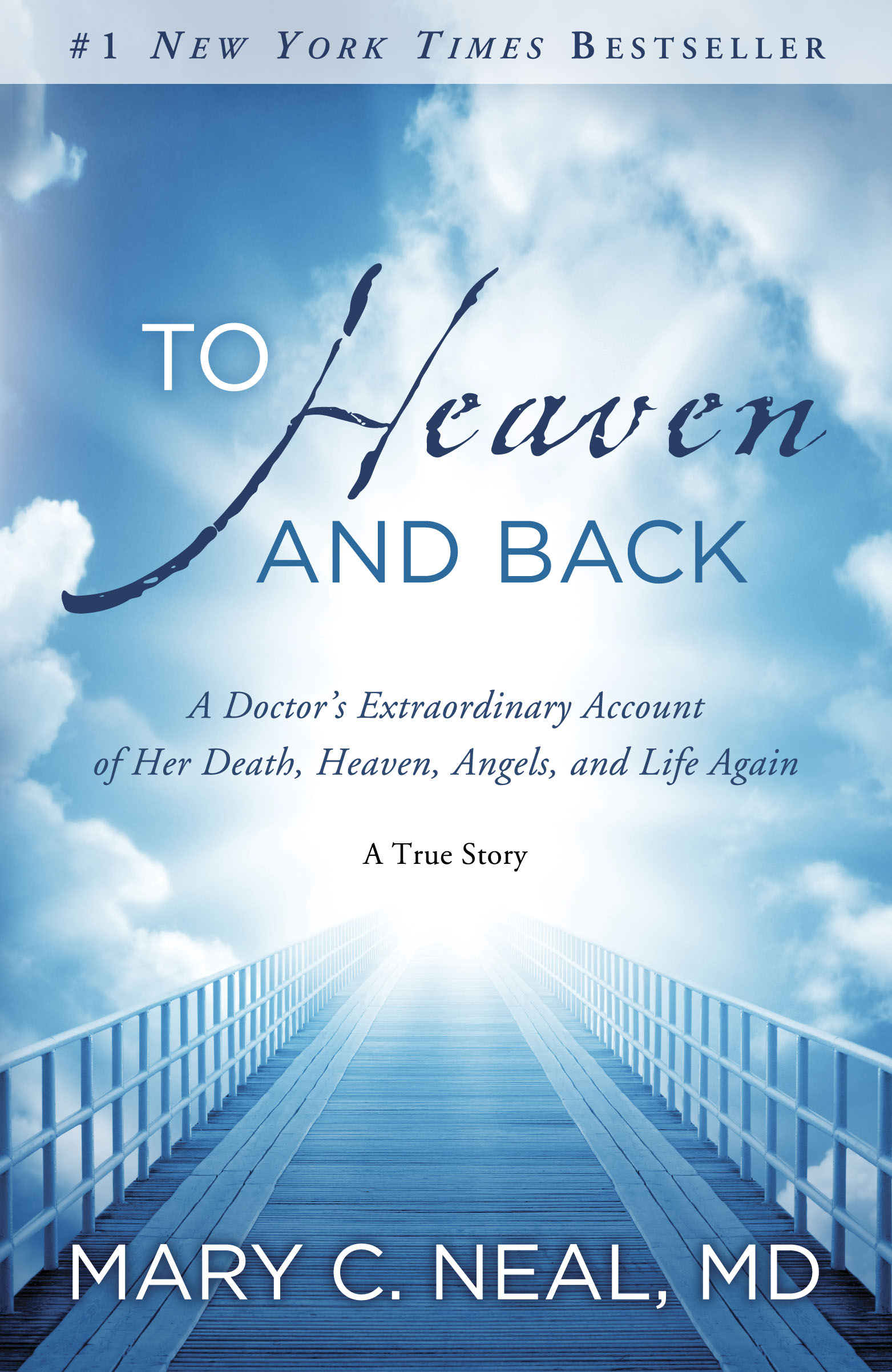
To Heaven and Back: Another Visit-to-Heaven Book

This blog and the one that follows will be full-length articles. I do this rarely, but I believe some of the issues at stake are very important, and far larger than just one particular book.

After its release two months ago, I guessed Mary Neal’s book To Heaven and Back would become an influential bestseller like its predecessors, so I read it. Sure enough, it has remained #1 in the “Paperback Advice & Miscellaneous” category of the New York Times Bestsellers List for nine weeks. 

Last year I blogged about Heaven is for Real and 90 Minutes in Heaven. I wrote that though these books don’t have the authority of Scripture, I am grateful that authors Don Piper and Todd Burpo uphold the gospel. Many who report after-death experiences do not.

For decades I’ve read accounts in which people who do not know Christ claim to have gone to Heaven and were reassured by a “being of light” that all is well. In some cases they’ve been “sent back” to earth to bring the message that people have nothing to fear because a loving God will send everyone to Heaven.

The Bible clearly states that those who do not trust Jesus for their salvation have great reason to fear death, and the Hell that follows (Luke 12:5). To claim otherwise is to preach a false gospel, which is exactly what some “I came back from Heaven” books do.

I’m convinced that though some have had real supernatural experiences, the one who reassured them with was not Jesus. “For such men are false apostles, deceitful workmen, disguising themselves as apostles of Christ.  And no wonder, for even Satan disguises himself as an angel of light. So it is no surprise if his servants, also, disguise themselves as servants of righteousness” (2 Corinthians 11:13-15).  Continue at Randy Alcorn

Saturday, July 28, 2012

Election by Murder?

I hope you’ve all benefited as much as I have from Jesse’s posts over the last few days regarding the eternal destiny of infants who die before they reach maturity. The persistently biblical emphasis—i.e., getting into the texts—has been a breath of fresh air regarding an extremely sensitive topic that is supercharged with emotion. The “cumulative case” approach to this issue is wise, because, even as he said, if you disagree with a particular interpretation of a particular verse, there are certainly others that are unmistakable. And the weight of all the biblical data bears on your conclusion.

However, the implications of this issue are so broad that not even three consecutive blog posts full of comments on twenty-six particular passages of Scripture from both Testaments proves exhaustive. There are other questions to be answered. One of our commenters asked one of these questions, broaching an issue that he himself deemed “an elephant in the room.” I want to take some time today to address his question, not at all because I want to give him a hard time but because I think having a clarifying answer to this question can be helpful for all of us—not only as we consider the topic of infant salvation but also the doctrine of salvation in general. He asks:  Read answer HERE

Friday, July 27, 2012

What Happens to Infants who Die? The NT answers

Yesterday we saw 16 verses in the OT that address the issue of what happens to little children who die. I hope you saw that the OT lays the groundwork for a category distinction: there are two kinds of sinners who die. There are those who die because of their sin nature, namely infants. And there are those who die because they love sin, and actively embrace it; namely, adults. This distinction is important to grasp because the NT does not reestablish it from the ground up but rather Jesus and Paul both teach in such a way that the distinction is reinforced.

Again, if any of these verses trouble you, simply skip them, and let the weight of the full list be enough to convince you. The numbering picks up where yesterday left off.

17) Jesus blessed little children. There are no examples of Jesus blessing anyone who was in open rebellion to God. Again, much like Jonah 4, Jeremiah 19, 1 Kings 11, this (at the very least) creates a category distinction between sinful adults in rebellion against God, and the childlike innocence of children (Matt 18:3-5).

18) In Matthew 18, Jesus not only blesses the children, but uses them as an earthly analogy of childlike faith. He says that “unless you are converted and become like children, you will never enter the kingdom of heaven. Therefore, whoever humbles himself like this child– this one is the greatest in the kingdom of heaven.” Everyone is free to debate what exactly Jesus means here, and there are Christian answers all over the spectrum. But at the very least, Jesus has to be implying that children in their current state would go to heaven if they died. Consider this statement: “my car is as fast as a cheetah, and unless your car is like a cheetah too, it can never be fast.” Everyone can debate what it means to be fast, or how fast my car really is, or if your car even should be fast. But the entire analogy would break down if cheetahs were not indeed fast to begin with. That is the assumption that makes the analogy make sense. Whatever Jesus is saying Matthew 18, it only makes sense if the destination of children who die is an enviable one.   Continue at Jesse Johnson

Wednesday, June 20, 2012

What The Bible Says About the Heaven Books

After writing about this new genre of I went to heaven books, I received many comments and emails asking me about biblical examples of those who glimpsed heaven—John in the book of Revelation, Paul in 2 Corinthians, Isaiah in his prophecy. I will address this briefly today.

There are several themes in today’s “I went to heaven” books:
  • Each of the people experienced heaven after dying a natural death. In every case, the soul had left the body so the person was clinically and spiritually dead.
  • After the experience of heaven, each of the people was restored to life so that the soul returned to the body and the body was no longer clinically or spiritually dead.
  • Each of the people describes as much as they can remember and does so in order to offer encouragement and in order to validate what the Bible says.
There is no biblical precedent for experiences of this kind. Let me look to each of the biblical passages.

Revelation


The Revelation is unique in being New Testament apocalyptic literature. This genre is prophetic, meaning that it is inspired by God in order to show what will take place in the end times, tying together past, present and future. Here is how John introduces his experience:   Continue at Tim Challies

Tuesday, June 19, 2012

Heaven Tourism

Travelling to heaven and back is where it’s at today. Don Piper spent ninety minutes there and sold four million copies of his account. Colton Burpo doesn’t know how long he was there, but his travel diary has surpassed 6 million copies sold, with a kids’ edition accounting for another half million. Bill Wiese obviously booked his trip on the wrong web site and found himself in hell, which did, well, hellish things to his sales figures. Still, 23 Minutes in Hell sold better than if he had described a journey to, say, Detroit, and he even saw his book hit the bestseller lists for a few weeks. There have been others as well, and together they have established afterlife travel journals as a whole new genre in Christian publishing—a genre that is selling like hotcakes, or Amish fiction, for that.

I’ll grant that the cost of this type of journey is rather steep (you’ve got to die, though only for just a few minutes), but it’s a sound investment when you factor in the sales figures. I can think of quite a few authors who would trade a few minutes of life for 50+ weeks on the bestseller lists and a few appearances on TBN.

The most recent heaven tourist is Mary C. Neal. Much like Todd Burpo, who is responsible for taking his son’s adventures to print, Neal only decided to write about her experiences many years after the fact, after all those other “I went to heaven” books began to sell in the hundreds of thousands. But that’s definitely just coincidence. She initially self-published her book To Heaven and Back, but once it started generating buzz (i.e. selling lots and lots of copies), Waterbrook Multnomah stooped down and scraped it off the bottom of a shoe somewhere, and promptly re-issued it. With the extra marketing nudge, it has now made its debut on the New York Times list of bestsellers. I gave it a skim—I just couldn’t bear to read it all the way—and found that it is much the same as the others. In fact, it may be worse than the others in that it contains even less Christian theology, less gospel and far more New Age, sub-Christian nonsense. That a publisher of Christian books would even consider taking this to print is appalling.   Continue at Tim Challies

Thursday, April 12, 2012

Another Gospel

Introduction
 
SATAN IS NOT AN INITIATOR but an imitator. God has an only begotten Son – the Lord Jesus, and so has Satan - “the son of Perdition” (2 Thess. 2:3). There is a Holy Trinity, and there is likewise a Trinity of Evil (Rev. 20: 10). Do we read of the “children of God,”so also we read of “the children of the wicked one”(Matt. 13:38).

Does God work in the former both to will and to do of His good pleasure, then we are told that Satan is “the spirit that now worketh in the children of disobedience” (Eph. 2:2). Is there a “mystery of godliness” (1 Tim. 3:16), so also is there a “mystery of iniquity” (2 Thess. 2:7). Are we told that God by His angels “seals” His servants in their foreheads (Rev. 7:3), so also, we learn that Satan by his agents sets a mark in the foreheads of his devotees (Rev. 13:16). Are we told that “the Spirit searcheth all things, yea, the deep things of God” (1 Cor.2:10), then Satan also provides his “deep things.” (See Greek of Rev. 2:24.) Did Christ perform miracles, so also can Satan (2 Thess. 2:9). Is Christ seated upon a throne, so is Satan (Rev.2:13 - Gr.). Has Christ a Church, then Satan has his“synagogue”(Rev. 2:9). Is Christ the Light of the world, then so is Satan himself “transformed into an angel of light” (2 Cor. 11:14). Did Christ appoint “apostles,”then Satan has his apostles, too (2 Cor. 11:13). And this leads us to consider “The Gospel of Satan.”   Continue at A. W. Pink

Friday, January 20, 2012

A Warning To Professing Christians

Some thirty years ago, when I was a university student, I came across a statement by Bishop J C Ryle that powerfully riveted itself to my mind. I made a small A4-size poster of it and put it up on the notice board in my room. I lost it when I graduated from university. Since then I have looked for it and failed to find it. I have tried to Google it, but even that has not yielded the desired fruit. I finally found it today (13 January 2012).

Bishop J C Ryle
All along I had been searching in the wrong place. I knew that the statement had something to do with a warning to Christians. Hence, I kept looking in Ryle’s A Warning To The Churches. I literally searched the book, sentence by sentence, several times over. Now that I have found it, I realize that it was in Ryle’s Holiness. The statement is found in the chapter, “Visible Churches Warned.” I will not reproduce the whole chapter here, as the book is readily available on the Internet. In fact, you can even read a PDF version of the chapter HERE. It is chapter 14 in the book.
 
The first paragraph below is the statement that shocked me out of my socks some thirty years ago. I have added a few more paragraphs to make this a fuller blog post and to also give my readers some more of the heart of this great bishop. I wish that all bishops today—including myself—could write and preach like this!  Continue at Some thirty years ago, when I was a university student, I came across a statement by Bishop J C Ryle that powerfully riveted itself to my mind. I made a small A4-size poster of it and put it up on the notice board in my room. I lost it when I graduated from university. Since then I have looked for it and failed to find it. I have tried to Google it, but even that has not yielded the desired fruit. I finally found it today (13 January 2012).  Continue at Conrad Mbewe

Monday, December 5, 2011

Keeping the Heart

“KEEP THY HEART WITH ALL DILIGENCE, FOR OUT OF IT
ARE THE ISSUES OF LIFE.”—Proverbs 4:23.


THE heart of man is his worst part before it is regenerated, and the best afterward; it is the seat of principles, and the fountain of actions. The eye of God is, and the eye of the Christian ought to be, principally fixed upon it.

The greatest difficulty in conversion, is to win the heart to God; and the greatest difficulty after conversion, is to keep the heart with God. Here lies the very force and stress of religion; here is that which makes the way to life a narrow way, and the gate of heaven a strait gate. Direction and help in this great work are the scope of the text: wherein we have,

I. An exhortation, “Keep thy heart with all diligence.”

II. The reason or motive enforcing it, “For out of it are the issues of life.”

In the exhortation I shall consider,
    First, The matter of the duty.
    Secondly, The manner of performing it.
I. The matter of the duty: Keep thy heart. Heart is not here taken properly for the noble part of the body, which philosophers call “the first that lives and the last that dies ;“ but by heart, in a metaphor, the Scripture sometimes represents some particular noble faculty of the soul. In Rom. 1:21, it is put for the understanding; their foolish heart, that is, their foolish understanding was darkened. Psalm 119:11, it is put for the memory; “Thy word have I hid in my heart ;“ and 1 John 3:10, it is put for the conscience, which includes both the light of the understanding and the recognitions of the memory; if our heart condemn us, that is, if our conscience, whose proper office it is to condemn.

But in the text we are to take it more generally, for the whole soul, or inner man. What the heart is to the body, that the soul is to the man; and what health is to the heart, that holiness is to the soul. The state of the whole body depends upon the soundness and vigor of the heart, and the everlasting state of the whole man upon the good or ill condition of the soul.   Keep Reading >>>

Tuesday, November 8, 2011

The Salvation of the ‘Little Ones’: Do Infants who Die Go to Heaven?

The death of an infant or young child is profoundly heartbreaking – perhaps the greatest grief a parent is called to bear. For Christian parents, there is the sure knowledge that our sovereign and merciful God is in control, but there is also a pressing question: Is our baby in heaven?

 This is a natural and unavoidable question, calling for our most careful and faithful biblical study and theological reflection. The unspeakable anguish of a parent's heart demands our honest and humble searching of the Scriptures.

Some are quick to answer this question out of sentimentality. Of course infants go to heaven, they argue, for how could God refuse a precious little one? The Universalist has a quick answer, for he believes that everyone will go to heaven. 

Some persons may simply suggest that elect infants go to heaven, while the non-elect do not, and must suffer endless punishment. Each of these easy answers is unsatisfactory.

Mere sentimentalism ignores the Bible’s teaching which bears on the issue. We have no right to establish doctrine on the basis of what we hope may be true. We must draw our answers from what the Bible reveals to be true.  Keep Reading >>>

Wednesday, May 18, 2011

Making All Things New (Not All New Things)

Last week I had the privilege of joining my good friends at the ABC Conference in Dallas. The theme of the conference was “The Groaning Cosmos” taken from Romans 8. My last session on Saturday dealt with one of my favorite passages, Romans 8:18-25. Below is the gist of what I said (explained in much more detail in my book Unfashionable: Making a Difference in the World by Being Different).

For a long time now, I’ve been convinced that the way most Christians think about redemption is influenced more by ancient Greek philosophy than by the Bible. We think of ultimate redemption as being redemption from the body, not of the body; redemption from the world, not of the world; redemption from the material, not of the material. This, however, goes against what the Bible clearly teaches about redemption.

In the Lord’s Prayer we see that God’s ultimate goal for earth is that it become like heaven.
Our Father in heaven, hallowed be your name. Your kingdom come, your will be done, on earth as it is in heaven. (Matthew 6:9-10)
God’s mission is to bring heaven to earth—this planet! Keep Reading...

Monday, March 7, 2011

Universalism: Not a New Temptation

The temptation is not new: silencing certain biblical texts in order to say that eventually everyone will be saved. In fact, we could just call it recycled liberalism.

Desiring God focused on this subject 21 years ago at the Conference for Pastors — "Universalism and the Reality of Eternal Punishment."

In his sermon that assesses the biblical and theological arguments for universalism, Sinclair Ferguson reminds us:
There is a mighty sermon in Gresham Machen’s book, God Transcendent, on the text in Matthew 10:28, “Do not fear those who can kill the body; fear Him who is able to cast soul and body into hell.” And the sermon begins by the repetition of the text and with these words: “These words were not spoken by Augustine, or by George Whitefield, or by Jonathan Edwards, but by Jesus of Nazareth."
It behooves us to listen to Jesus' testimony; both because this is the testimony of the Savior, and because this is the testimony of the One who names himself as the living and true witness—who is the One who has come back from the dead to tell men that it is so.
Ferguson's other messages from the conference include:
    1. Universalism and the Reality of Eternal Punishment: Contemporary Preaching
    2. Universalism and the Reality of Eternal Punishment: The Justice and Mercy of God
    4. Universalism and the Reality of Eternal Punishment, Panel Discussion

    Monday, January 31, 2011

    Is Joseph Smith the Gateway to Heaven?

    Joseph Fielding Smith 
    Absolutely amazing blasphemies from the Mormon church:
    “[There is] “no salvation without accepting Joseph Smith. If Joseph Smith was verily a prophet, and if he told the truth…no man can reject that testimony without incurring the most dreadful consequences, for he cannot enter the kingdom of God” -Joseph Fielding Smith, Doctrines of Salvation, vol. 1, p.190
    George Q. Cannon
    “If we get our salvation, we shall have to pass by Joseph Smith; if we enter our glory, it will be through the authority he has received. We cannot get around him.” -1988 Melchizedek Priesthood Study Guide, p. 142, Apostle George Q. Cannon
    Brigham Young
    “He that confesseth not that Jesus has come in the flesh and sent Joseph Smith with the fullness of the Gospel to this generation, is not of God, but is anti-christ.” -Brigham Young, Journal of Discourses, vol. 9, p.312
    “No man or woman in this dispensation will ever enter into the celestial kingdom of God without the consent of Joseph Smith…every man and woman must have the certificate of Joseph Smith, junior, as a passport to their entrance into the mansion where God and Christ are… [Joseph Smith] reigns there as supreme a being in his sphere, capacity, and calling, as God does in heaven. Many will exclaim—”Oh, that is very disagreeable! It is preposterous! We cannot bear the thought!” But it is true.” -Brigham Young, Journal of Discourses, vol. 7, p.289-91

    HT: Bob Hanks