The purpose of this Blog is to introduce men and women all over the World to the Doctrines of Grace; the 5 Solas; Reformation Theology and the Lord and Savior Jesus Christ.
Showing posts with label Moralism. Show all posts

Wednesday, April 9, 2014

Moralism is Not the Gospel (But Many Christians Think it Is)

One of the most amazing statements by the Apostle Paul is his indictment of the Galatian Christians for abandoning the Gospel. “I am amazed that you are so quickly deserting Him who called you by the grace of Christ, for a different gospel,” Paul declared. As he stated so emphatically, the Galatians had failed in the crucial test of discerning the authentic Gospel from its counterfeits.

His words could not be more clear: “But even if we, or an angel from heaven, should preach to you a gospel contrary to what we have preached to you, he is to be accursed! As we have said before, so I say again now, if any man is preaching to you a gospel contrary to what you have received, he is to be accursed!” [Gal. 1:6-7]    Continue at Al Mohler

Wednesday, November 20, 2013

Don’t Raise Good Kids

Parents, don’t raise good kids. I’m a recovering good kid, and I’m here to tell you that the gospel isn’t for good kids.

I was pretty easy for my parents to raise. I was generally compliant, had a buoyant, warm personality, didn’t get into any serious trouble, was liked by my teachers for the most part, usually did respectably in school, was a leader in my church groups, and had plenty of friends. My adolescent, wild-oat sowing would only generate smirks and eye rolls.

My folks and most adults in my life affirmed me as a good kid, and I believed it. Which posed a problem for me: I struggled to grasp the gospel.


Me? Hell?


Though I believe my pre-adolescent conversion was real — God is gracious to produce and honor a small seed of real faith — it was hard to swallow that I was that bad. God showing favor on me in redemption made sense because others had shown favor on me. But it was hard for me to see that this favor was not the approval of a good kid but the pardoning of a condemned sinner. Really? Me deserve hell?

It took quite a while — I am, in fact, still recovering — to see that in reality I was (am) profoundly depraved. Much of my outward good behavior was fueled by evil, selfish motives. Underneath my good-kid veneer was a glory-stealing, envious, covetous, idolatrous, lecherous person.   Continue at Jon Bloom

Saturday, July 13, 2013

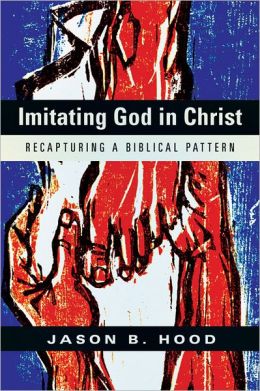
Imitating God in Christ: Recapturing a Biblical Pattern

Jason B. Hood, Imitating God in Christ: Recapturing a Biblical Pattern. InterVarsity Press, 2013. 232 pages. $22.00

“What Would Jesus Do?” is a slogan young Reformed types love to hate. But what if it’s a question more of us should be asking?
Gospel-centered-everything is quickly becoming a dominant refrain among younger and not-so-younger evangelicals. In part this is a reaction to the perceived moralism of the previous generation, whether a hardline fundamentalist variety or its squishier evangelical cousin. Two prominent threads in this fabric are gospel-centered holiness and gospel-centered preaching, the latter fueling the former.

Of course, with any reaction comes the peril of overreaction. As C.S. Lewis quipped, “For my own part I hate and distrust reactions not only in religion but in everything. Luther surely spoke very good sense when he compared humanity to a drunkard who, after falling off his horse on the right, falls off it next time on the left” (Fern-seed and Elephants, 66).

In Imitating God in Christ: Recapturing a Biblical Pattern, Jason Hood identifies the concept of imitation as a significant casualty in the gospel-centered counteroffensive against moralism. Should preachers exhort us to imitate biblical examples? Only if we want more “Dare to Be a Daniel” garbage. Should we talk about imitating Jesus? Only if we want to reduce the gospel to moralism or trendy activism. Should we play up the role of godly examples in the church? Only if we care more about copying behaviors than transforming hearts.    Continue at Bobby Jamieson

Tuesday, December 11, 2012

God Doesn’t Need Your Good Works…But Your Neighbor Does

Pertinent to any discussion regarding justification and sanctification is the question of effort. In my recent back and forth with Rick Phillips on the nature of sin and its ongoing effect on the Christian, some have assumed that when I say there is no part of Christians that are sin free, I’m also endorsing a “why-even-try”, effortless approach to the Christian life–that I’m overlooking or understating the importance of “sanctification.” I suspect that one of the reasons for this is owing to my passion to help people understand the inseparable relationship between justification and sanctification. 

 Whether this was explicitly taught or implicitly caught, I grew up with the impression that when it comes to the Christian life, justification was step one and sanctification was step two and that once we get to step two there’s no reason to revisit step one. In my experience as a pastor, this is one of the reasons why it seems so new to people that the gospel is not just for non-Christian’s but for Christian’s too–that it doesn’t just ignite the Christian life, but fuels it as well. By giving people the impression that sanctification is progress beyond the initial step of justification, they have concluded that once God saves us (justification) he then moves us beyond his work into our work (sanctification). But justification and sanctification are both God’s work and while they can and must be distinguished, the Bible won’t let us separate them. Both are gifts of our union with Christ and within this double-blessing, justification is the root of sanctification and sanctification is the fruit of justification. Moralism happens when we separate the fruit from the root. Or, as I’ve said before, imperatives minus indicatives equal impossibilities. As G. C. Berkouwer said, “The heart of sanctification is the life which feeds on justification.” So, I think it’s fair to say that sanctification is the justified life.   Continue at Tullian Tchividjian


Friday, November 2, 2012

6 Unbiblical Methods for Change

Many professing Christians seek change in their lives using methods which are contrary to Scripture. As a result, they don’t experience the change which God seeks to produce in his people. In the very helpful booklet, HELP! Want to Change, which I refer to as a primer on progressive sanctification, pastor and biblical counselor Jim Newheiser mentions six common, but ineffective, methods for lasting personal transformation.
  1. Deliverance Ministries: Some claim that the source of every personal problem is demonic and that the solution is to identify and cast out the evil spirit(s). Certain preachers claim to have the special powers and methods to perform these deliverances. They often draw large crowds of people desperate for help. While the Bible does teach that we are engaged in spiritual warfare (Ephesians 6:11–12), it does not teach that all our spiritual problems can be solved by casting out demons.
  2. Mysticism: Many believers expect that God will somehow instantly zap away their sin patterns and problems through dramatic answers to certain kinds of prayers. Some seek out spiritual leaders who claim to have special powers in prayer to produce dramatic results. The Bible, on the other hand, teaches that spiritual growth and true wisdom are typically obtained through a persistent disciplined pursuit of God (Proverbs 2:2–12), not through a one-time experience.
  3. Medication: While we embrace the use of medicine for true medical problems, many believers are hoping to find quick and easy solutions to their spiritual problems through pills. Some drugs may dull some of the symptoms of our emotional pain, but they do not address the heart issues from which sin comes (Proverbs 4:23; Mark 7:20–23). Wisdom must be exercised.   Continue at Paul Tautges

Tuesday, June 5, 2012

Veggie Tales: “Morality, not Christianity”

VeggieTales “convinced kids to behave Christianly without actually teaching them Christianity.” So says founder Phil Vischer in a new interview.

VeggieTales was a rags-to-riches entrepreneurial success story. Vischer and his counterpart, Mike Nawrocki, left college to pursue their dream of making wildly creative children’s videos. At the height of their success in the late 1990s, VeggieTales videos sold 7 million copies in a single year and generated $40 million in revenue. Though primarily aimed at a Christian market, VeggieTales had a broader cultural influence, pushing forward the boundaries of computer animation and children’s programming.

But success brought failure. Though Bob the Tomato and Larry the Cucumber are still around, they aren’t the same. Big Idea Productions went bankrupt in 2003 and Vischer lost ownership and creative control of the whole enterprise. VeggieTales is no longer VeggieTales. The characters still exist – and in some cases are even voiced by Nawrocki and Vischer as hired talent – but the decisions are now made by studio execs who don’t share the vision or worldview of the original founders.

In a recent issue of WORLD magazine, Vischer acknowledged to interviewer Megan Basham that the bankruptcy and subsequent trials have given him perspective. His words reveal a man who’s beginning to see the difference between moralism and the gospel. And a man humble enough to acknowledge his role in confusing the two:  Continue at Bob Thune

Wednesday, May 2, 2012

Has the Gospel-Centered Emphasis Gone Too Far?

R. C. Sproul, James Boice, and J. I. Packer were already stirring many evangelicals with the vision of a great God who saves sinners by a grace that is amazing from start to finish. Out of the Philadelphia Conference on Reformed Theology, chaired by Dr. Boice, a host of annual conferences sprouted up across North America. Ligonier Ministries gained a national platform. Inspired and nourished by these efforts, several of us started the White Horse Inn and Modern Reformation 20 years ago out of a concern that we need to recover the riches of the Reformation, with the gospel of justification in Christ alone, by grace alone, through faith alone, at its heart.

Over these two decades, we’ve been through a series of controversies within evangelicalism about the character of God and his gospel: open theism, Evangelicals and Catholics Together, and the “emergent” movement, to name a few. Along the way, we’ve engaged Robert Schuller, with the publication of his Self-Esteem: The New Reformation, at a moment when it seemed from the Christian best-seller list that Christianity was being radically re-written in the subjective and therapeutic categories of modernity.

There are still enormous challenges, of course. As our latest issue of Modern Reformation points out, the diet of Christian trade books doesn’t exactly point in the direction of widespread renewal of catechesis. Nevertheless, there has been a proliferation of gospel-centered resources. Groups like the Gospel Coalition and Together for the Gospel sponsor large national conferences. Reared on moralism, a number of younger pastors—many of larger nondenominational churches—are being gripped by grace.

Just think of some of the titles of late in this genre: The Gospel as Center, D. A. Carson; The Prodigal God, Tim Keller; Jesus + Nothing = Everything, Tullian Tchividjian; Gospel: Recovering the Power that Made Christianity Revolutionary, J. D. Greear; The Good News We Almost Forgot, Kevin DeYoung; What Is the Gospel?, Greg Gilbert. I’ve added a few of my own logs to the “gospel” fire, so I can only rejoice in what Charles Swindoll called a while back “the grace awakening.”     Continue at Michael Horton

Wednesday, April 11, 2012

MTD: Not Just a Problem with Youth Ministry

Editors' Note: Everyone has an opinion about youth ministry. Parents, pastors, and the youth themselves have expectations and demands that don't always overlap. But the rash of dire statistics about the ineffectiveness of youth ministry has prompted rethinking in these ranks. So we devote one day per week this month to exploring several issues in youth ministry, including its history, problems, and biblical mandate. The Gospel Coalition thanks Cameron Cole and the leadership team of Rooted: A Theology Conference for Student Ministry for their help in compiling this series. Cathedral Church of the Advent in Birmingham, Alabama, will host their 2012 conference from August 9 to 11. Speakers Ray Ortlund, Timothy George, and Mary Willson will expound on the conference theme, "Adopted: The Beauty of Grace."

**********

That a youth ministry "teaches the Bible" does not necessarily mean it teaches the gospel. Many mistake the gospel with moralism---being a good person, reading your Bible, or opening the door for the elderly in order to earn God's favor. But the gospel is altogether different.

This is a problem across the youth ministry landscape. It's not because teenagers and youth leaders have misunderstood the church's teaching of historical-confessional, gospel-infused Christianity. It's a problem in youth ministry wherever the American church has not preached Christ crucified and has catered to a pragmatic, entertainment-driven, and numbers-oriented model of church growth.  Continue at Brian H. Cosby

Saturday, February 25, 2012

Are Churches Secularizing America?

Several years ago, a mainline theologian told me of his experience at an evangelical megachurch. He was visiting his children and grandchildren during spring break and then Easter Sunday arrived. Nothing visibly suggested that it was a Christian service, but this distinguished theologian tried to reign in his judgments. There was no greeting from God or sense that this was God’s gathering. The songs were almost exclusively about us, our feelings, and our intentions to worship, obey, and love; but it was not clear whom they were talking about or why. He concluded, “Well, evangelicals don’t really have a liturgy. They put all of the content into the sermon, so I’ll wait.”

His patience, however, was not rewarded. Although it was Easter, the message (with no clear text) was on how Jesus gives us the strength to overcome our obstacles. Lacking even a benediction, this theologian left discouraged. He had come to an evangelical church at Easter and instead of meeting God and the announcement of a real victory over sin and death by Jesus Christ, he encountered other Christians who were being given fellowship and instructions for making their own “Easter” come true in their life.

Pressed with leading questions by his son-in-law as to his reaction to the service (like, “Did it touch your heart?”), the theologian broke his silence: “I assume you’re trying to ‘evangelize’ me right now,” he said. “But there was no ‘gospel’ anywhere in that service that might convert me if I were unconverted.” He concluded, “Not even in the most liberal churches I’ve been in was the service so devoid of Christ and the gospel. It’s like ‘God who?’”

Since then, a mainline Methodist theologian told me of an almost identical experience-curiously also at Easter-in a conservative Presbyterian church that was known around the university for its “Bible-believing” and “Christ-centered” ministry. He too left disappointed (the sermon was something about how Jesus overcame his setbacks and so can we), further substantiating his appraisal that evangelicals are as likely as mainliners today to talk pop-psychology, politics, or moralism instead of the gospel.

Over a century ago, Princeton theologians Charles Hodge and B. B. Warfield observed that according to the system of revivalism associated especially with Charles Finney, God was not even necessary. If conversion and revival are “simply the philosophical result of the right use of means” rather than a miracle of God’s grace, all you have to do is find the right techniques, procedures, and methods that work across the board: in business, politics, and religion.  Continue at Michael Horton

Wednesday, October 19, 2011

Where To Look When You’re In Trouble

A shift has taken place in the Evangelical church with regard to the way we think about the gospel and it’s far from simply an ivory tower conversation. This shift effects us on the ground of everyday life.

In his book Paul: An Outline of His Theology, famed Dutch Theologian Herman Ridderbos (1909 – 2007) summarizes this shift which took place following Calvin and Luther. It was a sizable but subtle shift which turned the focus of salvation from Christ’s external accomplishment to our internal appropriation:
While in Calvin and Luther all the emphasis fell on the redemptive event that took place with Christ’s death and resurrection, later under the influence of pietism, mysticism and moralism, the emphasis shifted to the individual appropriation of the salvation given in Christ and to it’s mystical and moral effect in the life of the believer. Accordingly, in the history of the interpretation of the epistles of Paul the center of gravity shifted more and more from the forensic to the pneumatic and ethical aspects of his preaching, and there arose an entirely different conception of the structures that lay at the foundation of Paul’s preaching.
Donald Bloesch made a similar observation when he wrote, “Among the Evangelicals, it is not the justification of the ungodly (which formed the basic motif in the Reformation) but the sanctification of the righteous that is given the most attention.”    Keep Reading...

Saturday, August 20, 2011

Indicatives and imperatives

Justin Taylor has provided a helpful set of links to the ongoing discussions between William Evans and Sean Lucas at Reformation21 and Kevin DeYoung and Tullian Tchividjian at the Gospel Coalition. Having made reference to a couple of these before, being persuaded of how important the issues are, and therefore having an ongoing interest in the matter, I thought others might appreciate following the discussion. Taylor summarises:
William B. Evans and Sean Michael Lucas have been engaged in a profitable discussion over at Reformation 21 on sanctification and the gospel. Here are their exchanges:
Rick Phillips also added a helpful and important post summarizing seven assertions about the relationship between justification and sanctification.
As I’ve mentioned before, Kevin DeYoung and Tullian Tchividjian have been engaged in a longer—though less direct—discussion addressing similar issues:

The Wanderer

Monday, August 8, 2011

Killing Moralism

Many Christians have grown up in the church on moralistic preaching; that is, preaching that calls for obedience without connecting the commands of God to the cross of Christ. This disconnect is dangerous, potentially leading hearers into either self-loathing or self-righteousness. Moralistic preaching is often the ground in which the devil sows the seeds of legalism. Of course biblical preaching will always be relevant and call for a response, but how can we preach the commands of God without reducing our messages to moralism? Is the key to simply jump from the command “pray without ceasing” to the reality that Jesus suffered a vicarious, penal atonement? Well, that’s one way to do it. But, let me suggest three ways of preaching the commands of God that help us avoid the trap of moralism.

Show the God of the Command

God’s laws are not arbitrary, but stem from who he is. And, because we are made in his image and for his glory, he gives us commands that reflect his character. So, when holding out the commands of God we must point beyond the command to the God who gives it.    Keep Reading...

Tuesday, April 26, 2011

Why Conservative Churches Are Growing: David Brooks and the Limits of Sociology

With amazing insight and candor, Kelley spoke for mainline Protestantism when he noted that it had been generally assumed that churches, “if they want to succeed, will be reasonable, rational, courteous, responsible, restrained, and receptive to outside criticism.” These churches would be highly concerned with preserving “a good image in the world” — and that meant especially within the world of the cultural elites. These churches, intending to grow, would be “democratic and gentle in their internal affairs” as the larger world defines those qualities. These churches will intend to be cooperative with other religious groups inb order to meet common goals, and thus “will not let dogmatism, judgmental moralism, or obsessions with cultic purity stand in the way of such cooperation and service.”

Then Kelley dropped his bomb: “These expectations are a recipe for the failure of the religious enterprise, and arise from a mistaken view of what success in religion is and how it should be fostered and measured.” Read it all HERE

Tuesday, April 12, 2011

The Problems With "WWJD?"

Pastor Robert W. Glenn of Redeemer Bible Church in Minnetonka, MN has written a thoughtful critique of the very popular Christian movement WWJD?  WWJD? is a movement that began in the 1990s among evangelical Christians as an exhortation to Christians that they should act and live in a manner that demonstrates the love of Christ. Obviously, the desire among those who started this movement was for the Lord's name to be glorified by Christians heeding this exhortation to live mindfully and Biblically in a lost and spiritually dark world. The movement manifested itself in all manner of items that bore the letters "WWJD?" (t-shirts, coffee mugs, plagues, bumper stickers, bracelets, etc.). So what on earth could be wrong with that? Well, I'm glad you asked. Pastor Robert Glenn's article below lays out a number of very thoughtful reasons why this movement is not just a harmless fad. Read it HERE

Saturday, March 12, 2011

Moralism vs. Gospel Virtue

The object of the gospel is both to pacify the sinner’s conscience and to purify the heart, and it is of importance to observe that what mars the one of these objects mars the other also. The best way of casting out an impure affection is to admit a pure one …. Thus it is that the freer the Gospel, the more sanctifying the Gospel. The more it is received as a doctrine of grace, the more it will be felt as a doctrine leading to godliness].. ..

On the tenure of “do this and you will live”, a spirit of fearfulness is sure to enter: and the jealousies of a legal bargain chase away ail confidence of intimacy between God and man: and the creature striving to be square and even with his Creator is, in fact pursuing all the while his own selfishness instead of God’s glory. With all the conformities which he labors to accomplish, the soul of obedience is not there, the mind is not subject to the law of God, nor indeed under such an economy can it ever be. It is only when, as in the Gospel, acceptance is bestowed as present, without money and without price, that the security which man feels in God is placed beyond the reach of disturbance. Only then can he repose in Him as one friend reposes in another … the one party rejoicing over the other to do him good…in the impulse of a gratitude, by which is he is awakened to the charms of a new moral existence. Keep Reading>>>

Tuesday, March 8, 2011

The Cart Before the Horse

I have sought to argue that the gospel of moralism is really no gospel at all – it is simply not good news! The legal hearts of man more readily assume a need to perform certain deeds and tasks before God than to live freely in the overflow of His grace. In other words, it’s far easier to understand that we should do something as opposed to relying on the fact that, in Jesus, everything has already been done. This, of course, is no new problem – it’s as old as the Judaizers. But, perhaps what’s most dangerous about moralism is what is so often the case in false teaching, namely that a little bit of truth is mixed with error, thus making it sound correct.

Certainly if one has listened to much evangelical preaching in the west, they have heard a (un)healthy dose of moralism. Now I am no antinomian – I love the Law of God (cf. Psalm 119:97). But the Law of God (and in moralism, it’s often mixed with the laws of man) understood apart from the gospel of God is devastatingly crippling and offers no sure foundation. Simply stated, moralism gets the cart before the horse when it comes to justification and sanctification. Keep Reading>>>

Thursday, May 13, 2010

The Poison of Quaint Moralism

Our churches are full of good-looking, upright, moral people. The tragic irony is that our goodness is our poision. A great many Southerners claim Christianity as their religion, mimicking righteousness on the surface while their hearts remain unchanged by the gospel of Jesus. I understand the gravity of that statement and do not make it hastily. Here in the South, the gospel has either been ignored or foolishly assumed. We have satiated our desire for God through quaint morality, allowing people to ignore their need for Jesus.

The outcome is disastrous; we are witnessing an exodus out of the local church and away from faith in Jesus. The words of Jesus to the church of Laodicea haunt me, "I know your works: you are neither hot nor cold…for you say, I am rich, I have prospered and I need nothing, not realizing that you are wretched, pitiable, poor, blind and naked" (Rev. 3:15–17). Read the rest HERE