The purpose of this Blog is to introduce men and women all over the World to the Doctrines of Grace; the 5 Solas; Reformation Theology and the Lord and Savior Jesus Christ.
Showing posts with label Reformed Baptist. Show all posts

Thursday, June 26, 2014

Cutting through the Confusion about What to Call “the New Calvinism”

The mention of Calvinism may provoke revulsion or comfort—but it rarely produces apathy. 

“Calvinism,” journalist H.L. Mencken opined in 1937, “occupies a place in my cabinet of private horrors but little removed from that of cannibalism.” Mencken included these words in his obituary for J. Gresham Machen, a Presbyterian theologian who whispered on his deathbed, “Isn’t the Reformed faith grand?” The same doctrines that elicited exultations from the lips of one man incited comparisons to sautéing your next-door neighbor in another. Perhaps it shouldn’t surprise us, then, that the most recent surge of interest in Reformed theology has ignited joy in some hearts and panic in others.

Over the past several years, an overabundance of possible names for this movement has also sparked no small measure of confusion. “Young, restless, Reformed” was the nomenclature that Collin Hansen selected for an article and book about his journey with “the new Calvinists”—a group that’s also been dubbed “neo-Reformed,” “neo-Calvinist,” and even “neo-Puritan."

Continue at  Timothy Paul Jones

Saturday, July 13, 2013

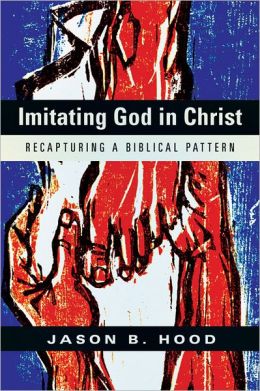
Imitating God in Christ: Recapturing a Biblical Pattern

Jason B. Hood, Imitating God in Christ: Recapturing a Biblical Pattern. InterVarsity Press, 2013. 232 pages. $22.00

“What Would Jesus Do?” is a slogan young Reformed types love to hate. But what if it’s a question more of us should be asking?
Gospel-centered-everything is quickly becoming a dominant refrain among younger and not-so-younger evangelicals. In part this is a reaction to the perceived moralism of the previous generation, whether a hardline fundamentalist variety or its squishier evangelical cousin. Two prominent threads in this fabric are gospel-centered holiness and gospel-centered preaching, the latter fueling the former.

Of course, with any reaction comes the peril of overreaction. As C.S. Lewis quipped, “For my own part I hate and distrust reactions not only in religion but in everything. Luther surely spoke very good sense when he compared humanity to a drunkard who, after falling off his horse on the right, falls off it next time on the left” (Fern-seed and Elephants, 66).

In Imitating God in Christ: Recapturing a Biblical Pattern, Jason Hood identifies the concept of imitation as a significant casualty in the gospel-centered counteroffensive against moralism. Should preachers exhort us to imitate biblical examples? Only if we want more “Dare to Be a Daniel” garbage. Should we talk about imitating Jesus? Only if we want to reduce the gospel to moralism or trendy activism. Should we play up the role of godly examples in the church? Only if we care more about copying behaviors than transforming hearts.    Continue at Bobby Jamieson

Saturday, December 15, 2012

Jesus Faithful Israel?

In the New Testament, there are some parallels between ancient Israel and Jesus Christ that give warrant to the view that Jesus is faithful Israel whose obedience brings blessings to others. For example, in the Gospel of Matthew, like Israel, Jesus goes to Egypt and then is called out of Egypt. Listen to Matthew 2:13-15.

13 Now when they had gone, behold, an angel of the Lord appeared to Joseph in a dream and said, “Get up! Take the Child and His mother and flee to Egypt, and remain there until I tell you; for Herod is going to search for the Child to destroy Him.” 14 So Joseph got up and took the Child and His mother while it was still night, and left for Egypt. 15 He remained there until the death of Herod. This was to fulfill what had been spoken by the Lord through the prophet: “OUT OF EGYPT I CALLED MY SON.” (Matt. 2:13-15)

After Jesus’ baptism (Matt. 3:13-17), He “was led up by the Spirit into the wilderness to be tempted by the devil” (Matt. 4:1). Matthew tells us that “after He had fasted forty days and forty nights” (Matt. 4:2), He was tempted. But unlike Adam in the garden and Israel in her wilderness wanderings between Egypt and Canaan, Jesus did not succumb to temptation and sin. Recall that Israel’s wilderness wanderings occurred over a forty year period due to sin (cf. Num. 14, especially verses 31-35) and after she passed through the Red Sea waters (Exod. 14-15). Jesus, however, passed through the waters of baptism, was tempted after forty days of fasting, and did not sin.

Another example of the New Testament relating ancient Israel and Jesus Christ comes from the apostle Paul. It is agreed upon by most Bible scholars that the redemption of the Old Testament was Israel’s exodus from Egyptian bondage, as stated above. God rescued Israel from Egyptian bondage. The Israelites were under a dark and oppressive Egyptian ruler and God Himself delivered them from bondage and took them to the Promised Land through the human leadership of Moses and then Joshua. In Colossians 1:12-15 there are some interesting echoes of the exodus in the words of the apostle Paul. Here’s what he says there:

12 giving thanks to the Father, who has qualified us to share in the inheritance of the saints in Light. 13 For He rescued us from the domain of darkness, and transferred us to the kingdom of His beloved Son, 14 in whom we have redemption, the forgiveness of sins. 15 He is the image of the invisible God, the firstborn of all creation. (Col. 1:12-15)    Continue at Richard Barcellos

Tuesday, October 23, 2012

Deacon Ministry in a Reformed Baptist Church

One of the hallmarks of reformed theology is captured in the cry of Sola Scriptura! We recall from 2 Peter 1:3 that the Lord has given us all we need for life and godliness – and this applies no less to life in the local church than to the individual Christian. As we consider the various way local churches deploy the office of deacon, it is painfully apparent that many of us have lost sight of the completeness of the wisdom our Lord has provided us and the reason for it – that how we serve Him and one another would be to the glory of His name and the good of His people.

The Scriptures are clear in describing two distinct offices (by this I mean positions with defined responsibilities) within the local church: elder/overseer/pastor and deacon are identified and qualified in 1 Tim 3. The men who serve in these offices are co-laborers, with distinctly different roles within the church. The account in Acts 6 gives a clear delineation between the two offices (with the Apostles as the spiritual shepherds at this time, prior to New Covenant elders), showing the service aspect of deacon ministry contrasted with the ministry of the word and prayer.   Continue at Grace Family Baptist Church

Friday, January 6, 2012

The Five Points of Reformed Baptist Churches

A brief out-line of our distinctive convictions

I REFORMATIONAL
A. Sola Scriptura  -  The Bible is the complete, closed and clear authority in all matters of faith.
B. Solus Christus  -  Our confidence is in Jesus Christ alone for salvation.
C. Sola Gratia  -  Grace secured redemption without reference to works.
D. Sola Fide  -  We are declared righteous by God through faith alone.
E. Soli Deo Gloria  -  Goal of creation and redemption is God‘s praise.

II CALVINISTIC
A. Total Depravity  -  The fall of Adam affected the totality of man’s person.
B. Unconditional Election  -  Election is not based on foreseen faith or works.
C. Limited Atonement  -  Redemption was accomplished by Christ for elect.
D. Irresistible Grace  -  Regeneration by the Holy Spirit is efficacious for elect.
E. Perseverance of the Saints  -  God will, by grace, complete what He began in regeneration of the elect.

III PURITAN
A. Godliness in Worship  -  Regulative Principle of Worship, the Lord’s Day as a Christian Sabbath.
B. Godliness in Preaching  -  Primacy of preaching. Both exposition and application emphasized.
C. Godliness in Instruction  -  Confessional and catholic. Publishing what we believe the Bible teaches.
D. Godliness in Family  -  Parents are to instruct (catechize) and discipline their children in the Lord.
E. Godliness in Behavior  -  Maintaining a good conscience before God and man.

IV COVENANTAL
A. Unity of the Bible  -  Many parts yet one message.
B. Christ-centered interpretation  -  Jesus’ person, work and kingdom is the theme of the Bible.
C. Law / Gospel distinction  -  Law commands and condemns. Gospel saves.
D. One way of salvation  -  Christ has saved all the elect throughout all the ages.
E. Optimistic view of history  -  Jesus Christ is now King ruling over all. He will soon come again.

V BAPTIST
A. Biblical Church Practice  -  Ordinances for believers only. Church discipline lovingly exercised.
B. Biblical Church Freedom  -  The state is not to intrude into matters of conscience.
C. Biblical Church Government  -  Elders and deacons. The local congregation chooses its leaders.
D. Biblical Church Growth  -  Gospel proclamation to the world. Repentance and Faith demanded of all.
E. Biblical Church Ministry  -  Priesthood of all believers.

Thursday, December 15, 2011

What is Covenant Theology by Ligon Duncan

Covenant theology is the Gospel set in the context of God’s eternal plan of communion with his people, and its historical outworking in the covenants of works and grace (as well as in the various progressive stages of the covenant of grace). 

Covenant theology explains the meaning of the death of Christ in light of the fullness of the biblical teaching on the divine covenants, undergirds our understanding of the nature and use of the sacraments, and provides the fullest possible explanation of the grounds of our assurance.

More Reading on Covenant Theology
To put it another way, Covenant theology is the Bible’s way of explaining and deepening our understanding of: (1)  Read it HERE

Wednesday, November 23, 2011

Young, Restless, Reformed: "Hip, Hip, Hurrah!" or "Bah Humbug!"

Young, Restless, Reformed is “a journalist’s journey with the new Calvinists.” Collin Hansen, an editor for Christianity Today describes the contemporary resurgence of Reformed theology, particularly among young evangelicals. The book consists largely of interviews with young people who have been drawn to Calvinism and the leaders whom God has used to foster the resurgence. In particular, Hansen devotes the bulk of his attention on the ministries of John Piper, Albert Mohler, C. J. Mahaney, and Mark Driscoll. He also devotes one entire chapter to the renewed interest in a dead pastor-theologian, Jonathan Edwards. Moreover, Hansen highlights important events such as The Passion Conference, Together for the Gospel, and New Attitude, as well as college campus ministries like Reformed University Fellowship, Campus Outreach, and University Christian Fellowship. My purpose is not to provide an extended review of the book. Several such reviews can be googled online. Instead, I’d like to reflect briefly on some of the responses to the book, especially from those within the Reformed camp.

Most responses to the book have been overwhelmingly positive. The back cover features accolades from the well-known blogger Tim Challies, author Jerry Bridges, NT scholar Donald Carson, and church historian Douglas Sweeney. When I posted this blog, there were 31 reviews in Amazon.com, 29 of which give the book 4 to 5 stars. After a thorough review, British Reformed Baptist Erroll Hulse queries, “Criticisms?” and tersely responds, “No!” The only weak spot Tim Challies finds is that the book’s “focus is more on today than on yesterday and tomorrow.” He wishes Hansen would have given a bit more time on “how this movement grew” and on “where it might be going.” Challies concedes, however, that the author’s narrow scope probably precluded such an analysis.   Keep Reading >>>

Thursday, August 5, 2010

Matrix of Reformed Baptists


The three part series Matrix of Reformed Baptists seeks to discover the religious, political, and social pressures which formed and developed that which has come to be known as Reformed Baptist Churches.  Without knowing something of these shaping influences over the course of seventeen hundred years of Church history, we cannot rightly understand how these churches came to be what they are today.
In Lesson One it will be seen that from the time of Constantine onward the dominant expression of the Christian Church has been that system wherein the State compelled its citizenry to embrace the “Christian” religion.  From the 4th century through the 15th century this Constantinian Model of Christianity was Roman Catholicism.  After the first few tumultuous and uncertain years of the Protestant Reformation the dust settled and a Constantinian Model of Christianity could be found throughout European countries not only in the Roman Catholic version but also in the Reformed version.  But whether Catholic or Reformed it was Constantianism still.  It was the Corpus Christianum of old whether supported by a Catholic Emperor or a Protestant and Reformed King.
When in the 16th Century the Pope was removed as head of the Catholic Church of England and Henry VIII declared himself to be head of the Church of England nothing essentially changed.  The Church goers in London were just as much compelled in religion under the one as the other.  This series of social and political pressures brings us to the turbulent 17th century in England where Baptist Churches were brought into being. Read the rest HERE

Thursday, November 19, 2009

Why Many Modern American Evangelicals Don't Like Reformed Baptist Preaching

Humanists with a thin coating of religion won't put up with this for long.


Reformed Baptist Churches tend to be between 50 and 350 congregants in size, generally. Here is a contrast. A "church" with 16,000 in attendance. Listen to the message.


HT: James White