The purpose of this Blog is to introduce men and women all over the World to the Doctrines of Grace; the 5 Solas; Reformation Theology and the Lord and Savior Jesus Christ.
Showing posts with label Bobby Jamieson. Show all posts

Wednesday, July 9, 2014

Biblical Theology and Shepherding

How would you write a pastor’s job description? Where would you look for models? Maybe you’d ask a few other local churches for theirs and make a few tweaks to reflect your own church’s schedule and programs.

That assumes, of course, that everyone already knows what a pastor is supposed to be and do. But how do we know what a pastor’s fundamental role is?

Certainly we should look to Scripture to tell us what a pastor is. But where in Scripture? We could start with the work implied in elders’ qualifications (1 Tim. 3:1–7; Tit. 1:5–10), and carefully consider explicit commands given to church leaders. When we scratch beneath the surface of some of those commands, though, an interesting picture emerges. Consider Acts 20:28 and 1 Peter 5:1–3, both addressed to elders of local churches:

Pay careful attention to yourselves and to all the flock, in which the Holy Spirit has made you overseers, to care for [Gk. poimainein] the church of God, which he obtained with his own blood. (Acts 20:28)

So I exhort the elders among you, as a fellow elder and a witness of the sufferings of Christ, as well as a partaker in the glory that is going to be revealed: shepherd [Gk. poimanate] the flock of God that is among you, exercising oversight, not under compulsion, but willingly, as God would have you; not for shameful gain, but eagerly; not domineering over those in your charge, but being examples to the flock. (1 Pet. 5:1–3)   Continue at Bobby Jamieson

Saturday, July 13, 2013

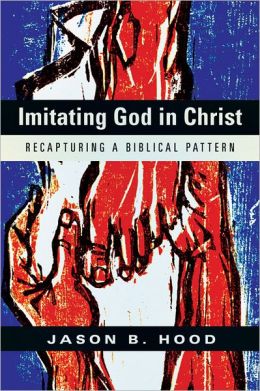
Imitating God in Christ: Recapturing a Biblical Pattern

Jason B. Hood, Imitating God in Christ: Recapturing a Biblical Pattern. InterVarsity Press, 2013. 232 pages. $22.00

“What Would Jesus Do?” is a slogan young Reformed types love to hate. But what if it’s a question more of us should be asking?
Gospel-centered-everything is quickly becoming a dominant refrain among younger and not-so-younger evangelicals. In part this is a reaction to the perceived moralism of the previous generation, whether a hardline fundamentalist variety or its squishier evangelical cousin. Two prominent threads in this fabric are gospel-centered holiness and gospel-centered preaching, the latter fueling the former.

Of course, with any reaction comes the peril of overreaction. As C.S. Lewis quipped, “For my own part I hate and distrust reactions not only in religion but in everything. Luther surely spoke very good sense when he compared humanity to a drunkard who, after falling off his horse on the right, falls off it next time on the left” (Fern-seed and Elephants, 66).

In Imitating God in Christ: Recapturing a Biblical Pattern, Jason Hood identifies the concept of imitation as a significant casualty in the gospel-centered counteroffensive against moralism. Should preachers exhort us to imitate biblical examples? Only if we want more “Dare to Be a Daniel” garbage. Should we talk about imitating Jesus? Only if we want to reduce the gospel to moralism or trendy activism. Should we play up the role of godly examples in the church? Only if we care more about copying behaviors than transforming hearts.    Continue at Bobby Jamieson

Wednesday, May 22, 2013

Sound Doctrine by Bobby Jamieson

While “doctrine” is a dirty word in some circles, there are times when I wonder if it’s become a bit of a cliché in some of ours. Many of us in the “new Calvinist/YRR/whatever-you-want-to-call-this” movement love to talk about the importance of sound doctrine and why it matters. We have systematic theologies and commentaries, apologetics books and cultural critiques. But sometimes we forget to talk about what doctrine does in the life of the church, practically.

In Sound Doctrine: How a Church Grows in the Love and Holiness of God, Bobby Jamieson doesn’t give us another book on why doctrine is important. Instead, he reminds us how orthodoxy leads to a healthy church—one committed to the fulfilling of the Great Commission in the spirit of the great commandments.

Sound doctrine: for life in—and the life of—the church


Jamieson, assistant editor of 9Marks and managing editor of the 9Marks Journal, hooked me the moment I read his definition of sound doctrine: “Sound doctrine is a summary of the Bible’s teaching that is both faithful to the Bible and useful for life” (17).    Continue at Aaron Armstrong

Saturday, February 4, 2012

Pastors, Don’t Let your People Resign into Thin Air

Does your church let people resign into thin air?

A church member simply submits a letter or has a conversation with a pastor, and then poof!—they’re gone. And your church couldn’t say whether the person has joined another evangelical church or dropped off the face of the earth.

My brothers, this should not be.

TWO WAYS CHURCHES LET MEMBERS DISAPPEAR INTO THIN AIR
An encouraging number of evangelical churches seem to be regaining meaningful practices of church membership and discipline. But I’m concerned that even some of these churches, however unintentionally, are leaving their back doors wide open.

One way churches do this is procedural. In some churches, an intent to resign, whether submitted verbally or in writing, is regarded as a fait accompli. If someone “resigns” their membership, then they’re gone. After all, the church can’t coerce people into staying, can it? (More on this below.)

Another way churches might do this is situational. Let’s say that to resign from First Baptist Smallville you have to submit a resignation, then the pastor or elders look it over, and then the congregation has to vote to dismiss you from membership. Most of the time, people are moving away and joining a church in another town. Once in a while somebody leaves to go to another nearby church.

But this time, a cranky troublemaker who’s been giving the church headaches for years has finally had enough and decides to throw in the towel and resign. In a huff, this person says he’s just giving up on church—at least for now.  Continue at Bobby Jamieson

Friday, January 13, 2012

The Post-Program Church: Which Programs to Cut?

If churches shouldn’t rely wholly on programs to do the work of ministry, this raises some questions: First, should churches ditch all their programs? Second, if not, how should churches decide which programs to keep or cut?

SHOULD CHURCHES DITCH ALL THEIR PROGRAMS?

Should churches ditch all their programs? Not necessarily.

Certainly churches should view all “programs” that aren’t biblically prescribed as optional, and so they should hold them with a relatively open hand. But this doesn’t mean that all programs are bad, or that they are inherently bureaucratic and counterproductive of real ministry. Some programs, like Sunday school, can be excellent tools for teaching the Bible, equipping Christians with a biblical worldview, and changing the culture of a church.

HOW TO DECIDE WHICH PROGRAMS TO KEEP OR CUT
How then should churches decide which programs to keep or cut? Obviously this is a complicated question that each church will answer slightly differently. Here are three principles for thinking it through. These principles, I should add, are relevant not just for deciding whether to keep a program or cut it, but for thinking through how to reform and improve existing programs as well.

1. Programs should be means, not ends in themselves. That is, they should be means to the end of equipping the saints for the work of ministry. For instance, an evangelism program shouldn’t be the only way people in the church evangelize. Or at least, if it is initially, it should have the stated goal of equipping people to evangelize outside the program.  Keep Reading >>>

Saturday, December 3, 2011

Does Hebrews Tell Us to Move On from the Gospel?

The other day a friend and I were discussing the rising tide of “gospel-centrality” among evangelicals. More and more voices are telling us that the gospel is not something we move on from in order to grow as Christians; instead, it should always remain the throbbing center of our lives and churches.
But, my friend asked me, what about Hebrews 6:1-2? “Therefore let us leave the elementary doctrine of Christ and go on to maturity, not laying again a foundation of repentance from dead works and of faith toward God, and of instruction about washings, the laying on of hands, the resurrection of the dead, and eternal judgment.”

Doesn’t it sound like the author of Hebrews is urging us to move on from the gospel? Doesn’t he tell us specifically to “leave the elementary doctrine of Christ” and go on to bigger and better things?

Well, let’s find out. What does the author of Hebrews himself “move on” to after giving this exhortation?

First, he warns his hearers not to fall away from the faith (Heb. 6:4-8), assures them that their faith is indeed bearing fruit (Heb. 6:9-12), and reminds them to hope in the steadfast promises of God which are an anchor for the soul (Heb. 6:13-20).

Then he spends an entire chapter explaining Jesus’ high priesthood by comparing him to Melchizedek (Heb. 7:1-28). This teaching on Melchizedek is, in fact, what the author wanted to get to earlier (Heb. 5:11-14), but had to rebuke his hearers first.  Keep Reading >>>

Friday, November 4, 2011

The Bible’s Burden for Church Revitalization

Throughout much of the United States (and a few other parts of the world) evangelical churches quite literally litter the landscape.

Many of these churches are like trash left on a street corner—they cause people to cross to the other side to avoid them. The people who belong to them profess to believe in the gospel, and their historic statements of faith confess the gospel. And some true Christians do belong to such churches. But on the whole the life of the church broadcasts anything but a gospel message. These churches instead churn out toxic waste rather than the nourishing food that people need.

Some churches in this state may be unrecoverable. But the sad thing is, many evangelicals seem content to ignore such churches and simply start new ones.

Church planting is important and strategic, and I am glad to see more and more people taking up that work.

But if you saw a garden overrun with weeds, would you simply plant some nice new irises right in the middle? If you couldn’t hear the news on TV because your radio was blaring, would you simply turn up the TV?

I would suggest that church revitalization—bringing life to dying churches by dealing with the causes of decline and building toward faithfulness—is a biblical burden. That is, when we see these churches acting as anti-witnesses to Christ, we should, according to Scripture, have a burden to do something about it. The burden of this article is to prove that point.    Keep Reading  >>>

Monday, October 31, 2011

Church Discipline Is Not a Dirty Chore

For some reason, doing the dishes vexes my wife. I think the process feels futile to her: there’s always something else getting dirty, something more that needs to be put away.

For me, dishes are no big deal. I’m more than happy to do them. But I’m much less sure-footed when it comes to some other, fouler-smelling messes around the house. 

Most of us put some chores on our “dirty” list. These are the things that make us hold our nose and look the other way. Things we would swiftly delegate if we could.

When it comes to life in the church, I think that many of us treat church discipline as a dirty chore. From private rebuke to public exclusion, we can resent the whole process. We hold our nose and look the other way as we go through the motions, eager to be done with all the mess.

I don’t deny that dealing with sin in the church can be uncomfortable, painful, and even disheartening. But we shouldn’t treat church discipline as a dirty chore.

Corrective church discipline begins—and, praise the Lord, very often ends—with one church member privately confronting the sin of another member. In Matthew 18:15-20, Jesus himself commands us to do this when our brother sins against us. Then Jesus provides further instruction about what to do if the individual doesn’t repent, ultimately culminating, if necessary, in excluding him or her from the congregation.    Keep Reading >>>

IMAGE - <<< Click on image to read another article on Church Discipline.

Saturday, October 22, 2011

How Congregations with Authority Submit to Elders

If the congregation as a whole is the final court of appeal, what does it mean for a church to submit to its leaders?

The Bible teaches that elders are to teach the Word, set a godly example for the flock, and oversee the affairs of the church (1 Tim. 3:2; 1 Pet. 5:3; 1 Tim. 5:17). Scripture therefore calls all Christians to “submit” to the leaders of our churches (Heb. 13:17). At the same time, Scripture teaches that the congregation as a whole has final authority in matters of discipline (Matt. 18:17; 1 Cor. 5:4-5) and doctrine (Gal. 1).

Do you see the dilemma? If the Bible located church authority exclusively in the elders, the idea of submission would be simple: the elders would make the decisions, and the congregation would submit to those decisions. But what does it mean for a congregation to submit to its elders when the congregation itself holds final authority?

Instead of considering this question in the abstract, let’s do it in an actual setting you may encounter.

Consider a case of church discipline. I would argue that, even in a congregational church, the process of discipline should be led by the elders. To work to work to restore someone who is in sin requires spiritual maturity (Gal. 6:1, Jude 23). Therefore, it makes sense for the elders to be the primary group who work behind the scenes to address sin issues in the congregation.
 
Still, the congregation maintains final authority. The decision to excommunicate must finally be theirs. The elders cannot simply “announce” that they have excommunicated so-and-so. They must bring all irresolvable cases of unrepentant sin to the congregation for a final decision.     Keep Reading>>>