The purpose of this Blog is to introduce men and women all over the World to the Doctrines of Grace; the 5 Solas; Reformation Theology and the Lord and Savior Jesus Christ.
Showing posts with label Mark Driscoll. Show all posts

Thursday, March 20, 2014

Caring Enough to Wonder if What Just Happened, Happened

Mark Driscoll’s recent apology has provided for some thoughtful and edifying discussion.

And as we discuss, it’s best for us to remember a few things: We need to love and pray for him. We need to remember that we’re not omniscient. And we need to hope for the best and pray accordingly.

And in doing so, the church as the opportunity to grow from this. Questions are being raised. Ideas are being circulated. But there have been too many erroneous assertions and objections in the mix.

Here are a few categorically unhelpful ideas buzzing throughout evangelicalism regarding the Driscoll apology:

1. “Concern for the genuineness of one’s repentance is equivalent to a refusal to forgive.”

Continue at Eric Davis

Saturday, March 15, 2014

Mark Driscoll’s Problems, and Ours

The recent revelation that Mars Hill Church in Seattle paid an outside company to boost sales of its pastor’s books has raised questions not simply about personal integrity but also about the very culture of American Evangelicalism.

As an English Presbyterian living in the States, I am never quite sure about whether I am an “Evangelical” by American standards. Back home, I am Evangelical without question, but here it is more complicated. I certainly hold to a traditional, orthodox Protestant faith with a strong existential twist. But American Evangelicalism is more (and sometimes much less) than that. The political commitments of the movement are, on the whole, a mystery to me. And, while the celebrity leadership of the movement is comprehensible to me in sociological terms, I find it distasteful and arguably unbiblical. It too often seems to represent exactly what Paul was criticizing in 1 Corinthians 1.   Continue at Carl Trueman

Wednesday, March 12, 2014

The Line at Mars Hill's Communion Table

This week brought to light more disturbing facts concerning Mars Hill's leadership. By paying to put Mark Driscoll's book on the New York Times Bestseller list, Mars Hill Executive Elders may have put the church's 501(c)3 tax exempt status in jeopardy. That would be a multi-million dollar hole from which the church may not recover. There is growing pressure for Mark to step down from leadership as more elders accuse him of what I have personally witnessed firsthand - a bullying, angry leadership style that leaves members and staff bleeding on the sidelines. He laughed about the dead bodies under the bus of Mars Hill in 2007/2008. People have been pointing out the dead bodies for years, but apparently the pile has to be big enough to see from space before enough pressure will be raised to cause change or repentance. But I admit from personal experience that, until you are personally splattered with your own blood or the blood of someone standing beside you in ministry, it is hard to believe the problem is as big as it is.

The larger Body of Christ needs to take seriously the criteria set in Scripture for acting on such accusations – two or three witnesses.

I Tim. 5:19-20 Do not admit a charge against an elder except on the evidence of two or three witnesses. As for those who persist in sin, rebuke them in the presence of all, so that the rest may stand in fear.    Continue at Theology for Women

Celebrity Pastors: A Retrospective


When I raised the 'celebrity pastor' issue a few years ago, my primary concern was the distasteful self-promotion and the cultivation of cults of personality which it seemed to involve.  The first time that I caught serious flack for this was when I mentioned an incident where a group of European churchmen was evicted from the VIP seating at a conference to make way for some young folk.  I well remember a conversation with one of the organizers shortly thereafter when, having declined an invitation to be part of the next gathering (and thus find myself standing inside the tent, as President Johnson would have said), I was told that I needed to understand that the only thing that would be changed as a result of my article was the VIP nomenclature for the seating. In retrospect, that reaction was pregnant with significance: the critics were to be treated as the problem, but the band was to play on.   Continue at Carl Trueman

Thursday, December 19, 2013

Re: Mark Driscoll

There are lots of people who want Mark Driscoll to fail and fall. I am not one of them. I love and respect Pastor Mark. His preaching helped saved my life. I have profited immensely from his ministry, especially in my early days of church planting and trying to figure out what missional ministry could look like among young adults. I do not know Mark personally. We have never exchanged so much as email messages. But we have mutual friends. He was kind enough to endorse my first book. During my time with the Docent Research Group, I did some editing work on a few of his book manuscripts. When I wrote the piece linked above, he was gracious enough to send a note of thanks and encouragement through his personal assistant. It touched me deeply. I want to repeat: I do not want Pastor Mark to fail and fall. I just want him to walk in step with the truth of the gospel.

I would “confront” him to his face if I could. Even though this is not a Matthew 18 situation, and Pastor Mark has not sinned against me personally, last week I tried to contact him privately through the two avenues available to me, but I received no response. I did not demand or even expect one. I know Pastor Mark is a very busy man, and since we do not really know each other, he has no obligation to me, and I don’t mean to suggest he does. He doesn’t. And if I’d had the opportunity to speak to him, as I requested, I would have done so respectfully and gently. I do hope what I’m writing right now will not be read as unkind or argumentative or ungraciously accusatory.   Continue at Jared Wilson

Friday, December 13, 2013

The Real Problem with Mark Driscoll's 'Citation Errors'

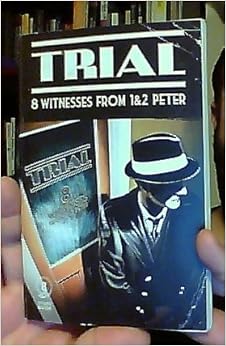
The Twittersphere lit up this past week with the revelation that Mark Driscoll's new book includes passages that bear a striking resemblance (though not quite word-for-word equivalence) to material from the book that is cited as their source. Further digging found a Bible study guide published by Driscoll's church in 2009 that did lift an entire passage, word-for-word, from an InterVarsity Press commentary on 1 and 2 Peter. The ensuing controversy has revolved largely around one of the last truly scandalous words in the English language: plagiarism.

I believe this scandal is largely misplaced.

To be sure, there is something troubling here, which I'll get to in a moment. But the fact that popularizers like Driscoll borrow material in books like A Call to Resurgence, without documenting the source of every turn of phrase in painstaking detail? Without excusing the carelessness, that's about as shocking (shocking!) as Captain Renault's discovery, in the movie Casablanca, that there was gambling going on at Rick's Café Américain.

As for the unattributed copying in the church's Bible study guide, by "Pastor Mark Driscoll": this was, without a doubt, improper use. But rather than tar it with the explosive word plagiarism, with that word's connotations of intent to reap rewards by presenting others' work as one's own, why not simply call it a mistake?    Continue at Andy Crouch

Saturday, November 30, 2013

Young, Restless and... Nietzschean?


Over at First Thoughts, Collin Garbarino offers some very perceptive comments on the Driscoll plagiarism affair.  He makes the point that such activity receives a failing grade at his university.  I would only add that at Westminster it also involves automatic suspension from the degree program followed by discussion with the powers that be about whether Christian ministry is really an option for the perpetrator.

One sentence in particular stands out: 'Ghostwriting is lying, and plagiarism is stealing, and there seems to be a lot of it going around.' No further comment is necessary, for that says it all.

For some time now I have been harping on and on about the corrupting effects of celebrity culture on conservative evangelicalism.  I think I was wrong: we are not dealing these days with mere celebrities; the ethical transgressions we are witnessing would indicate that we are actually dealing with a form of evangelical Nietzscheanism whereby the leaders of the movement are, to borrow a phrase, beyond good and evil. This should have been clear when Driscoll embraced T D Jakes as a brother.   Continue at Carl Trueman

Thursday, November 28, 2013

How do we Fix the Problem of Celebrity-Ism?

Monday, after sharing a few thoughts on the latest bit of controversy surrounding Mark Driscoll, I made the following statement:

Maybe our question should really be: how do we fix the problem of “celebrity-ism” that’s seeped into the church?

I don’t think there’s anyone out there who would deny this is a problem—not just for pastors with a particularly large platform, but for laypeople, too. I think the solution really comes down to one thing:

Regaining a right view of oneself. 

I know—totally revolutionary and world-changing, right? Bear with me a minute:

How does celebrity-ism start? It always—always—begins when we forget who we are. For pastors, maybe the congregation’s grown to a size when people are starting to take notice. More people show up. Podcasts downloads increase. Someone suggests writing a book. That book sells more than three copies.   Continue at Aaron Armstrong

Tuesday, November 5, 2013

A Call to Resurgence by Mark Driscoll

Christendom is dead. Now let’s set aside our differences and get to work telling people about Jesus.

If you wanted to sum up Mark Driscoll’s new book, A Call to Resurgence, in a sentence, that’d be the way to do it. And make no mistake, pronouncing Christendom, the age of cultural Christianity, dead is no overstatement, even if declaring the American church dead is. A quick survey of the cultural landscape in America (and the West in general) shows how much has changed, and it’s definitely not in favor of Christianity. So what are Christians to do? Are we to retreat and wait for Jesus to return? Are we to give up our distinguishing characteristics and blend into the culture?

We do not need more retreat, Driscoll says. We need resurgence:
This is not a time for compromise but rather courage. The fields are ripe. And as Jesus says, “the laborers are few”—in part because the prophets of doom are many.… This is no time to trade in boots for flip-flops. The days are darker, which means our resolve must be stronger and our convictions clearer.   Continue at Aaron Armstrong

Thursday, October 31, 2013

A Call to Resurgence

Mark Driscoll. A Call to Resurgence: Will Christianity Have a Funeral or a Future? Carol Stream, IL: Tyndale House, 2013. 336 pp. $19.99.

Mark Driscoll’s new book, A Call to Resurgence: Will Christianity Have a Funeral or a Future?, is sometimes insightful, sometimes amusing, sometimes stirring, and sometimes exasperating. In places, particularly at the beginning and the end of the book, it represents the best of Driscoll: an uncompromising assessment of the scale of the mission, a robust call to courage and obedience, and an impassioned plea for sound doctrine, spiritual power, and sacrificial mission. At the book’s heart, however, is an internal tension so significant that large parts of it are likely to be ineffective, or even counterproductive, in persuading those who do not already share Driscoll’s view. Consequently—and I say this as a broadly Reformed, complementarian, charismatic, missional pastor—A Call to Resurgence is somewhat frustrating to read.

The book is clearly laid out, and its contents can be easily summarized. American society is in a terrible mess: Christendom is over, and the results aren’t pretty (chapter one). The American church is also in a terrible mess, with weird spiritualities, sexual sin, fluffy pluralism, immature masculinity, and financial stinginess creeping into her through the surrounding culture (chapter two). Not only that, but the church is also divided into tribes that may barely know each other: Reformed and Arminian, complementarian and egalitarian, continuationist and cessationist, fundamentalist and missional (chapter three).   Continue at Andrew Wilson

Saturday, October 26, 2013

See you in Seattle, Pastor John MacArthur?


Dear Pastor John MacArthur,


Let me start by saying thank you.

Thank you for preaching the Bible year after year. As a new Christian, I listened to a lot of your sermons via technology and learned a lot of Bible from you.

Thank you for staying faithful to your wife. You’ve been in ministry long enough to see a parade of scandals, and young men need examples of fidelity to their marriage covenant.

Thank you for staying at your church for so many years. It’s become vogue for a pastor to sell enough books that they can quit ministry in a local church and go do something else. Thank you for serving one church for the long haul. I hope by God’s grace to do the same.

Lastly, thank you for having courage and boldness. Admittedly, we disagree on some things that I would consider secondary and you would consider primary, but a man who takes the Bible seriously and has passion to defend truth is rare in our day.

You have made deposits in my life through your ministry and for that I thank God and appreciate you.   Continue at Mark Driscoll

Friday, October 25, 2013

Mark Driscoll's Call to Resurgence

You may love him, you may hate him, but you’ve definitely heard of him and A Call to Resurgence poses this question: Will Christianity have a funeral or a future? This is a book about the past, the present and the future of the Christian faith, particularly in the United States of America.

you’ve undoubtedly got an opinion about him. Mark Driscoll is pastor of Mars Hill Church in Seattle, co-founder of the Acts 29 Network, and the author of several bestselling books. The newest of these books may well prove the most controversial.

The fact is, Christendom is dead. The Christian faith that once existed in the background of American life and culture has diminished to such an extent that America is now a post-Christian nation. “Christians are ostracized. Gay marriage is celebrated. Abortion is literally destroying an entire generation. The bandwagon has stopped carrying us and has started running over us.” This is happening all around us, yet many Christians remain oblivious. “The church is dying, and no one is noticing because we’re wasting time criticizing rather than evangelizing.”    Continue at Tim Challies

Thursday, May 16, 2013

Open Letter to Mark Driscoll (2013)

Dear Pastor Mark --

I know you don't read any of the little blogs, or people who are trying to make their own tribe, but others do, and I think it's worth writing a brief open letter to you this week based on your epic video from this weekend.  

I think it's fantastic that you can walk away from the Gospel Coalition, and hand over the reigns to Acts29, and with no muss and no fuss start your own tribe.  It's proof that you have something which most of us don't have.  I'm sure there's a Greek word for it, but unfortunately I don't speak Greek.

Someone with more time on their hands might want to go through this 21-minute monologue and find all the ingrown hairs and blemishes, but sadly: I'm on a tight schedule this week.  I'm writing today about the funniest parts of this video.  In your attempts here to get tribes to talk to each other, you have somehow done two things so well that they deserve a mention.

The first is this: you are fantastic at making much of yourself.  You are the master of the humblebrag now that the meme is dead and the ship has sailed.  Like a self-aware version of Ari Gold from Entourage, you drop all the names you know to demonstrate your position -- but dutifully, you're not like any of them.  T.D. Jakes didn't hardly even know you when he met you, for pete's sake.  And thankfully: you're nothing like the homeschooled fundies who can't make a tribe for themselves, who act drunk even though they would never touch the stuff.  You're a tribal leader.

If anyone knows how to salvage his own reputation from the doctrinal and moral pratfalls and frankly-insulting egoisms for which you are actually well-known, it's you -- and it's funny to watch you do it as you get older and your audience stays the same age.    Continue at Frank Turk

Thursday, February 7, 2013

Any Place for the God of Job?


The last twenty-four hours have seen widespread reporting of the latest TGC 'kerfuffle,' this time over Mark Driscoll's comments about Joel Osteen.  I guess I am becoming rather jaded, but I am surprised there is surprise: he is the man, after all, who gave T. D. Jakes a clean bill of health last year.

More interesting, however, is the hint that some unnamed modern reformed types make too much of suffering.  The apparent connection Pastor Driscoll makes between this and a world which apparently over-uses antidepressants is interesting and no doubt worthy of discussion.  For me, it triggered a chain of related thoughts in my mind.  Do we make too much of suffering?  Is depression sinful?  Is it always the result of personal sin?  Or poor preaching?  Or defective theology and unbalanced homiletic emphases?  I am convinced that this is not so. Once one moves in that direction, one is positing a tight and necessary connection between personal issues and specific suffering. That is not biblical and is pastorally very dangerous. Yes, suffering can sometimes be that way: the man who cheats on his wife and loses his family suffers as a direct result of his personal sin. But is the depressed person necessarily suffering because of some specific sin? The Bible, I believe, teaches that this is not so.

Preaching through Job recently, I was very struck by the Lord's final intervention.   Job has suffered incredibly throughout the book; and we, the readers, know that none of this is his fault.  It is the result of the battle between God and the Accuser and, if anything, Job's suffering is thus the result of his devotion to the Lord, which Satan wishes to test.  
 
 And by the end of Job's last big speech (Job 31) he is depressed, and with good reason.  The man has lost everything.   Continue at Carl Trueman

Wednesday, February 6, 2013

Joel’s Not So Bad After All? Mark Driscoll on Joel Osteen

So says YRR (Young, Restless, and Reformed) leader Mark Driscoll in an interview (regarding his forthcoming book) published by the TGC:
Q: You observe that “appreciated people” exchange grumbling for praying, competing for celebrating, bitterness for thankfulness, performing for serving, and boasting for encouraging. What’s an “appreciated person”? Isn’t that what Joel Osteen wants me to be?
A: I am aware of the theological differences that exist between our tribe and Pastor Joel. I also know my Reformed brothers like to treat Pastor Joel like a piñata, but there are worse things than being happy and encouraging at a time when the most common prescription medications are antidepressants. A few guys in our tribe could learn to talk about something other than painful, arduous suffering once and a while—if nothing else than for the sake of variety. Our identity is not in our joy, and our identity is not in our suffering. Our identity is in Christ, whether we have joy or are suffering. 
So, there are two utterly competing accounts of Joel Osteen’s message before us.  Either Osteen’s is a false gospel or he has been misunderstood. James Gilmore, author of The Experience Economy, has produced a scorecard by which to evaluate Osteen’s message. The key phrases under the Osteen column are telling. More pointedly, Mike Horton writes:  Continue at R. Scott Clark

Wednesday, May 9, 2012

Driscoll vs. Calvin, Doctrine vs. the Spirit

A few days ago, a short YouTube came out called, “Don’t Elevate Doctrine above the Holy Spirit.” It’s a clip from Mark Driscoll’s sermon on Revelation 2:1-7 preached at the ancient Celsus Library in Ephesus. Apart from the excerpt on youtube, there are some helpful things said at various points in the sermon. However, the portion in the video is a perfect example of a wider error often seen in the church today: the pitting of “doctrine” (cue ominous music) against the work of the Spirit in the heart.

In Driscoll’s latest hit, he warns against the supposed consequences of elevating doctrine over the Holy Spirit with statements such as: “You don’t need to pray much anymore, because you have a theology that tells you what to do. You don’t have to listen to the Holy Spirit anymore, because you have a theology that directs all your steps. I’m not saying we avoid our doctrinal clarity, but we still need to be filled with the Holy Spirit.” He proposes that “cessationism…[is] a clever way of saying, we don’t need him [the Holy Spirit] like we used to.” One of the repercussions of cessationism, he says, is that “Christianity goes from a relationship we enjoy to a belief system we adhere to.”

Whatever cessationism is, it’s anything but these things (see Nate Busenitz’s article here for helpful clarification on what cessationism is not).

But more to the point: Can doctrine be elevated over the Spirit? It’s a charged issue, no doubt. Much could be said in response to the quotes above, but the bottom line is this: to say, “Don’t elevate doctrine above the Holy Spirit,” is to make a boogeyman distinction. It’s a non-existent dichotomy that sounds catchy, but is false through and through, and needs to be laid to rest.   Continue at Eric Davis

Thursday, February 23, 2012

Go Beyond the Sex Questions

Evangelicals appear to be preoccupied with sex. One megachurch pastor and his wife have written a book challenging married couples to a “sexperiment” of making love for seven days straight. Mark Driscoll’s controversial new book on marriage contains a chapter titled “Can We?” in which he and his wife answer questions they are typically asked in counseling situations, questions related to different sex acts.

This post is not meant to be a critique of Driscoll’s book (I haven’t read it and don’t plan to). Nor do I want the comments section to degenerate into a fiery back-and-forth about what activities are appropriate for married couples.

Instead, I want to offer a pastoral look at the underlying issues that prompt these questions and encourage pastors to go for the heart, not merely the surface, when approached with questions of this kind.

1. Recognize the legitimacy of the questions.

First, we should not be surprised that new converts are asking pointed questions about what activities are appropriate for a married couple. We live in a pornified culture.  Continue at Trevin Wax

Thursday, January 12, 2012

Jeremy Pierre Reviews “Real Marriage”

Jeremy Pierre has a critical review of Real Marriage in Credo magazine, and like many reviewers he takes issue with chapter 10. Pierre is a pastor and biblical counselor, and he has a section that I think is particularly insightful. He writes,

It is precisely the Driscolls’ apparent desire to stand against a sexualized culture that makes Chapter 10 “Can We ____?” so frustrating to read…

Driscoll allows for a broad range of sexual expression… Many things could be said in response, but perhaps most helpful would be to point out that Driscoll frequently answers the question Is it Helpful? affirmatively based on the dangerous assumption that novelty of the sexual experience is the avenue to greater pleasure, that variety gives that edge of intrigue that keeps sex exciting.

Driscoll says that [sodomy] can be helpful “for the variety” (187), role-playing can be helpful to keep things from getting “sexually predictable” (190), sex toys “heighten the pleasure” of sex (191), and cosmetic surgery can “make us more attractive to our spouse” (197).

I have spent many hours counseling couples, undermining this very assumption. A pornographic culture teaches that greater sexual satisfaction comes from hotter methods and better bodies…  Keep Reading >>>

Tuesday, January 10, 2012

Evangelical Exhibitionists - Mark Driscoll and Ed Young Jr.

After hours of writing and half a dozen drafts, I've decided not to review or link to Mark Driscoll's latest book, Real Marriage. Over the past two weeks or so, lots of our readers have written via e-mail, Twitter, and Facebook to ask for a TeamPyro review of the book. Last week I said I'd go ahead and do it. But after trying for most of the weekend to write a review without breaching the boundaries of propriety and chaste conversation, I'm throwing in the towel.

The book is the umpteenth incarnation of Driscoll's infamous homilies on sex and the Song of Solomon. It is by no means the first book in which he has dealt with supposedly taboo sexual topics in graphic ways that are calculated to shock. (Now that I think of it: Has he ever written a book that doesn't somehow get around to the same themes that make up the table of contents of Porn-Again Christian?)

For several years, one of Driscoll's websites has featured a lot of the same kind of explicit material that recent reviewers have found so offensive. (The website actually includes some links and recommendations that point readers to even more outlandish and sex-saturated websites, such as "Christian Nymphos" and XXXChurch.) So the current controversy about the book's second half is literally years late. I'm quite amazed so many influential bloggers and Christian leaders seem totally unaware that Driscoll has been teaching this same stuff for years.  Keep Reading >>>