The purpose of this Blog is to introduce men and women all over the World to the Doctrines of Grace; the 5 Solas; Reformation Theology and the Lord and Savior Jesus Christ.
Showing posts with label Old Testament. Show all posts

Monday, July 15, 2013

The Grace of God in the Old Testament


Even in its diversity, the Bible is tied together by the theme of God’s grace, and we can see this in every book of the Old Testament.

There is always a danger of squeezing the Bible into a mold we bring to it, rather than letting the Bible mold us. There could hardly be more diversity within the Protestant canon—diverse genres, historical settings, authors, literary levels, ages of history.
But while the Bible is not uniform, it is unified. The many books of the one Bible are not like the many pennies in the one jar. The pennies in the jar look the same, yet are disconnected; the books of the Bible (like the organs of a body) look different, yet are interconnected. As the past two generations’ recovery of biblical theology has shown time and again, certain motifs course through the Scripture from start to end, tying the whole thing together into a coherent tapestry—kingdom, temple, people of God, creation/new creation, and so on.
While the Bible is not uniform, it is unified.
Yet underneath and undergirding all of these themes is the motif of God’s grace, his favor, and love to the undeserving. We can see the grace of God in every book of the Bible, throughout both the Old and New Testaments.   Continue at Dane Ortlund

Tuesday, July 2, 2013

The New Testament Explains the Old Testament

44 ”The kingdom of heaven is like a treasure hidden in the field, which a man found and hid again; and from joy over it he goes and sells all that he has and buys that field. 45 ”Again, the kingdom of heaven is like a merchant seeking fine pearls, 46 and upon finding one pearl of great value, he went and sold all that he had and bought it. (Matthew 13:44-46 NASB) 
The correct way to understand Sacred Scripture is that the Old Testament contains the “old” promises of the Messiah and the fulfillment of His Kingdom while the New Testament is the “new” revelation from Jesus and His Apostles, which reveal to us how the “old” promises are fulfilled in Him. The New Testament explains the Old Testament, not the other way around.
51 ”Have you understood all these things?” They *said to Him, “Yes.” 52 And Jesus said to them, ”Therefore every scribe who has become a disciple of the kingdom of heaven is like a head of a household, who brings out of his treasure things new and old.” (Matthew 13:51-52 NASB)   Continue at Mike Ratliff

IMAGE

Thursday, October 18, 2012

Is the Sabbath Still Required for Christians?

Tom Schreiner’s 40 Questions About Christians and Biblical Law releases later this month. As I’ve said before, I think it’s now the go-to book for an accessible introduction to all the major issues related to gospel and law, the role of law in redemptive history, application of the law today, etc. I could not recommend it more highly.

Kregel has kindly given me permission to reprint some of the entries. I’ll do so throughout the week. I won’t reproduce the footnotes or the discussion questions, but other than that it’s the full entry.

Today I’ll reprint question #37, “Is the Sabbath Still Required for Christians?”


Believers today continue to dispute whether the Sabbath is required. The Sabbath was given to Israel as a covenant sign, and Israel was commanded to rest on the seventh day. We see elsewhere in the Old Testament that covenants have signs, so that the sign of the Noahic covenant is the rainbow (Gen. 9:8–17) and the sign of the Abrahamic covenant is circumcision (Gen. 17). The paradigm for the Sabbath was God’s rest on the seventh day of creation (Gen. 2:1–3). So, too, Israel was called upon to rest from work on the seventh day (Exod. 20:8–11; 31:12–17). What did it mean for Israel not to work on the Sabbath? Figure 5 lists the kinds of activities that were prohibited and permitted.

The Sabbath was certainly a day for social concern, for rest was mandated for all Israelites, including their children, slaves, and even animals (Deut. 5:14). It was also a day to honor and worship the Lord. Special burnt offerings were offered to the Lord on the Sabbath (Num. 28:9–10). Psalm 92 is a Sabbath song that voices praise to God for his steadfast love and faithfulness. Israel was called upon to observe the Sabbath in remembrance of the Lord’s work in delivering them as slaves from Egyptian bondage (Deut. 5:15). Thus, the Sabbath is tied to Israel’s covenant with the Lord, for it celebrates her liberation from slavery. The Sabbath, then, is the sign of the covenant between the Lord and Israel (Exod. 31:12–17; Ezek. 20:12–17). The Lord promised great blessing to those who observed the Sabbath (Isa. 56:2, 6; 58:13–14). Breaking the Sabbath command was no trivial matter, for the death penalty was inflicted upon those who intentionally violated it (Exod. 31:14–15; 35:2; Num. 15:32–36), though collecting manna on the Sabbath before the Mosaic law was codified did not warrant such a punishment (Exod. 16:22–30). Israel regularly violated the Sabbath—the sign of the covenant—and this is one of the reasons the people were sent into exile (Jer. 17:21–27; Ezek. 20:12–24).   Continue at Justin Taylor


Tuesday, October 16, 2012

Biblical Womanhood and the Problem of the Old Testament


As explained in my review of A Year of Biblical Womanhood, much of Rachel Held Evans’ book could be summed up, sadly, as an attempt to discount the validity of Scripture. I am hopeful that she does not intend for this to happen, but it is unfortunately what happens when she repeatedly speaks of the Bible as being outdated, useless in parts, and at times downright horrific — including at one point describing having a terrifying nightmare as she contemplated the texts (62). Tragically, that is her claim.

Evans is troubled by many things in the Old Testament, but especially by the harsh consequences in the law that follow from sexual sin — consequences that often required the death of men and women. In explaining why these same codes do not apply today — why adulterers are not stoned to death — she can only say, “Most Jews and Christians have long abandoned the practices associated with hard patriarchy” (51). But is it that simple — and that shallow?

She suggests this is because Jesus ignored certain Old Testament laws. He was a revolutionary who used “selective literalism” and who broke these anti-adultery laws when he urged compassion on the adulterous woman (53). But before we charge Jesus with breaking the law, we should give this question some serious thought.

Actually, we are faced with two questions. First, how should we handle the abuse of women recorded in the Old Testament? And second, how should do we properly evaluate the ongoing value of the Old Testament law?

Handling Abuse in the Old Testament

In one chapter, Evans sets out to find groups “committed to preserving as much of the patriarchal structure of Old Testament law as possible,” including polygamists. In polygamy, “the man’s consequent procreative prowess is listed by writers of Scripture as one of his most worthy virtues” (51, 58). That is a bold claim, but she provides no biblical citations to back it up.   Continue at Trillia Newbell

Friday, July 27, 2012

What Happens to Infants who Die? The NT answers

Yesterday we saw 16 verses in the OT that address the issue of what happens to little children who die. I hope you saw that the OT lays the groundwork for a category distinction: there are two kinds of sinners who die. There are those who die because of their sin nature, namely infants. And there are those who die because they love sin, and actively embrace it; namely, adults. This distinction is important to grasp because the NT does not reestablish it from the ground up but rather Jesus and Paul both teach in such a way that the distinction is reinforced.

Again, if any of these verses trouble you, simply skip them, and let the weight of the full list be enough to convince you. The numbering picks up where yesterday left off.

17) Jesus blessed little children. There are no examples of Jesus blessing anyone who was in open rebellion to God. Again, much like Jonah 4, Jeremiah 19, 1 Kings 11, this (at the very least) creates a category distinction between sinful adults in rebellion against God, and the childlike innocence of children (Matt 18:3-5).

18) In Matthew 18, Jesus not only blesses the children, but uses them as an earthly analogy of childlike faith. He says that “unless you are converted and become like children, you will never enter the kingdom of heaven. Therefore, whoever humbles himself like this child– this one is the greatest in the kingdom of heaven.” Everyone is free to debate what exactly Jesus means here, and there are Christian answers all over the spectrum. But at the very least, Jesus has to be implying that children in their current state would go to heaven if they died. Consider this statement: “my car is as fast as a cheetah, and unless your car is like a cheetah too, it can never be fast.” Everyone can debate what it means to be fast, or how fast my car really is, or if your car even should be fast. But the entire analogy would break down if cheetahs were not indeed fast to begin with. That is the assumption that makes the analogy make sense. Whatever Jesus is saying Matthew 18, it only makes sense if the destination of children who die is an enviable one.   Continue at Jesse Johnson

Monday, May 28, 2012

Seven Ways to Get to Christ in the Old Testament

Maybe some of you have had a similar experience to mine. I was born and raised in a Christian home where the Gospel was believed and the Bible was taught and God was revered and trusted.

All of that was great, and I am so thankful and blessed for my upbringing, but the Old Testament was always a disconnect for me to the Gospel and the New testament. I wasn’t ever taught false doctrine but I believe that the emphasis was put in the wrong place. As far as I knew, Jesus’ life was just another story of the Bible among others like Daniel, Abraham, David, Esther, etc. You get the idea.

My friend recently described it as if you were given a box full of parts and told to assemble them not knowing that you were supposed to be building a motorcycle.

I think that this comes from an over emphasis on “Bible Study.”  I am not saying that there is anything wrong with Bible study or having a good hermeneutical foundation. Obviously, these are important for context so we don’t miss the original meaning and message. We correctly exegete the word and do not perform the big no no of eisegesis.

When Paul the Apostle refers to the Gospel or sometimes even “the Mystery” he isn’t just talking about the “The Romans Road” or some easy steps to understanding salvation. When Paul uses these terms he is talking big picture; he is looking at the whole story of historical redemption. He is thinking of Creation to New Creation and everything in between. This is where a proper understanding of the Old testament fits in. All the stories, and historical events of the Old Testament are pointing forward to something greater – to some one greater! Jesus himself said to the religious leaders and students of his day:   Continue at Char Brodersen

Friday, May 4, 2012

Jesus Is What the Old Testament Promised Him to Be

Last Sunday evening, Ben Falconer, our excellent associate pastor, preached a sermon called “Immanuel” on Jesus Christ as the fulfillment of Old Testament prophecy and promise. He concluded the sermon with a worshipful list of all that Jesus is.

He is the promised seed of Adam who would crush Satan’s head (Gen. 3:15).

He is the descendent of Abraham through whom every nation on earth would be blessed (Gen. 12:3).

He is the son of Judah, who reigns eternally as king, whose garments are washed in the blood of grapes, and whose hand is on the neck of his enemies (Gen. 49:8-12).

He is the Passover Lamb who was slain to protect God’s people from the Angel of Death (Exod. 12).

He is the greater son of Israel who came out of Egypt, and He is the great redeemer who brings his people out of a bondage and slavery that is far worse than anything the Israelites experienced there (Exod. 12-14).

He is the true bread from heaven that actually nourishes and feeds his people (Exod. 16).

He is the Rock from whom the only life-giving water flows (Exod. 17).

He is the fulfillment of the Law, perfectly obeying not only the 10 Commandments, but all 613 from the day of his birth (Exod. 20).

He is the One through whom we enter into our lasting Sabbath rest, not just for one day out of seven, but for every day from now through all eternity (Exod. 23:10-12).   Continue at Kevin DeYoung

Monday, April 30, 2012

The Church: The Gospel Made Visible

What Does the Bible Say?

The Nature of the Church

The church is the body of people called by God’s grace through faith in Christ to glorify him together by serving him in his world.

The People of God in the Old Testament: Israel

In order to understand the church in the full richness of God’s revealed truth, we must examine both the Old and New Testaments. Christians may sometimes use the phrase “a New Testament church,” but the shape of the visible church today bears a clear continuity—though not identity—with the visible people of God in the Old Testament.

God’s eternal plan has always been to display his glory not just through individuals but through a corporate body. In creation God created not one person but two, and two who have the ability to reproduce more. In the flood God saved not one person but several families. In Genesis 12 God called Abram and promised that Abram’s descendents would be as numerous as the stars in the sky or the sand on the seashore. In Exodus God dealt not only with Moses but with the nation of Israel—12 tribes comprised of hundreds of thousands of people yet bearing one corporate identity (see Exod 15:13–16). He gave laws and ceremonies that should be worked out not only in the lives of individuals but also in the life of the whole people.

In the Old Testament, Israel is called God’s son (Exod 4:22), his spouse (Ezek 16:6–14), the apple of his eye (Deut 32:10), his vine (Isa 5:1–7; Nah 2:2), and his flock (Ezek 34:4). Through these names God foreshadowed the work he would eventually do through Christ and his church.   Continue at B&H Blog

Thursday, April 26, 2012

The Old Testament Is a Story of Providence

 ”God sent an evil spirit between Abimelech and the citizens of Shechem” (Judges 9:23).
•    ”Now the Spirit of the Lord has departed from Saul, and an evil spirit from the Lord tormented him” (1 Samuel 16:14).
•    ”I am the Lord and there is no other.  I form the light and create disaster; I bring prosperity and create disaster; I the Lord do all these things” (Isaiah 45:6-7).
•    ”When disaster comes to a city has not the Lord caused it” (Amos 3:6).
Even death is in the Lord’s hands.
•    ”The Lord brings death and makes alive; he brings down to the grave and raises up” (1 Samuel 2:6).
•    ”There is no other god besides me. I put to death and I bring to life. I have wounded and I will heal, and no one can deliver out of my hand” (Deuteronomy 32:39).
From the big pictures to the tiniest details, the Old Testament teaches that God guides all our steps.
•    ”The lot is cast into the lap, but its every decision is from the Lord” (Prov. 16:33).
•    ”A man’s steps are directed by the Lord.  How then can anyone understand his own way?” (Prov. 20:24).
•    ”I know, O Lord, that a man’s life is not his own; it is not for man to direct his step” (Jeremiah 10:23).
•    ”All the days ordained for me were written in your book before one of them came to be” (Psalm 139:16).
Our God, Daniel says, “does as he pleases with the powers of heaven and the peoples of the earth” (Dan. 4:35). And in Isaiah the Lord declares: “I am God, and there is no other; I am God ant there is none like me.  I make known the end from the beginning, from ancient times what is still to come.  I say: My purpose will stand, and I will do all that I please” (Isa. 46:9-10). God is God because he  has the power to do what he wants, the wisdom to carry it out, and the sovereign authority to immutably appoint whatsoever shall come to pass.     Continue at Kevin DeYoung
 

Thursday, November 17, 2011

Pastors and Tithing

I was recently asked by a church if Grace Church requires their pastors to practice tithing. This is my response to that email:

The word tithing means giving ten-percent of income to the church. I do not teach or practice that approach to money. I think that is based on a faulty understanding of the Old Testament practice, and creates and propagates a wrong understanding of God’s relationship to our money.

In the OT, the Israelites were living in a theocracy, and everything they owned really belonged to God. God drove that point home by making them revert their land sales and free their slaves every 50 years. Tithing in this system served as a form of taxation. While God owned everything, he required his people to fund the Levitical system (Levites were priests, and thus generally were not farmers, merchants, or shepherds) with a tithe collected annually (Deut 12:2-19; 14:22-29). Leviticus 27:30-32 reiterates this tithe, and applies to livestock as well.

In the NT, the tithe goes the way of the Levites and the temple curtain. As the Baker Bible Encyclopedia says, “Tithing is mentioned in the New Testament only critically.” The fact was, Pharisees loved the tithe, because it was easy to enforce, said nothing of the heart, and had little to do with actual love for God. Not only that, but religious leaders were the recipients of it, and in exchange all they paid was ten-percent (to themselves!).   Keep Reading >>>

Saturday, July 9, 2011

The Gospel of the Old Testament

This is the Gospel. It was preached to Adam after the fall; the seed of the woman should bruise the serpent’s head: the first Gospel-sermon, delivered before the curse of God’s broken law had been pronounced. To Abraham it was preached in clearer terms; ” In thy seed shall all the nations of the earth be blessed;” and by Moses to Israel, ” I am the Lord thy God, that brought thee out of the land of Egypt.” Moses was the typical deliverer. In David, Christ was exhibited still more clearly; he is the true David, the real Beloved. And indeed if Christ was not preached, then were the saints of old not saved; for the Scripture says, “there is no other name under heaven whereby men can be saved.” “By the deeds of the law shall no man living be justified?” “Jesus Christ is the same yesterday, to-day, and forever;” yesterday under the law, to-day under the Gospel, and forever, the same one and only Saviour. If therefore, men under the former dispensation were saved at all, and we know assuredly they were, they must have been saved by Christ —by the Gospel. Read the rest HERE

Friday, January 14, 2011

The Unity of The Bible: Exodus

  • Israel in Egypt: they are in a desert place in that the Creator is not worshiped and it is not the land promised to them. It seems barren of prosperity and blessing, though these things were promised to them. God the Creator will bring the out of this desert place, just as He filled the formless, desert wasteland of Earth in the creation, and just as He filled the barren wombs of Sarah and Rachel.
  • Pharaoh commanded infanticide that Israel would not become a great nation. They become great in spite of the command. God continues to create in the desert wastelands. Continue Reading>>>

Tuesday, December 28, 2010

Can the Old Testament be of Value to Christians?

Jon Akin recently wrote a 2-part blog on the misuse of the Old Testament in the Church. You can read parts one and two.


This raises the question then, how is the Old Testament to be read? And is the Old Testament of value to the church today?

Jon Akin, who is completing a PhD in Old Testament studies at The Southern Baptist Theological Seminary has written several blogs that can help us with both of these questions. He writes in one of these blogs: Continue Reading>>>

Monday, December 6, 2010

The Continuity of Theological Concepts: A New Covenant Reading of Old Covenant Texts

While studying and teaching Zechariah 9-14 near Beirut, Lebanon I was challenged to think about the meaning and relevance of those chapters to Lebanese believers who often suffer because of the animosity between Lebanon and the very nation and people who are mentioned in those chapters. Does an alleged promised restoration of Israel and Jerusalem bring comfort or chagrin to believers in Lebanon? After all, are not Arabic speaking believers and Jewish believers in the Middle East the true people of God? Are they not the ones who should expect to share in the triumph of God? Does present day Israel have a “favored nation” status that trumps the “holy nation” of the church (1 Pet 2:9-10)?
Furthermore, does not a similar conundrum exist for those of us who live in North America? Do these texts have anything relevant to say to a largely Gentile church? Do we simply rejoice because ethnic Israel is to be restored or do we rejoice because the triumph which the old covenant nation expected is the triumph that belongs to all of those who are children of God through faith in Jesus Christ? Admittedly, the question of relevancy should not be determinative in the understanding of biblical texts but it does raise questions that might not be raised otherwise. Continue Reading>>>

Friday, August 27, 2010

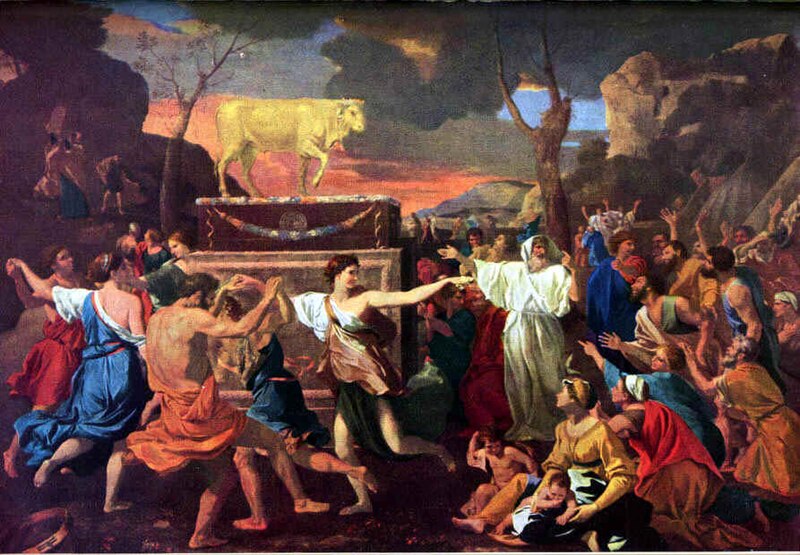
A Biblical Overview of Idolatry

In his sermon titled “Soul Idolatry Excludes Men Out of Heaven,” English Puritan Pastor David Clarkson (1621-1686) gives us thirteen pointers I’ll draw from to help us identify the idols of our hearts and I will frame them as questions.[5]
  1. What do you most highly value?
  2. What do you think about by default?
  3. What is your hightest goal?
  4. To what or whom are you most commited?
  5. Who or what do you love the most?
  6. Who or what do you trust or depend upon the most?
  7. Who or what do you fear the most?
  8. Who or what do you hope in and hope for most?
  9. Who or what do you desire the most? Or, what desire makes you most angry or makes you despair when it is not satisfied?
  10. Who or what do you most delight in, your greatest joy and treasure?
  11. Who or what captures your greatest zeal?
  12. To whom or for what are you most thankful?
  13. For whom or what great purpose do you work?
Read the whole article HERE

Image Courtesy of  wikipedia

Tuesday, June 1, 2010

What The Bible Is Not

In the Introduction of that book, author Sally Lloyd-Jones rightly explains what the Bible is not before she beautifully explains what the Bible is. She writes:

Now, some people think the Bible is a book of rules, telling you what you should and shouldn’t do. The Bible certainly does have some rules in it. They show you how life works best. But the Bible isn’t mainly about you and what you should be doing. It’s about God and what he has done.

Other people think the Bible is a book of heroes, showing you people you should copy. The Bible does have some heroes in it, but (as you’ll soon find out) most of the people in the Bible aren’t heroes at all. They make some big mistakes (sometimes on purpose), they get afraid and run away. At times, they’re downright mean.

No, the Bible isn’t a book of rules, or a book of heroes. The Bible is most of all a Story. It’s an adventure story about a young Hero who comes from a far country to win back his lost treasure. It’s a love story about a brave Prince who leaves his palace, his throne–everything–to rescues the ones he loves. It’s like the most wonderful of fairy tales that has come true in real life! Read the rest HERE