The purpose of this Blog is to introduce men and women all over the World to the Doctrines of Grace; the 5 Solas; Reformation Theology and the Lord and Savior Jesus Christ.
Showing posts with label Calvinists. Show all posts

Friday, June 28, 2013

Why Non-Calvinists Are (Often) Babies

I was at a wedding over the weekend. I was the best man. It was a nice wedding, albeit a warm one. My wife and I got to stay in a nice condo out by the beach with a bunch of other people that were part of the wedding party. This is the first time in two years now that I have not been a Bible college student and surrounded by reformed people. The two years before the last two I had never been surrounded by reformed people. I like the exposure, and conversely I like the fellowship with other Calvinists as well.


It's easy to think everyone is reformed when you are around reformed people, and it's easy to think no one is reformed when you are not. The truth is, most people are not reformed here in the United States. The wedding reminded me of that, as my wife returned to our room at the condo and informed me that she overheard in a conversation one young fellow saying "theology doesn't really matter" to another young fellow. She found that hard to understand. Good for her. I can understand because that is the mentality I expect from people who don't take knowing God seriously.


When you say theology doesn't matter, only the basics are needed, what you are really saying is that God doesn't expect us to take His Word seriously. The Bible is a basic manual, a hand guide or reference book, a moral compass and not much more. It is something to be trifled with, something to go to when you feel down to get back up on your feet. It is but something to comfort you like a child does when he carries a blanket or his old favorite toy with him.   Continue at Thomas Booher

Saturday, May 18, 2013

Andrew Fuller Defended the Biblical Gospel

Today marks the 198th anniversary of Andrew Fuller’s death. Though largely unknown to contemporary evangelicals, Fuller was a Particular Baptist pastor and one of the leading theologians during the final decades of the so-called Long Eighteenth Century (1689–1815). He was a tireless promoter of missions at home and abroad, and widely published polemical theologian, defending the biblical gospel against two key errors in his day: High Calvinism and Sandemanianism.

High Calvinism, Edwardsian Theology, and Missions


Many parishes in the Church of England had experienced significant spiritual renewal from 1730 to 1760, but most English Nonconformists, including Particular Baptists, remained largely untouched by the Evangelical Awakening. Many Particular Baptists were suspicious of the revivals on account of Wesleyan Arminianism. However, others, especially in London, also advocated a form of High Calvinism (or hyper-Calvinism) that was suspicious of “promiscuous” evangelistic preaching and frequently advocated an antinomian understanding of God’s moral law. Fuller was raised in this context, though in the early years of his pastoral ministry he rejected High Calvinism for evangelical Calvinism.

Fuller found many guides along his path to evangelicalism. He learned that the seventeenth-century Puritans and their Particular Baptist cousins affirmed God’s sovereignty in salvation and were dedicated to intentional evangelism. But by far Fuller’s most influential guide was the New England pastor-theologian Jonathan Edwards (1703–1758). By the 1770s, several pastors in the Northamptonshire Association were reading the writings of Edwards, especially The Freedom of the Will (1755). In that work, Edwards argues that men are naturally able to believe the gospel, but are morally unable to do so. While any man can believe, no man will believe without receiving the Holy Spirit’s effectual calling that frees his will from its moral captivity, thus enabling saving faith.    Continue at Nathan A. Finn

Thursday, May 9, 2013

Who Limits the Atonement: Calvinists or Arminians?


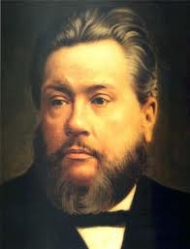
C.H. Spurgeon drawing in color

“Even as the Son of man came not to be ministered unto, but to minister, and to give His life a ransom for many.” — Matthew 20:28
[Calvinists] are often told that we limit the atonement of Christ, because we say that Christ has not made a satisfaction for all men, or all men would be saved. Now, our reply to this is, that, on the other hand, our opponents limit it: we do not. The Arminians say, Christ died for all men. Ask them what they mean by it. Did Christ die so as to secure the salvation of all men? They say, “No, certainly not.” We ask them the next question—Did Christ die so as to secure the salvation of any man in particular? They answer “No.” They are obliged to admit this, if they are consistent. They say, “No; Christ has died that any man may be saved if”—and then follow certain conditions of salvation. We say, then, we will go back to the old statement—Christ did not die so as beyond a doubt to secure the salvation of anybody, did He? You must say “No;” you are obliged to say so, for you believe that even after a man has been pardoned, he may yet fall from grace, and perish. Now, who is it that limits the death of Christ? Why, you. You say that Christ did not die so as to infallibly secure the salvation of anybody. We beg your pardon, when you say we limit Christ’s death; we say, “No, my dear sir, it is you that do it.” We say Christ so died that He infallibly secured the salvation of a multitude that no man can number, who through Christ’s death not only may be saved but are saved, must be saved, and cannot by any possibility run the hazard of being anything but saved. You are welcome to your atonement; you may keep it. We will never renounce ours for the sake of it.   Continue at Eric T. Young

Thursday, November 10, 2011

Calvinists Aflame for God

Some say Calvinism tends toward a cold, cerebral piety that is devoid of compassion. They claim Reformed theological convictions produce ineffective or just downright annoying Christians. In some cases this has undeniably been true. You can probably think of examples. 

Great. Point conceded.
 
On the other hand, many of the most zealous servants of Christ have been Calvinists. Some of the most pioneering, devoted, self-sacrificing missionaries in the history of the Church have been Calvinists. Many of the martyrs who have testified passionately and died for Christ's cause have been Calvinists. Many of the greatest devotional works - the ones that point to the glories of Christ and call us to love-inspired labors - were written by Calvinists. Newton, Bunyan, Spurgeon, Baxter, Whitefield and Watson come to mind.
 
How is it that some Calvinists have demonstrated such intense devotion, while others have gone flat? It's a good question, and an important one. Below are a few thoughts about how we Calvinists can stay aflame for God, speaking Truth in love and maintaining the simplicity of devotion to Christ, even as we wrestle Calvin-style with the hard doctrines of Scripture and refuse to back away from any of their philosophical implications.
  • Never think about the doctrine of Total Depravity without considering your own sins. Especially your recent sins. Let the desperate plight of fallen humanity inspire a fresh compassion for the lost people around you.
  • Never think about the doctrine of Unconditional Election without reminding yourself that nothing in you influenced God's choice. That's what unconditional means. Know that it was purely of His mercy that He took pity on you and saved you.   Keep Reading ...

Saturday, August 20, 2011

“Charles Spurgeon was NOT a Calvinist!”

Today I talked to a buddy who has spent the last few months studying the doctrines of grace (i.e. Calvinism).  Like many today, he’s been reading and listening to John Piper, John MacArthur, R.C. Sproul and Paul Washer on the Internet. And to use his own words, “It just seems to make sense.”  He’s coming from a Fundamental Independent Baptist background.  And like many in those circles, has only heard caricatures and straw men arguments about that “Satanic heresy” of Calvinism.

But what a friend told him yesterday almost made me fall out of my chair, “Charles Spurgeon was NOT a Calvinist!“  The logic went something like this: since Charles Spurgeon preached to thousands and was evangelistic, he couldn’t be a Calvinist.  Again, these kinds of statements underscore the ignorance that is rampant amongst many Fundamentalists.

Just for the record, I thought I’d let Spurgeon speak for himself:  Read it HERE

See Also:

Are You Sure You Like Spurgeon?

Wednesday, March 16, 2011

Faithful are the Wounds of a Friend

“Better is open rebuke than hidden love. Faithful are the wounds of a friend; profuse are the kisses of an enemy.” Proverbs 27: 5, 6
 
On Sunday afternoon I wrote an article dealing with the earthquake and tsunami and the resultant devastation in Japan, looking at it from a theological perspective. Perhaps you have read it here on the blog. 

I spent quite some time pouring over and examining every word, seeking to make the issues as clear and compelling as possible for those who would read it. I read and then re-read the article through a couple of times. Then I had the idea of sending it to a gentleman whom I have never met, but who has already become something of a good friend through the internet. I wanted him to look at the article I had written with fresh eyes, so to speak, and I asked for his advice on how to improve it or what I might add to it. I felt something might be missing, but I was not sure what it might be. Boy, was I in for a surprise! 

In that I have not got permission to mention my friend’s name here (he has no idea I am writing this), he will remain anonymous. However, after reading my article, this was his response:
“John,
I affirm everything you said…theologically.
My problem…and the problem I have with almost all Reformed and Calvinistic folks when speaking of these things is that we don’t evince a shred of compassion or understanding. We think playing the hard doctrine card is sufficient to address broken hearts and broken lives… and I’m here to tell you it’s not.
Until we learn to mourn with those who mourn and weep with those who weep, few will be attracted to the truth we have to share. Mix in some compassion and understanding… because I sense that you have great measures of both to give.
The article is good and sound theology…but it can be so much more.
Please hear me…I’m not trying to be critical of you in a personal way at all. I just believe you have much more to give…” Keep Reading>>>

Wednesday, March 2, 2011

Myth: Calvinists Take a Dim View of Revival and Awakening

We do not often speak of the Reformation era as a period of aggressive evangelistic preaching; but it indeed was this. Away from the university faculties of theology and the city cathedrals where much of the story of the Reformation played out, there were the itinerant evangelistic preachers who went town to town decrying the virtual idolatry of medieval religion and preaching up the need for living faith in Jesus Christ. Lesser-known figures of the Reformation such as John Frith and Robert Barnes (in England), Patrick Hamilton and George Wishart (Scotland), Pierre Viret and Guillaume Farel (in France and Switzerland) did this kind of itinerant evangelistic preaching—often to very large crowds. There followed what were at first “underground cells” of evangelical believers which met in barns, orchards, and hedges. It is no stretch to call these 16th century events evangelistic awakening or revival. By the early 17th century, we have clear documentation of such events in Northern Ireland and in the west of Scotland with some well-known Reformed preachers such as David Dickson instrumental in evangelistic harvests that endured over years. Read it all HERE

Friday, January 21, 2011

Saying What You Believe Is Clearer Than Saying “Calvinist”


We are Christians. Radical, full-blooded, Bible-saturated, Christ-exalting, God-centered, mission-advancing, soul-winning, church-loving, holiness-pursing, sovereignty-savoring, grace-besotted, broken-hearted, happy followers of the omnipotent, crucified Christ. At least that’s our imperfect commitment.

In other words, we are Calvinists. But that label is not nearly as useful as telling people what you actually believe! So forget the label, if it helps, and tell them clearly, without evasion or ambiguity, what you believe about salvation.

If they say, “Are you a Calvinist?” say, “You decide. Here is what I believe . . .”
I believe I am so spiritually corrupt and prideful and rebellious that I would never have come to faith in Jesus without God’s merciful, sovereign victory over the last vestiges of my rebellion. (1 Corinthians 2:14; Ephesians 3:1–4; Romans 8:7).
I believe that God chose me to be his child before the foundation of the world, on the basis of nothing in me, foreknown or otherwise. (Ephesians 1:4–6; Acts 13:48; Romans 8:29–30; 11:5–7)
I believe Christ died as a substitute for sinners to provide a bona fide offer of salvation to all people, and that he had an invincible design in his death to obtain his chosen bride, namely, the assembly of all believers, whose names were eternally written in the book of life of the Lamb that was slain. (John 3:16; John 10:15; Ephesians 5:25; Revelation 13:8)
When I was dead in my trespasses, and blind to the beauty of Christ, God made me alive, opened the eyes of my heart, granted me to believe, and united me to Jesus, with all the benefits of forgiveness and justification and eternal life. (Ephesians 2:4–5; 2 Corinthians 4:6; Philippians 2:29; Ephesians 2:8–9; Acts 16:14; Ephesians 1:7; Philippians 3:9)
I am eternally secure not mainly because of anything I did in the past, but decisively because God is faithful to complete the work he began—to sustain my faith, and to keep me from apostasy, and to hold me back from sin that leads to death. (1 Corinthians 1:8–9; 1 Thessalonians 5:23–24; Philippians 1:6; 1 Peter 1:5; Jude 1:25; John 10:28–29; 1 John 5:16)
Call it what you will, this is my life. I believe it because I see it in the Bible. And because I have experienced it. Everlasting praise to the greatness of the glory of the grace of God! (John Piper)

Friday, January 29, 2010

Why Calvin is More Biblical Than Some Calvinists

I am not going to debate Calvin’s view of limited atonement. Instead, I’d like to point out what I find most fascinating about Calvin on this subject: his willingness to speak in ways that the Bible itself speaks when it comes to these matters.

Take this Trinitarian prayer for example:

We offer up our prayers unto Thee, O most gracious God and most merciful Father, for all men in general, that as Thou art pleased to be acknowledged the Savior of the whole human race by the redemption accomplished by Jesus Christ Thy Son…

Or consider his thoughts on the pardoned thief:

Our Lord made effective for the thief his death and passion which he suffered and endured for all mankind.

Or his thoughts on Christ’s suffering:

Indeed, our Lord Jesus was offered to all the world… Our Lord Jesus suffered for all and there is neither great nor small who is not inexcusable today, for we can obtain salvation in him. Read the rest HERE