The purpose of this Blog is to introduce men and women all over the World to the Doctrines of Grace; the 5 Solas; Reformation Theology and the Lord and Savior Jesus Christ.
Showing posts with label Evangelist. Show all posts

Wednesday, March 19, 2014

John Wesley’s Failed Marriage

John Wesley (1703–1791) is best known in church history as the founder of Methodism. His commitment to the biblical gospel, passion for evangelistic preaching, and skill at organizing the budding Methodist movement are all notable traits. And God used those qualities to help spark the Evangelical Revival in England in the mid-18th century (a revival that paralleled the Great Awakening in North America). In that respect, there are many helpful things that we can learn from Wesley’s example.

His marriage, however, left a different kind of legacy; one which is also noteworthy, but not for good reasons.

As Methodist author John Singleton explains:

The saga of John Wesley’s marriage is a cautionary tale from the roots of Methodism that ought to resonate today with any couple so involved in church life that they fail to leave enough space for each other.    Continue at Nathan Busenitz


See also:  Interacting with Wesley’s Christian Perfection

Friday, August 10, 2012

Archibald Alexander Publications Online

Of the plethora of American theologians almost none are as interesting to study about as the Rev. Dr. Archibald Alexander. Alexander was the first professor at Princeton Seminary and a powerful evangelist and preacher. In addition to his multi-variegated ministry, he was a prolific theological writer. A fairly comprehensive list of his published works were listed in his biography, The Life of Archibald Alexander D.D. first professor in the Theological Seminary, at Princeton, New Jersey.  Many of Archibald Alexander’s publications were published together here. You can buy a collection of many of his works from Logos here. Below you will find the list from the biography and links to as many of these works as are available for free at Google Books and Internet Archive:

A Sermon at the opening of the General Assembly. Philadelphia, 1808.


Thursday, February 16, 2012

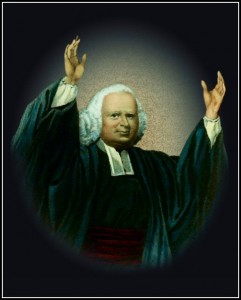
Satan’s Schemes by George Whitefield

He is full of hatred, envy, and revenge: For what other motives could induce him to molest innocent man and woman in paradise? And why is he still so restless in his attempts to destroy us, who have done him no wrong?

He is a being of great power, as is evident in his being able to act on the imagination of our blessed Lord, so as to depict some sort of vision to Him of all the kingdoms of the world and their splendor, and all this in a moment of time. His power is also displayed in the transporting of the sacred body of our dear Savior, through the air up to the highest point of the temple; and also of his driving a herd of pigs so furiously that the whole herd rushed down a steep bank into a lake and died in the water. Yes, so great is Satan’s power, that, I do not doubt, that if God was to permit him to use his full strength, he could turn the earth upside down, or pull the sun out of its orbit.

But Satan is most known for his remarkable ability to use his cleverness against mankind. Since he is not given power from God to take us by force, he is therefore required to wait for opportunities to betray us, and to catch us by the use of deception. He, therefore, made use of the serpent, which was the most crafty of all the beasts of the field, in order to tempt our first parents; and accordingly he and his accomplices are described in the New Testament as being cunning and crafty in their deceitful scheming. In the words of our text, this morning, the Apostle says, “We are not unaware of his schemes:” thereby implying, that we are more in danger of being seduced by his system of deception, than overpowered by his strength.  Read it all HERE

Saturday, October 1, 2011

The Final Word on Contextualization

Several weeks ago Grace to You launched a blog series examining the subject of contextualization, the pragmatic approach to evangelism that says the gospel can be made more powerful by adapting it to cultural contexts. John MacArthur opened that series by asking an important question: Where did Christians ever get the idea they could win the world to Christ by imitating it?

Believe it or not, church marketing specialists answer that question by claiming the apostle Paul as their inspiration. They say he modeled contextualization when he addressed the Athenian philosophers on Mars Hill (Acts 17:22-34). But their favorite passage to cite to justify contextualizing the gospel is 1 Corinthians 9:22-23, where Paul wrote, “I have become all things to all men, that I may by all means save some. And I do all things for the sake of the gospel, that I may become a fellow partaker of it.”

John MacArthur confronted and corrected that false way of thinking about Paul’s statement with a careful, reasoned explanation of the text. Far from mandating pragmatism in ministry, the apostle Paul was calling for personal sacrifice on the part of the evangelist.He was describing not his willingness to sacrifice the message, but his willingness to sacrifice himself to preach the message. He would give up everything to promote the spread of the gospel—his rights, privileges, and ultimately his own life.

That’s precisely how Paul lived and ministered. The history of his ministry in the New Testament bears proof after proof of that claim.   Keep Reading...

Thursday, January 13, 2011

My Journey Into Grace

I was born and raised in Chester in England. My father was a Baptist Evangelist and yet I never really grew up in Church. My Dad used to travel extensively to preach, and that meant that my mother and I seldom went with him to Church. That was until my Dad became the pastor of a local Church. 

I remember being extremely bored with Church as a child and was far more interested in soccer (called football over in England). I wanted to be a pro-soccer player. My favorite part of the Church service was the benediction – I was so glad when it all was over!

I remember seeing my Dad reading and studying his old black leather King James Bible (I was probably around age 9 at the time) and thought to myself, “that looks so boring to me – spending hours with a book that’s hard to read, in language I cannot understand – you’ll never catch me doing that.” Continue Reading>>>

See also My Journey Into Grace (2)