The purpose of this Blog is to introduce men and women all over the World to the Doctrines of Grace; the 5 Solas; Reformation Theology and the Lord and Savior Jesus Christ.
Showing posts with label Fundamentalism. Show all posts

Thursday, May 2, 2013

Will the Pentagon Prohibit the Great Commission?

[Note: This is the first in an occasional series examining and assessing potential threats to religious liberty in America and around the world.]
The Situation: According to the Associated Press, a group called the Military Religious Freedom Foundation is urging the Pentagon to court martial officers whose subordinates feel they're being proselytized. MRFF founder Mikey Weinstein says even a Christian bumper sticker on an officer's car or a Bible on an officer's desk can amount to "pushing this fundamentalist version of Christianity on helpless subordinates." Weinstein and other leaders of his foundation met with top officials at the Pentagon last week.

The Backstory: Weinstein and his group met privately with Pentagon officials on April 23. He told Fox News that U.S. troops who proselytize are guilty of sedition and treason and should be punished to stave off what he called a "tidal wave of fundamentalists." "Someone needs to be punished for this," Weinstein told Fox News. "Until the Air Force or Army or Navy or Marine Corps punishes a member of the military for unconstitutional religious proselytizing and oppression, we will never have the ability to stop this horrible, horrendous, dehumanizing behavior."

"If a member of the military is proselytizing in a manner that violates the law, well then of course they can be prosecuted," he said. "We would love to see hundreds of prosecutions to stop this outrage of fundamentalist religious persecution."

"[Proselytizing] is a version of being spiritually raped and you are being spiritually raped by fundamentalist Christian religious predators," Weinstein told Fox News.   Continue at Joe Carter

Saturday, December 29, 2012

Can a “Moral” Government Produce a “Moral” Society?

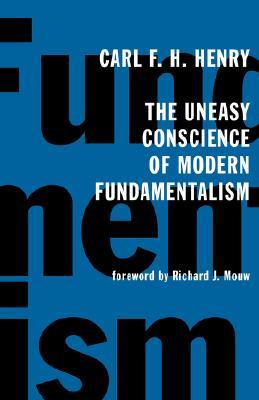
I recently read Carl F. H. Henry’s book The Uneasy Conscience of Modern Fundamentalism. Here are a few thoughts concerning applying Henry’s points to my life and ministry.

I appreciated Henry’s emphasis on the all-encompassing reality of Christ’s reign in the life of the believer.  I also appreciated his emphasis on Jesus being the answer for all that is wrong with the world.  Sin is the disease and Christ is the cure.  Every so-called answer other than Christ is a mere Band-Aid on a bleeding artery.  Only Jesus can save the man from his drugs, regenerate him, save his soul from hell, and provide him the Holy Spirit to compel him to go and sin no more.

I did not learn anything new in this work, but Henry did reveal inconsistencies in my life and ministry.  With the past Presidential election and the current emphasis on the economy in the media, it is tempting to think, even as an evangelical Christian, that we need more jobs and this can be sustained by a mere “moral” government or “moral” society.  Apart from the rule and reign of the Triune God, is there any sustainable morality?  No.  Also, will a good economy sustain man either physically or eternally?  No.  Is the chief end of man economic?  No.  I knew these answers prior to reading this book, but ashamedly, these realities were in the back of my mind instead of the front.  The truth of the all-encompassing reign of Christ will affect my ministry in how I present applying the moral commands in Scripture concerning loving one’s neighbor.  Continue at Jared Moore

Monday, January 23, 2012

The Evangelical Uneasy Conscience Faces the Future

It’s a little book by a dead man from the last generation, and it just might be the road-map for the future of American Christianity. I’m referring to the late theologian Carl F. H. Henry’s 1947 book “The Uneasy Conscience of Modern Fundamentalism.” This slim little paperback’s importance might not seem obvious in a digital whirling world of contemporary Christians, but the issues Henry raised over sixty years ago are more relevant than ever.

When most people think of Carl Henry, they tend to think of his magnum opus, the six-volume “God, Revelation, and Authority,” which dealt with the major philosophical and theological challenges to Christian theism and the biblical canon. Some remember his work as a pioneer, along with Billy Graham, in the explosion of the post-World War II evangelical movement. From his place as a founding faculty member at Fuller Seminary to his role as first editor of “Christianity Today” and beyond, Henry was the intellectual godfather of the cause. But, in my view, “Uneasy Conscience” is what matters most for us these days.  Continue at Russell Moore

Tuesday, November 15, 2011

The F Word

I'm a fundamentalist born and bred. I grew up in independent fundamental baptist churches from the time I can remember up until I graduated from college. Then I left. My departure from Fundamentalism had a lot to do with my own study of Scripture:
  • My growing belief that reformed theology was really biblical theology (you're average IFB pastor is not gonna be very reformed friendly)
  • My experience that separation was not being practiced biblically (Fundamentalism has often lobbed not-so-friendly fire at other Christians).
  • My disillusionment with personality driven churches, institutions, camps, and the like.
  • My disdain for the underhanded tactics when soul-winning.
Now these are my experience and therefore do not mean all fundamentalist do these things. Truly, I've found some churches that don't. I gladly attend Geneva Reformed Seminary which is part of the Free Presbyterian denomination. The Free Pres are in Fundamentalism and they do a great job of avoiding a lot of the pit falls mentioned above. Initially, on my departure from the movement at large I harbored a lot of ill will towards Fundamentalism. Now not so much. I'm grateful for the family, foundation, and, yes even for Fundamentalism. All I can say is God works in mysterious ways!

One thing I appreciate about Fundamentalism is that they practice separation at all. A lot of time they are hyper-separationist but they see the command to keep the Gospel pure and they take it seriously. You'd never find someone who doesn't believe in the trinity, atonement, or the exclusivity of Jesus teaching in their church (although you might find some KVO people who aren't strong on Bibliogoly, that's entirely different subject). On the other hand, the reformed evangelicals get grace, doctrine, and the lot right but some of them don't know what do when a heretic walks in the room if he's wearing a wool jacket. We need a return to Scripture so that we faithfully defend the bride of Christ from false teachers while not shriveling the body down to haggard old man like Fundamentalism tends to do. John MacArthur's lot seem to balance the two well. He's strongly biblical, fiercely protective over the gospel, and boldly defends the body against false teachers. Now I don't agree with every thing John MacArthur says but we could do for more MacArthurs.   Keep Reading >>>

Saturday, June 18, 2011

Adding to the Word?

Here’s one more great section from Packer’s Fundamentalism and the Word of God. In the concluding section Packer mentions how salvation from sin is a gift of divine grace alone through faith alone, “and faith is no more than an activity of reception, contributing nothing to that which it receives.”  Since Christ’s work is perfect and completed, there is nothing for the Christian to add.  However, pride creeps in and we often want to find a way to claim credit in salvation by some sort of contribution.  Sometimes we start to think our works play a part in our justification, which should lead us to repent and remember Paul’s sharp words against such unchristian thoughts (see Galatians for example).  Packer notes another way we may want to contribute something to our salvation: by “explicating and qualifying God’s revealed truth.”  What does that mean?  He uses the liberalism of 100 years ago for an example. Keep Reading....

Friday, October 8, 2010

Al Mohler, The Fundamentalist

Christianity Today is out with a cover story on Al Mohler and how he lead the push to purge the SBC from liberal theology by reforming the Southern Baptist Convention’s flagship seminary. The article is entitled “The Reformer”, and certainly Mohler is that. It truly is an amazing story, even if the author of the CT story makes it very clear she doesn’t approve.
What struck me when reading this article was how similar Mohler’s battle for truth at Southern is to the battle that was waged at Princeton in the 1920s by the likes of J. Gresham Machen and Cornelius Van Til. The only difference is that Mohler won and turned back the tide of liberalism at Southern. He didn’t have to leave and found his own seminary, like Machen and Van Til did (when they founded Westminster).
“Fundamentalist” isn’t a popular label these days. And it’s meanings are many and varied. But by the truest, historic sense of the term, Al Mohler would have to be considered a fundamentalist. The question is, would today’s fundamentalists (of the independent Baptist variety) accept him? Continue Reading>>> 

See Also: Christianity Today: Biblical, Reformed confidence = baaad, ignorant Pentecostal hubris = A-OK

Friday, July 2, 2010

Charles Finney, Ergun Caner & Fundamentalism

Finney’s manipulation consisted of the “artful, unfair, and insidious” control of the emotional state of his hearers in order to bring about a “decision” which was anything but. We make decisions when we decide to take a certain course of action, generally after thoughtful consideration. Finney’s “decision” had nothing to do with thought. His hearers were whipped into a terror over the thought of hell. This sudden emotional state was a work of Finney’s art, and he knew how to mold it into a decision to follow God. He utilized every form of pressure to bring about the desired end.

Over the years evangelists have learned that other emotions can be equally well utilized to bring about a decision. Various moral crusaders have capitalized upon a manufactured sense of outrage, while missions promoters have made an equally good use of pity. Often these tactics are aimed at producing a donation, but there is no reason why they cannot be turned to the purposes of Finneyite evangelist as well.

Any emotion will do, provided that the speaker can stoke that emotion into flames and that he has the skill to turn it in whichever direction he chooses. Read the rest HERE