The purpose of this Blog is to introduce men and women all over the World to the Doctrines of Grace; the 5 Solas; Reformation Theology and the Lord and Savior Jesus Christ.
Showing posts with label Biblical Knowledge. Show all posts

Saturday, May 31, 2014

Girding up the Christian Mind

In his address called The Religious Life of Theological Students, delivered at Princeton Theological Seminary on the 4th of October 1911, Benjamin B. Warfield stressed the need for servants of God to be both learned and religious. The man without learning, Warfield noted, no matter with what other gifts he may be endowed, is unfit for his duties. Because he was addressing students in particular, the burden of his lecture was on their “religious” or spiritual life—that is, Warfield was warning these students about the dangers of studying apart from worship, of seeking knowledge apart from godliness. Severing knowledge and godliness is indeed perilous to the soul. Apart from godliness, knowledge merely puffs up into vanity and pride; apart from knowledge, godliness proves thin and unstable, tossing one about by every wind of doctrine.

Considering our own context broadly, it is perhaps the latter danger that faces the church of Jesus Christ most urgently—namely, the pretense of seeking godliness apart from knowledge.   Continue at L. Michael Morales

Tuesday, August 21, 2012

30 Suggestions for Theological Students and Young Theologians

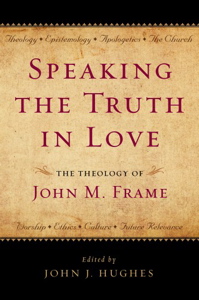
“Reflections of a Lifetime Theologian: An Extended Interview with John M. Frame,” interviewed by P. Andrew Sandlin in Speaking the Truth in Love: The Theology of John Frame (ed. John J. Hughes; Phillipsburg, NJ: Presbyterian & Reformed, 2009), 106–10: 

[Question]: Finally, what advice would you offer to theological students and young theologians as they face a lifetime of theological work?

[John Frame’s answer]: Well, here are some thoughts, in no particular order.
  1. Consider that you might not really be called to theological work. James 3:1 tells us that not many of us should become teachers and that teachers will be judged more strictly. To whom much (biblical knowledge) is given, of them shall much be required.
  2. Value your relationship with Christ, your family, and the church above your career ambitions. You will influence more people by your life than by your theology. And deficiencies in your life will negate the influence of your ideas, even if those ideas are true.
  3. Remember that the fundamental work of theology is to understand the Bible, God’s Word, and apply it to the needs of people. Everything else—historical and linguistic expertise, exegetical acuteness and subtlety, knowledge of contemporary culture, and philosophical sophistication—must be subordinated to that fundamental goal. If it is not, you may be acclaimed as a historian, linguist, philosopher, or critic of culture, but you will not be a theologian.
  4. In doing the work of theology (the fundamental work, #3), you have an obligation to make a case for what you advocate. That should be obvious, but most theologians today haven’t a clue as to how to do it. Theology is an argumentative discipline, and you need to know enough about logic and persuasion to construct arguments that are valid, sound, and persuasive. In theology, it’s not enough to display knowledge of history, culture, or some other knowledge. Nor is it enough to quote people you agree with and reprobate people you don’t agree with. You actually have to make a theological case for what you say.  Continue at John Frame