The purpose of this Blog is to introduce men and women all over the World to the Doctrines of Grace; the 5 Solas; Reformation Theology and the Lord and Savior Jesus Christ.
Showing posts with label Tradition. Show all posts

Tuesday, May 7, 2013

Will the Real Pharisee Please Stand Up!

So, what exactly is a Pharisee, anyway?  Every Christian has some idea; in fact it has become the Christian version of “Nazi” – you win any argument by being the first to call the other guy a Pharisee.  But do many Christians know what a Pharisee is?

There are a number of passages in the Gospels which speak of the Pharisees, but one brief interaction summarizes the major elements of their theology and practice.  It is found in Matthew 15:
1 Then Pharisees and scribes came to Jesus from Jerusalem and said, 2 “Why do your disciples break the tradition of the elders? For they do not wash their hands when they eat.” 3 He answered them, “And why do you break the commandment of God for the sake of your tradition? 4 For God commanded, ‘Honor your father and your mother,’ and, ‘Whoever reviles father or mother must surely die.’ 5 But you say, ‘If anyone tells his father or his mother, “What you would have gained from me is given to God,” 6 he need not honor his father.’ So for the sake of your tradition you have made void the wordof God. 7 You hypocrites! Well did Isaiah prophesy of you, when he said:
8 “‘This people honors me with their lips,
but their heart is far from me;
9 in vain do they worship me,
teaching as doctrines the commandments of men.’”
And what do we learn about the Pharisees from this?

The first element of Phariseeism is clearly implied, and Jesus makes it even more clear elsewhere: Pharisees were moralists.  That doesn’t just mean that they believed in morality; if that were so, every member of every religion ever would be a Pharisee.  Rather it means that they saw personal morality as the path to redemption.  It is why they became so adept at popping up in every situation to point out perceived sins.  Only a moralist could be concerned with whether or not Jesus’ disciples washed their hands.  This central element of their theology is what Jesus had in mind when He told the parable of the Pharisee and the Tax Collector.  The one saw that righteousness was unobtainable and relied on the mercy of God.  But the other – the Pharisee – thought his own moral character was enough for him to draw near to God.    Continue at ChantryNotes

Tuesday, January 17, 2012

Historical Claims Concerning Union with Christ

“Union with Christ is finally getting its just place as a central dogma in organizing the Reformed view of how we are saved.” “Charles Hodge, among others, placed the forensic (especially justification) at the center, rather than union.” “Reformed paradigm: justification and sanctification have their source in union; Lutheran paradigm: minor role for union, if anything, and sanctification has its source in justification.”

These statements illustrate a type of exaggeration that I’d like to unpack very briefly, in part because there different nuances in this discussion that have pretty significant implications. Since my focus here is the historical claim about defining the Reformed consensus on this point, rather than exegesis.

Union with Christ at the center
Hunting down central dogmas that distinguish one tradition or school from others was a hallmark of 19th-century historians. Yet a host of specialists in Calvin and Reformed orthodoxy have shown conclusively that this is a wrong approach. It imposes our own constructs on historical views and, furthermore, there is no central dogma in Calvin, much less in Reformed theology. A central dogma is not just an important truth; it functions as a theory from which everything else is deduced.

For Calvin and the whole Reformed tradition, Christ’s person is the source of everything and his work is inseparable from Christ himself. Christ himself, not any one of his gifts, is the center and object of our faith. (That’s Lutheran, too, by the way.) However, there’s a big difference between something being important—even in tying together other important doctrines—and something being a central dogma. Many are discovering union with Christ, and that’s great, but it has been there in our Reformed bloodstream all along. It is not something that was somehow buried after Calvin and then just uncovered recently in a particular school or circle of contemporary Reformed thought.  Continue at White Horse Inn

Saturday, September 24, 2011

John Calvin for Everybody

I consider myself a conscientious objector in the Calvinist/Arminian wars. First of all, it’s because I find the issue more complicated than such partisanship can convey, and I think both sides are right at certain points. Second, I find the polemics rather boring compared to the glory of the big scope of God’s kingdom. Third, I don’t think the distance between mainstream Calvinists and mainstream Arminians is really all that great. And, finally, because I find the professional Calvinists and professional anti-Calvinists to be shrill and exhausting. 

So when my friend John Mark Reynolds (an Eastern Orthodox dispensationalist; and I thought I was eclectic!) asked me to write an essay on Calvin for his new volume on the great books, I hesitated. But Calvin is more important than the coffee shop debates over the extent of the atonement and how many elders can dance on the head of a pulpit. So, here’s what I had to say about Calvin’s Institutes of the Christian Religion:   Keep Reading...

Friday, September 16, 2011

Prayer to Mary?

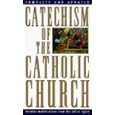
In the Roman Catholic Catechism prayer to Mary is explained in part 4, chapter 2, article 2.  The Catechism talks about the “twofold movement of prayer to Mary” which 1) consists of magnifying the Lord for what he did through her and 2) “entrusts the supplications and praises of the children of God to the Mother of Jesus.”    This twofold movement is found in the Ave Maria (Hail Mary), the traditional Catholic prayer which addresses Mary, who is ”full of grace.”  The Catechism also calls her ”the dwelling of God…with men,” and ascribes to her these names: “the Mother of Mercy, the All-Holy One.”

Because Mary is at the top of the human ladder of blessedness, the Catechism also says we can “entrust all our cares and petitions to her: she prays for us as she prayed for herself…we give ourselves over to her now…to surrender ‘the hour of our death’ wholly to her care.”  In fact, Rome says, “We can pray with and to her.  The prayer of the Church is sustained by the prayer of Mary and united with it in hope.”

This is one of the major reasons why the Reformation happened: because Rome was steeped in corrupt, idolatrous worship.  And this is why the Reformation matters today, because Rome has not repented of her idolatry; the above quotes are from the Roman Catholic Church’s modern Catechism.    Keep Reading...

Thursday, August 11, 2011

Before you Convert to Roman Catholicism

Roman Catholicism has a gospel that does not give peace, because it fundamentally violates the Scriptural teaching on how one is made right with God. Rome has a false gospel that cannot save, hence, I have no reason to abandon the peace I have with God through Christ’s perfect atonement for the treadmill of Rome’s sacramental system of salvation… the person who has embraced the gospel of grace has not only landed his boat on the far side [of the Tiber River], but has torn the boat apart to use the wood as a pulpit from which to proclaim freedom in Christ to those trapped on the other shore. – Dr. James White
 
At his blog at www.aomin.org, Dr. White also writes: 

Last week I received the following e-mail, and I felt it would be best to share my response here on the blog.

Dear Mr. White, For someone considering converting to Catholicism, what questions would you put to them in order to discern whether or not they have examined their situation sufficiently? Say, a Top 10 list. Thanks. Read them HERE

Wednesday, February 9, 2011

Tradition Still Requires Interpretation

One of the common Catholic objections to the Protestant doctrine of sola scriptura is that without the Church to offer authoritative interpretations we are all just left with our own personal readings of Scripture. So, the argument goes, evangelicals may talk a big game about the Bible being our ultimate authority, but actually the final authority rests with each individual interpretation of Scripture. In light of this chaotic free-for-all, consider how much better is the Catholic understanding of authoritative Tradition with a capital T.

There are a number of ways an evangelical could respond to this argument.

1. Illumination. We believe the Spirit opens the eyes of his people so that spiritual things can be spiritually discerned (1 Cor. 2:6-16). This illumination is not limited to church councils.

2. Perspictuity. We believe that the main things of the Bible–sin, salvation, Christ, man, God, faith–can be clearly understood. Our God speaks and knows how to speak. Jesus and the apostles quoted Scripture all the time as if they believed there was a meaning in the text that they could understand and others ought to have understood as well. Continue Reading>>>

Tuesday, January 25, 2011

Common Sense Burial vs. Cremation

Does the Bible require that when Christians die their bodies should be buried? An article over at Front Porch Republic makes a pretty good case for the Christian practice of burial, along with the not so felicitous implication that cremation is of pagan derivation. But we have no explicit instruction from Scripture, only examples. According to Andrew Harvey:

Our burning discussion keeps returning to the word “tradition.” And most Christian churches . . . had no established doctrine to address the issue of modern cremation. The only fact was convention: Christians simply had never cremated before. But burial is indisputably the rule throughout the Hebrew Bible and the New Testament. God’s people in every covenant prefer interment. Everyone on God’s side gets buried eventually. From Adam to the Beloved Disciple John every saint who falls asleep in the Lord finds a grave as a bed. (Moreover, cremation is reserved in the Old Testament for the wicked and apostate: see Josh. 7:25, 2 Kgs. 23:20, Amos 2:1.) The only time where one of the Lord’s anointed is unfortunately cremated (King Saul, defiled by the Philistines) – it is through burial that his remains finally rest in peace. Additionally this hard and fast “orthopraxy” also correlates to a theology, an “orthodoxia.” Continue Reading>>>

See also:

Is Cremation Christian? - Audio
Is Cremation Christian? - PDF

Friday, February 12, 2010

A Forgotten Voice

Theodorus Jacobus Frelinghuysen was born in 1691 in West Friesland and died in New Jersey in 1747. He received ordination in the Dutch Reformed Church at the age of twenty-six and served for two years in his native land. At twenty-eight he was approached by Classis Amsterdam to see if he was willing to take a church in Rarethans (Raritan). Frelinghuysen accepted, assuming Rarethans was in the Netherlands, but the Classis meant the Raritan Valley in New Jersey. Convicted by Psalm 15:4–“God honoureth them that fear the Lord. He that sweareth to his own hurt, and changeth not”–Frelinghuysen took the charge, misunderstanding and all, and moved to the New World. Read the rest HERE