The purpose of this Blog is to introduce men and women all over the World to the Doctrines of Grace; the 5 Solas; Reformation Theology and the Lord and Savior Jesus Christ.
Showing posts with label Sacrifice. Show all posts

Friday, March 1, 2013

Exposing the Heresies of the Catholic Church: The Mass

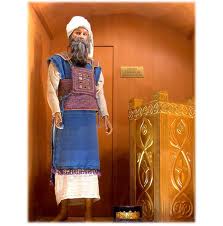
The writer of Hebrews is inescapably clear about the singular nature of Christ’s sacrifice.
For Christ did not enter a holy place made with hands, a mere copy of the true one, but into heaven itself, now to appear in the presence of God for us; nor was it that He would offer Himself often, as the high priest enters the holy place year by year with blood that is not his own. Otherwise, He would have needed to suffer often since the foundation of the world; but now once at the consummation of the ages He has been manifested to put away sin by the sacrifice of Himself. And inasmuch as it is appointed for men to die once and after this comes judgment, so Christ also, having been offered once to bear the sins of many, will appear a second time for salvation without reference to sin, to those who eagerly await Him. (Hebrews 9:24-28, emphasis added)
Scripture does not waver on the finality of Christ’s sacrifice on our behalf. He came to make a one-time offering for sin, never to be repeated. It was a contrast to the Mosaic covenant, which necessitated a system of near-constant sacrifices. But none of the Old Testament sacrifices could actually atone for sin. They could only serve as a reminder of God’s deliverance and foreshadow Christ’s final sacrifice which would conquer sin.

In the practice of the mass, the Roman Catholic Church has reinstituted an unbiblical system of repeated sacrifices, blaspheming Christ and perverting His work on the cross.

How important is the mass to Catholicism? The Catechism of the Catholic Church refers to it as “the source and summit of the Christian life.” That is to say, it is the origin and the high point of the Catholic faith. It’s not peripheral—it’s the heart and soul of the entire system.    Continue at John F. MacArthur Jr.

IMAGE

Friday, May 18, 2012

Why Hunger Games is Flawed to Its Core

Nate (N. D.) Wilson is one of my favorite writers. He has given us some excellent fiction and non-fiction books. He knows what makes a story work.

Nate was in town recently, and we had a conversation about books, beauty, and bestsellers. Naturally, we talked about The Hunger Games. His take on it was too good to keep to myself, so I asked if I could share it here.
Why Hunger Games is Flawed to Its Core
N.D. Wilson

Almost everywhere I go, I’m asked about The Hunger Games (book, not film). The questions used to fly about Twilight and Potter, but Katniss and dystopic death-matches have taken over.

First, I completely understand why The Hunger Games took off. Suzanne Collins knows how to suck readers into a page-turning frenzy. The pace of the book grabs like gorilla glue and the kill-or-be-killed tension keeps fingernails nibbled short. She knows her craft, and I have to say that I’m grateful to her for expanding our mutual marketplace (in the same way that Rowling did). That said, Collins stumbles badly in her understanding of some pretty fundamental elements of human story, and the whole thing is flawed to its core as a result.

The best authors are students of humanity, both as individuals and grouped in societies (big and small).   Continue at Trevin Wax

Saturday, June 25, 2011

The Intercession and Sacrifice of Christ

What was God’s intention from all eternity in the atonement? What did He intend for Christ to accomplish by His death on the cross?


Orthodox Christians are not universalists (universalism is the ancient heresy that teaches that all people will eventually be redeemed). Instead, we are particularists, believing that only some (and not all) will be saved. The Bible makes it clear that some people will in fact be lost, ultimately lost, in a place of weeping, darkness and gnashing of teeth. Some people will in fact spend eternity in hell. 

Knowing this, all of us as Christians limit the atonement in some sense because we agree that not everyone will be saved by the work of Christ. Amongst particularists then there are two main views; the first being what is called “universal redemption” (the view that Christ died to try to save everybody in human history, past, present and future, though His work by itself did not actually accomplish this unless man does something to cooperate). Keep Reading...