The purpose of this Blog is to introduce men and women all over the World to the Doctrines of Grace; the 5 Solas; Reformation Theology and the Lord and Savior Jesus Christ.
Showing posts with label Biblical Worldview. Show all posts

Monday, March 24, 2014

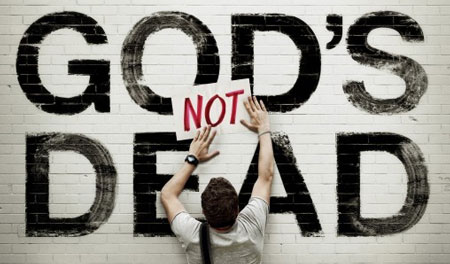
God’s Not Dead Movie Review

Today, Christianity is under attack more than ever. Christians with a biblical God’s Not Dead, we hoped that it would be an example of how to argue for one’s faith in the university, as the stats show that this is one area where young Christians struggle and even lose their faith.

God’s Not Dead does not completely meet the stereotypes people assume about Christian movies being the lowest quality. Indeed, the production quality was good for a Christian themed movie, and we would have dearly liked to give this feature film our endorsement. Unfortunately, the content of the film has many problematic areas, so it is with a heavy heart that we feel we need to clearly report our concerns. Christians need to be aware of the problem areas, so if they do decide to view the movie, they can do so with discernment.   Continue at Creation Ministries

Tuesday, June 5, 2012

How Pastor-Counselors Differ from Secular Counselors

David Powlison’s essay “The Pastor as Counselor” (available free online) is far and away the best thing I have ever read on the role of pastor-elders in counseling God’s people. It was originally published in For the Fame of God’s Name and is reprinted in CCEF’s The Journal of Biblical Counseling. At our church we have read through it together as an elder council, and I’d encourage other churches to do the same. I also wish every seminarian could read through this at least once.

Here is one section directed to pastors on their unique role in counseling:

The uniqueness of your message is easy to see. But you already know this. I won’t rehearse the unsearchable riches of Christ, or the 10,000 pertinent implications.

But I do want to note the uniqueness of your message by contrast. Every counselor brings a “message”: an interpretation of problems, a theory that weighs causalities and context, a proposal for cure, a goal that defines thriving humanness. How does your message compare with their messages? Simply consider what our culture’s other counselors do not say.
  • They never mention the God who has a name: YHWH, Father, Jesus, Spirit, Almighty, Savior, Comforter.
  • They never mention that God searches every heart, that every human being will bow to give final account for each thought, word, deed, choice, emotion, belief, and attitude.
  • They never mention sinfulness and sin, that humankind obsessively and compulsively transgress against God.
  • They never mention that suffering is meaningful within God’s purposes of mercy and judgment.
  • They never mention Jesus Christ. He is a standing insult to self-esteem and self-confidence, to self-reliance, to self-salvation schemes, to self-righteousness, to believing in myself.   Continue at Justin Taylor

Wednesday, April 25, 2012

The Legacy of Charles Colson

I don’t mean to be a curmudgeon and I don’t mean to be insensitive, truly. Perhaps there are rules that govern these things, and I am violating them, or maybe I am just missing some vital piece of information. I don’t know. But I have been to a wide variety of Christian blogs and news sites reading the obituaries and memorials and remembrances of Charles Colson and have been surprised to note that they are have been very nearly uniformly, unabashedly positive. 

I am not convinced that we are doing right here. I suppose I would rather wait a little while to say this, but then the opportunity will be gone. At least to my understanding, Colson’s legacy was both more and less than people are making it out to be. I didn’t really understand the man in all his inconsistencies and complexities while he lived—the combination of good and bad baffled me—and I certainly don’t understand him now that he has died.

Don’t hear me say that Colson was a complete villain, but do hear me when I say that he leaves behind a legacy that is far more multi-faceted, far more multi-dimensional, than most people have been saying. It is a legacy that includes some dark chapters, and not only prior to his conversion.

Charles Colson leaves behind a testimony of a man who encountered grace at his darkest hour. He leaves behind a legacy of a ministry that seeks to extend grace to those who are likewise in their darkest hour. He sought to teach Christians how to think—to describe and define a biblical worldview. And then he sought to lead in the application of that biblical worldview, and this is where things become hazy, where a positive legacy collides with a woeful one, where his work for the Lord encounters his work against the Lord’s church.  Continue at Tim Challies
Wednesday, February 22, 2012

When the Accounts Are Called: A Christian Understanding of Gambling

The nationwide explosion of legal gambling may well be the most underrated dimension of America’s moral crisis. With the expansion of state lotteries, casino gambling, and new technologies, the gambling industry is poised to grow even further in the next decade.

According to some estimates, as much as one-third of the nation’s money supply now moves through the gambling industry each year. Looking at a recent annual economic report, management consultant Eugene M. Christiansen determined that “Americans spent more on gambling than they did on health insurance, dentists, shoes, foreign travel, or household appliances.”

The Bible is clear on this issue. The entire enterprise of gambling is opposed to the moral worldview revealed in God’s Word. The basic impulse behind gambling is greed—a basic sin that is the father of many other evils. Greed, covetousness, and avarice are repeatedly addressed by Scripture—always presented as a sin against God, and often accompanied by a graphic warning of the destruction which is greed’s result. The burning desire for earthly riches leads to frustration and spiritual death.  Continue at Al Mohler

Wednesday, March 16, 2011

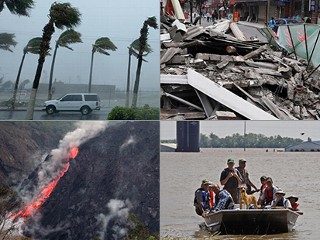
The Significance of Natural Catastrophes (Part 1)

In recent years the headlines have reported catastrophic events from all over the world.  Earthquakes in particular have brought devastation to Sumatra, Pakistan, China and Haiti.  We wonder, “Where will the next earthquake hit?”  Those who have been exposed to the teachings of the Bible understand that these events have significance.  But what do they mean?  Are earthquakes “signs” from God?  Is God angry with men?  Is God punishing people because of their sin?

In order to interpret catastrophes (indeed to interpret all life and experience), we must view the event from the vantage point of a Biblical worldview.  A Biblical worldview rests upon the four pillars of Biblical reality: Creation, the Fall, Redemption and Restoration.  Earthquakes must be interpreted in terms of these four foundational truths. Keep Reading>>>

Thursday, July 29, 2010

Blessed Are the Intolerant

No one today would advocate putting false teachers to death, an event unique even in the biblical record. However, the New Testament is abundantly clear that God’s people have nothing in common with the followers of false religions. The apostle Paul wrote, “Do not be unequally yoked together with unbelievers…. What part has a believer with an unbeliever?…Therefore ‘Come out from among them and be separate, says the Lord’” (2 Cor. 6:14-15, 17).
Today almost any form of biblical separation has fallen on hard times, partially due to abuse but increasingly due to the tolerant mood of the moment. As a result, rather than seeing our divine mandate as taking the gospel to the lost and calling men and women out of the domain of darkness and into Christ’s Kingdom (Col. 1:13), many within the church spend their time trying to find common ground with those who teach falsehood. Some examples would be helpful. Read the rest HERE