The purpose of this Blog is to introduce men and women all over the World to the Doctrines of Grace; the 5 Solas; Reformation Theology and the Lord and Savior Jesus Christ.
Showing posts with label Priest. Show all posts

Monday, March 18, 2013

Christ the Victim, Christ the Priest

Joseph was told by an angel to name his son Jesus, because he would save his people from their sins (Mt 1:21). In times past in Egypt, the Passover lamb had borne people's sins. But now Jesus came into the world to become the Lamb of God who takes away the sin of the world (Jn 1:29). In our day some would have us confess Jesus as Savior, but suggest that he saved us by doing something other than taking our sin away. Or if they admit that sin needs to be taken away, they say that Jesus does this by training us not to sin. In either case, we are left with something other than Biblical salvation. 

No plan of salvation that leaves out Christ's payment for sin is a Biblical plan of salvation. And yet I find that those who fight for this doctrine (may they always be given the honor that is their due) often are so focused on the truths under contention that they forget to flesh them out with other Biblical truths. In the heat of battle it is forgotten that we must not only contend for that part of the truth that is being attacked, but we must tell the whole truth, even that part that might not be objected to. It might put the controversial statements in a new light. The doctrine of substitutionary atonement needs to be fleshed out with the doctrine of Christ's deity, his two natures, and his Supper if people are to see just how glorious a teaching is at stake.

Purchased with God's Own Blood


The doctrine of substitutionary atonement teaches us that Christ saved us by paying for our sins, that is, he died in our place. As the Scriptures say "The wages of sin is death" (Rom 6:23). Christ, who being sinless did not need to die, laid down his life for the sake of those who were condemned to death. The resurrection shows that God accepted the payment as complete. Christ was raised for our justification. It is what Luther called the great exchange. Our sins are imputed to Christ. His righteousness is imputed to us. We can press these images even further. When we are united to Christ, God looks at us as if we had done our time. Eternal hell is our sentence, and we show up in God's presence as if we had done the unthinkable and made full payment. Of course, we did not. Christ did it for us, but we receive the benefit.    Continue at Rick Ritchie

Wednesday, February 27, 2013

Exposing the Heresies of the Catholic Church: The Pope

One of the major, early catalysts in the Protestant Reformation was a book by Jan Hus, a Bohemian Christian who preceded Martin Luther by a full century. The book was De Ecclesia (The Church), and one of Hus’s most profound points was proclaimed in the title of his fourth chapter: “Christ the Only Head of the Church.”

Hus wrote, “Neither is the pope the head nor are the cardinals the whole body of the holy, universal, catholic [i.e., true] church. For Christ alone is the head of that church.” Pointing out that most church leaders in his era actually despised the lordship of Christ, Hus said, “To such a low pitch is the clergy come that they hate those who preach often and call Jesus Christ Lord.”

Hus’s candor cost him his life. He was declared a heretic and burned at the stake in 1415.

More than a hundred years later, and already at odds with the papal establishment, Martin Luther read De Ecclesia. After finishing the book, he wrote to a friend, “I have hitherto taught and held all the opinions of Jan Hus unawares; so did John Staupitz. In short, we are all Hussites without knowing it.”

As the head of the Roman Catholic Church, the pope is often called the “Holy Father” and the “Vicar of Christ”—names and roles that only apply to God. He claims the ability to speak ex cathedra, exercising Godlike infallibility to add to and augment Scripture (Revelation 22:18). He wields unbiblical, unholy authority over his followers, usurping the headship of Christ and perverting the work of the Holy Spirit.

The Reformers understood that and declared it with unashamed boldness. As Martin Luther wrote to a friend, “We here are of the conviction that the papacy is the seat of the true and real Antichrist. . . . Personally I declare that I owe the Pope no other obedience than that to Antichrist.”

In his Institutes of the Christian Religion, John Calvin said:    Continue at John F. MacArthur Jr.

Wednesday, March 21, 2012

Jesus As the New Israel

The New Testament authors understood Jesus to be the culmination of the Old Testament. He is the Last Adam, true Israel, the suffering servant, the son of David, the faithful remnant, the ultimate prophet, the reigning king, the final priest.

Here is a good, concise summary of the Israel/remnant theme from a New Testament perspective:

. . . Jesus had become a remnant of one. He was the embodiment of faithful Israel, the truly righteous and suffering servant. 

Unlike the remnant of the restoration period, he committed no sin (Isa. 53:9; 1 Pet. 2:22). 

As the embodiment of the faithful remnant, he would undergo divine judgment for sin (on the cross), endure an exile (three days forsaken by God in the grave), and experience a restoration (resurrection) to life as the foundation of a new Israel, inheriting the promises of God afresh. 

As the remnant restored to life, he becomes the focus of the hopes for the continued existence of the people of God in a new kingdom, a new Israel of Jew and Gentile alike. 

As the nucleus of a renewed Israel, Christ summons the “little flock” that will receive the kingdom (Dan. 7:22, 27; Luke 12:32) and appoints judges for the twelve tribes of Israel in the new age (Matt. 19:28; Luke 22:30).  Continue at Justin Taylor

Thursday, February 2, 2012

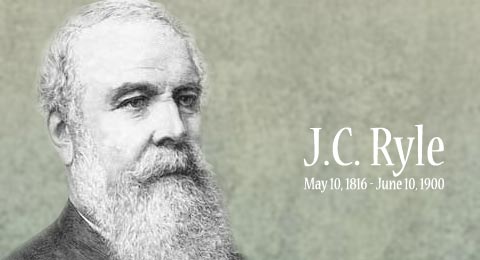
“The Frank and Manly Mr. Ryle” — The Value of a Masculine Ministry


In dealing with the life and ministry of John Charles Ryle, my hope is to clarify and commend what I mean by the value of a masculine ministry. But before we
turn to “the frank and manly Mr. Ryle,”1 let me make some clarifying comments from the Bible.


God has revealed himself to us in the Bible pervasively as King, not Queen, and as Father, not Mother. The second person of the Trinity is revealed as the eternal Son. The Father and the Son created man and woman in his image, and gave them together the name of the man, Adam (Genesis 5:2). God appoints all the priests in Israel to be men. The Son of God comes into the world as a man, not a woman. He chooses twelve men to be his apostles. The apostles tell the churches that all the overseers—the pastor/elders who teach and have authority (1 Timothy 2:12)—should be men; and that in the home, the head who bears special responsibility to lead, protect, and provide should be the husband (Ephesians 5:22–33).

Masculine Christianity

From all of this, I conclude that God has given Christianity a masculine feel. And, being a God of love, he has done it for the maximum flourishing of men and women. He did not create women to languish, or be frustrated, or in any way to suffer or fall short of full and lasting joy, in a masculine Christianity. She is a fellow heir of the grace of life (1 Peter 3:7). From which I infer that the fullest flourishing of women and men takes place in churches and families where Christianity has this God-ordained, masculine feel. For the sake of the glory of women, and for the sake of the security and joy of children, God has made Christianity to have a masculine feel. He has ordained for the church a masculine ministry.

And, of course, this is liable to serious misunderstanding and serious abuse, because there are views of masculinity that would make such a vision repulsive. So here is more precisely what I mean. And words are always in adequate when describing beauty. Beauty always thrives best when she is perceived by God-given instincts rather than by rational definitions. But we must try. What I mean by “masculine Christianity,” or “masculine ministry,” or “Christianity with a masculine feel,” is this:  Continue at John Piper

Wednesday, August 10, 2011

What About Bob? The Meaning of Ministry in the Reformed Tradition

Although he “went forward” to receive Christ only a month ago, Bob, who recently ended his NFL career, has just informed his discipleship group that he is called to the ministry. In fact, next week he will be teaming up with a businessman who has also decided that he is called to the ministry. Together, they will form a sports evangelism team.

A familiar story for those of us raised in evangelical circles, this fictional account illustrates the practical importance of the question, “What is ministry?”

The verb “to call” (kalein) and the noun “calling” (klesis) are rich and somewhat varied in their New Testament use. To be “called” is to be warmly invited by Christ to come and receive eternal life. But not all who hear this universal invitation respond; the Holy Spirit must draw the elect to Christ by actually awakening them from spiritual death. Lazarus could never have come forth simply by the invitation of Christ, apart from the mighty action of God inwardly restoring life. Likewise, “no one can come to me,” said Jesus, “unless the Father who sent me draws him; and I will raise him up at the last day” (John 6:44). Not only does our Savior call sinners to repentance (Matt. 9:13), he called the Twelve to be his disciples (Matt. 4:21). He not only called and justified those who were predestined (Rom. 8:30), but called some of his people to be his representatives and overseers of his church.  Keep Reading...

Tuesday, July 12, 2011

The Temple of Eden

In his book The Temple and the Church’s Mission (IVP/Apollos, 2004), G. K. Beale argues that the Garden of Eden was the “first archetypal temple.” He provides 14 conceptual and linguistic parallels between Eden and future tabernacle/temple structures. My brief summary:

1. The Garden as the unique place of God’s presence. Eden was the place where God walked back and forth with man, paralleled this with later references to the Tabernacle (Gen. 3:8 with Lev. 26:12, Deut. 23:14; 2 Sam. 7:6–7).

2. The Garden as the place of the first priest. Adam was placed in the garden to “cultivate and keep it” (Gen. 2:15). Taken alone, “cultivation” has obvious agricultural meaning. But this pair of terms (“cultivate/keep” also translated “serve/guard”) is used elsewhere in the OT to describe the work of the priest (Num. 3:7–8; 8:25–26; 18:5–6; 1 Chr. 23:32; Ezek. 44:14). Thus “the task of Adam in Genesis 2:15 included more than mere spadework in the dirt of a garden. It is apparently that priestly obligations in Israel’s later temple included the duty of ‘guarding’ unclean things from entering (cf. Num. 3:6–7, 32, 38; 18:1–7), and this appears to be relevant for Adam, especially in view of the unclean creature lurking on the perimeter of the Garden and who then enters” (p. 69).

3. The Garden as the place of the first guarding cherubim. After sin was introduced into the garden, Adam and Eve are barred from the tree of life by cherubim. This reveals that Adam’s work included more than gardening—he was to protect the garden from evil and uncleanness. (Gen. 3:24 with Ex. 25:18–22; 1 Kgs. 6:29-35, 8:6–7; Ezek. 28:14–16, 41:18). Keep Reading...

Thursday, June 9, 2011

Why We Need a Prophet, a Priest, and a King


Lately I’ve been writing, speaking, and studying a lot about how Jesus leads us, serves us, and provides an example for us as a Prophet, Priest, and King—three pastoral offices established in the Old Testament and fulfilled perfectly in Jesus.
In researching the topic, I came across the following concept, ultimately rooted in Scripture but expounded by John Calvin and others. I found it extremely encouraging and practical in considering the comprehensive work, ministry, and love of Jesus: 
We need a prophet because we are ignorant
We are foolish in our understanding (Romans 1:21, 25). As Prophet, Jesus reveals truth in both his word and his life. He illuminates our ignorance. Keep Reading...