The purpose of this Blog is to introduce men and women all over the World to the Doctrines of Grace; the 5 Solas; Reformation Theology and the Lord and Savior Jesus Christ.
Showing posts with label Russell Grigg. Show all posts

Thursday, June 28, 2012

Darwin’s Bulldog—Thomas H. Huxley

Charles Darwin had little time for the scientific, theological and moral controversies engendered by the publication of his Origin of Species in 1859. Not so Thomas Henry Huxley (1825–1895), who leapt to the fray, even dubbing himself ‘Darwin’s bulldog’.
 
Darwin called him, ‘My good and kind agent for the propagation of the Gospel—i.e. the devil’s Gospel.’
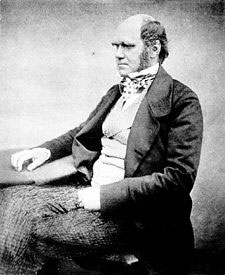
 
It was Huxley, not Darwin, who enraptured and outraged audiences in the 1860s with talk of our ape ancestors and cave men. London turned out—from cardinals to Karl Marx—to be tantalized and tormented by his scintillating lectures. ‘Bushy-bearded labourers with blistered hands flocked to his talks on our ancestry. He drew the sort of crowds that are reserved for evangelists or rock stars today.’

‘Out of his provocations came … the West’s new faith—agnosticism (he coined the word).’3

Youth and self-education
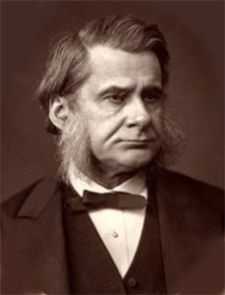
Thomas was born in Ealing village, near London, in 1825, the seventh of eight Huxley children. Neglected by his father, he grew up in poverty, with only two years of formal schooling. Living in the industrial squalor of the 1840s, where the Church was a rich man’s luxury, he sought redemption through self-education. 

At the age of 12 he read James Hutton’s Theory of the Earth and had his first encounter with anti-biblical geology. An avid reader of history, science and philosophy, he taught himself almost everything he knew until he entered Charing Cross Hospital medical school.4 He put himself through Part 1 of the Bachelor of Medicine exam at London University, winning the gold medal for anatomy and physiology, but did not present to sit Part 2.

He then became Assistant Surgeon (‘surgeon’s mate’) on HMS Rattlesnake for a southern oceans surveying voyage (1846–1850). Although Huxley had no formal university degree,6 the publishing of his researches on the structure of various marine invertebrates from this trip secured his future acceptance by the British scientific community.7 In 1851, at age 25, he was elected a Fellow of the Royal Society (F.R.S.), which also awarded him its Royal Medal in 1852, a year before Charles Darwin received the same honour.   Continue at Creation Ministries

Monday, May 21, 2012

What Happened Before the Big Bang?

A BBC documentary with this title was aired on SBS-TV in Australia in April, 2012. In it, several cosmologists discus ‘the unthinkable’—perhaps the big bang was not the beginning of everything after all. It seems that scientists have discovered a new law. Well, not actually new—just one that has been treated as if it didn’t exist for the last half century or so by ‘big-bangers’ such as Stephen Hawking, Roger Penrose, Paul Davies, Edwin Hubble, et al, namely the law of Cause and Effect.

The program explains that the concept of the big bang1 postulates that “everything we see in the universe today—us, trees, galaxies, zebras—emerged, in an instant, from nothing. And that’s a problem. It’s all effect and no cause.” We are then given five different explanations from five different scientists concerning what this cause may (or may not) have been.

Prof. Michio Kaku and the meaning of ‘nothing’


Dr Michio Kaku is Professor of Theoretical Physics at City University, New York. He asks: “How can it be that everything comes from nothing?” His solution: “If you think about it a while, you begin to realise it all depends on how you define ‘nothing’!”2
 
We are then shown a huge NASA vacuum chamber, the largest in the world—the nearest we can get to a state of nothing, but which still has dimensions (‘nothing in 3D’), and through which light can pass. Prof. Kaku tells us: “I think there are two kinds of nothing. First there is something I call absolute nothing: no equations, no space, no time, no anything that the human mind can conceive of, just nothing. Then there is the vacuum which is nothing but the absence of matter.” 

The host then comments: “Prof. Kaku’s version of nothing is the perfect vacuum where on the face of it there is only energy. But in a perfect vacuum, energy sometimes transforms itself temporarily and briefly into matter. It is one of these tiny explosions that might have been going on and ended up in the big bang.”

Prof. Kaku: “So for me the universe did not come from absolute nothing—that is a state of no equations, no empty space, no time; it came from a pre-existing state—also a state of nothing. Our universe did in fact come from an infinitesimally tiny little explosion that took place giving us the big bang, and giving us the galaxies and stars we have today.”   Continue at Russell Grigg