The purpose of this Blog is to introduce men and women all over the World to the Doctrines of Grace; the 5 Solas; Reformation Theology and the Lord and Savior Jesus Christ.
Showing posts with label Calling. Show all posts

Saturday, February 16, 2013

How Can I Tell If I’m Called to Pastoral Ministry?

I’ve been asked the question many times, and I’m not sure I agree with it. The question often assumes that pastors, unique among all the vocations of the world, will (and sometimes must) have a powerful, divine, subjective call to ministry that overwhelmingly points them in their God-ordained direction. I don’t see support for that sort of normative experience in Scripture.
 
But I understand what young men are looking for. They understand that pastoral ministry is weighty work, not to be entered into lightly. So naturally they want to know that their inclinations are not self-serving and their direction is not a fool’s errand. They are looking for a few signposts along the way to show them that they’re not obviously on the wrong road. That’s a commendable impulse.

Here are several questions you should ask yourself as you ponder a call to pastoral ministry.

1. Do I meet the qualifications laid out in 1 Timothy 3 and Titus 1? This is the place to start. If your character is not mature, stable, and (in a non-perfectionist way) exemplary, then you are not ready to be a pastor. This does not necessarily mean you are on the wrong path if you don’t yet have victory over certain sins (like pornography), but it means you won’t be ready until you meet the Scriptural standards.    Continue at Kevin DeYoung

Wednesday, January 23, 2013

So You’re About to Call a Pastor?

This is a sensitive topic. People don’t always think rationally or biblically or confessionally about the office of pastor. Many folk don’t understand what ministers do and most people who are involved in the pastoral search process are well-meaning but inexperienced. Most congregations only do a search every 7-10 years.

Having been intimately involved in the hiring process I know how difficult it is to find good people for highly responsible positions. Searching to fill a position is difficult even when one knows exactly what the job requires and the qualities for which one is looking. If one is not sure of the sort of person or qualities or even what the job entails, the search becomes considerably more difficult. Add to this mix the fact that, in churches, most searches are conducted by committee and we all know how much more difficult committees can make things. Think of 7 people with seven different sets of criteria and 7 different job descriptions!

Some of these difficulties are in the nature of the animal. Most conservative and confessional (NAPARC) Reformed (and Presbyterian) congregations are small and all of them are non-profit organizations. This means that they are under-staffed and under funded. They rely on volunteers to do many important tasks including calling a pastor. Even if the search is being conducted by the ordained elders (as it ought to be) it is still the case that all the elders probably don’t have the same degree of experience in conducting searches.   Continue at R. Scott Clark

Friday, June 1, 2012

Works and Words: Why You Can't Preach the Gospel with Deeds


When it comes to the enduring question of word versus deed in the Christian's calling, the issue is always one of balance. How are Christians to think about the relative roles of words (proclaiming the gospel) and deeds (loving action) in what Christ has called his people to be and do? We need to set our scales to a balance that matches Scripture.

"Balance" may sound simple, but finding and maintaining our equilibrium on such a complex subject is never easy. It's like walking a tightrope. Only one direction will keep us upright and moving forward, and any number of missteps could lead us to fall off one side or the other. Misguided claims abound. Here's a prominent example.

How often do we hear these days, with passion and approval, the famous dictum attributed to Francis of Assisi: "Preach the gospel at all times. Use words if necessary"? In this saying, the word-versus-deed question rears its head, stressing in this instance how important it is for Christians to "preach the gospel" with their actions. Let the gospel be seen rather than spoken, it's implied. Words may serve a useful backup role, but our actions must take center stage if we are to make a difference in the world.

At first blush, this sounds right. Except that it isn't.

According to those who know the relevant history well—the Franciscans—Francis never uttered these words. But more important, on its face this dictum represents a significant error. It's simply impossible to preach the gospel without words. The gospel is inherently verbal, and preaching the gospel is inherently verbal behavior.

But perhaps we should lighten up, we may say. Let us view the phrase as a mere aphorism and avoid pressing its language too literally. According to this reading, the saying is a rhetorical trope designed to emphasize the importance of backing up our gospel words with Christ-following lives.  Continue at Duane Litfin

Saturday, May 12, 2012

Motherhood Is a Calling (And Where Your Children Rank)

A few years ago, when I just had four children and when the oldest was still three, I loaded them all up to go on a walk. After the final sippy cup had found a place and we were ready to go, my two-year-old turned to me and said, “Wow! You have your hands full!”

She could have just as well said, “Don’t you know what causes that?” or “Are they all yours?!”

Everywhere you go, people want to talk about your children. Why you shouldn’t have had them, how you could have prevented them, and why they would never do what you have done. They want to make sure you know that you won’t be smiling anymore when they are teenagers. All this at the grocery store, in line, while your children listen.

A Rock-Bottom Job?


The truth is that years ago, before this generation of mothers was even born, our society decided where children rank in the list of important things. When abortion was legalized, we wrote it into law.

Children rank way below college. Below world travel for sure. Below the ability to go out at night at your leisure. Below honing your body at the gym. Below any job you may have or hope to get. In fact, children rate below your desire to sit around and pick your toes, if that is what you want to do. Below everything. Children are the last thing you should ever spend your time doing.

If you grew up in this culture, it is very hard to get a biblical perspective on motherhood, to think like a free Christian woman about your life, your children. How much have we listened to partial truths and half lies? Do we believe that we want children because there is some biological urge, or the phantom “baby itch”? Are we really in this because of cute little clothes and photo opportunities? Is motherhood a rock-bottom job for those who can’t do more, or those who are satisfied with drudgery? If so, what were we thinking?   Continue at Rachel Jankovic

Saturday, October 15, 2011

Amusing the Goats or Calling the Sheep?

Mike Riccardi oversees the membership process at Grace Community Church in Los Angeles. I dont know him personally at all but I loved all he had to say in this article below. 

I believe it will be especially encouraging to Pastors in revealing our most important task in Christian ministry. I recommend it highly:

“And even if our gospel is veiled, it is veiled to those who are perishing.” – 2 Corinthians 4:3
 
In 2 Corinthians, Paul writes primarily to defend his own apostleship against certain men whom he later dubbed false apostles (2 Cor 11:13). These men were teaching that Paul was not a true apostle, and were advancing many attacks against both his character and his ministry, to the point that the Corinthians began to doubt Paul, and thus doubt the gospel he preached.

For example, these false apostles accused him of being under God’s judgment because of his constant sufferings. The thought was that if Paul was really sent from Christ he wouldn’t have such opposition and turmoil, but rather that God would bless him. And so in 2 Cor 1:3-11 Paul defends himself by saying that his sufferings for the Gospel are actually a mark of God’s favor. Far from discrediting him as an apostle, sufferings are a badge of his authenticity as a minister of Christ. They also accused him of vacillating, and “purposing according to the flesh” (2 Cor 1:17) because he had changed his plans about coming to Corinth. And so in 2Cor 1:15-22 he defends himself by saying his word to the Corinthians is not yes and no, but yes, just as all God’s promises are yes in Christ. Another accusation was that he was uncredentialed—a sort of Johnny-come-lately apostle, not part of the original twelve. And so in 2 Cor 3:2 he asks the Corinthians, “Do we need letters of commendation to you? You are our letter of commendation. The fact that you now know Christ because of the Gospel we preached to you is evidence of our authenticity.”     Keep Reading...

Thursday, October 6, 2011

Open Letter to James MacDonald

Dear Pastor MacDonald,

First, allow me to greet you in the name of our common Master, the Lord Jesus.

I am writing to you as a fellow pastor - the pastor of a smaller church.  While I hope that you do not consider me a lesser brother because of the smallness of my church, what I ought rather to say is that I do not consider you an unworthy brother because of the largeness of yours.  I am not one of the small-church critics who holds the opinion that large churches are universally evil.  Rather, I believe that if it is God’s will a church like yours can do much good for the cause of the gospel.

Some mega-church pastors care little for the gospel.  That sort of man would probably stop reading my letter as soon as he read that my church is small.  In such a man’s eyes the great gospel can only be served by great men with great vision and wisdom and great results - meaning great turn-out each Sunday.   Keep Reading...

Saturday, January 22, 2011

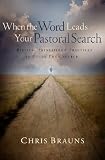
When the Word Leads Your Pastoral Search

Here are a bunch of reasons Brauns’s book is so good:
  • It emphasizes and re-emphasizes prayer.
  • It gets first things first. The only way a church’s search for a pastor will succeed, Brauns says, is if the search “is shaped by an understanding of Scriptures” (15). It’s like the book’s title says: the Word should lead our pastoral searches. And this point is made again and again throughout the book.
  • It offers wise criteria for selecting committee members. Should committee members be chosen because they represent different demographics of the congregation? That may be a recipe for division, says Brauns. They should be chosen because they know the importance of the Word and are willing to exercise biblical discernment.
  • It attends to the unity of the congregation. It does this by telling committees to avoid certain bad practices, such as thoughtless surveys that simply ask people what they want. And it does this by offering practical advice on how to actively promote unity, such as having the congregation read and study through Titus as an opportunity to meditate on what they’re looking for in a pastor.
  • It teaches search committees what to look for: good expositional preaching. Brauns doesn’t merely give mechanical advice, like telling committees to divvy up responsibilities. He gives substantive guidance: look for good expositional preaching above everything else! In other words, the book is both motivated by and imparts a philosophy of ministry. And gratefully, it imparts the right philosophy. Along these lines…
  • It teaches committees to look for a shepherd. Not a CEO. Not a life-coach. But a biblical shepherd. That is, Brauns helps committees look for men who have these seven qualities: they lead with exemplary character; they feed their flocks with the Word; they desire to know the church and the community; they sacrificially love the church; they guard the flock against danger; they point them toward a positive vision; and they care for straying lambs.
  • It teaches search committees how to evaluate good expositional preaching. Brauns defines what expositional preaching is and what it’s not. It’s not just preaching on a topic from a text. It’s preaching the point of the text. Plus, it’s preaching a text to one’s particular listeners. He observes that Paul told Titus not to preach just sound doctrine, but what accords with sound doctrine (Tit. 2:1). Interesting—I’d never noticed that before. Brauns even provides a sermon evaluation form.
  • It emphasizes how important this job is, as well as the need to be rightly critical.One section of the book is called “Judge, Lest You Be Judged.” Search committees need to exercise a loving and critical approach to choosing a pastor since so much depends upon it. Brauns rightly turns up the pressure.
  • It’s very practical. For instance: don’t just rely on classifieds but ask pastors you trust for recommendations; let the pastoral candidate stay at a hotel so that he has private time; ask a candidate what he has done at least as much as what he would do;don’t require a seminary degree, but if a man doesn’t have such a degree, look for evidence that he has an appetite to learn. And much more. Read it all HERE