The purpose of this Blog is to introduce men and women all over the World to the Doctrines of Grace; the 5 Solas; Reformation Theology and the Lord and Savior Jesus Christ.
Showing posts with label C. S. Lewis. Show all posts

Wednesday, January 8, 2014

C. S. Lewis on Hell: Really Deep, Oft-quoted, Really Wrong


Love reading C. S. Lewis. Always have. Doesn't mean I think he's always right.

For instance, take one of Lewis' most oft-quoted observations on Hell:

There are only two kinds of people in the end: those who say to God, "Thy will be done," and those to whom God says, in the end, "Thy will be done." All that are in Hell, choose it. Without that self-choice there could be no Hell. No soul that seriously and constantly desires joy will ever miss it. Those who seek find. Those who knock it is opened.
This is quoted and re-quoted all over the place. I just read it again, in Ortlund's little book that treats parts of Proverbs (48). Why do we like this Lewis quotation so much?

Well, I think we like it because its binary, and many of us like binary. In fact, I suppose I could say there are only 10 kinds of people in the world: those who like binary, and those who don't.

Sorry. Anyway.   Continue at Dan Phillips

Tuesday, December 3, 2013

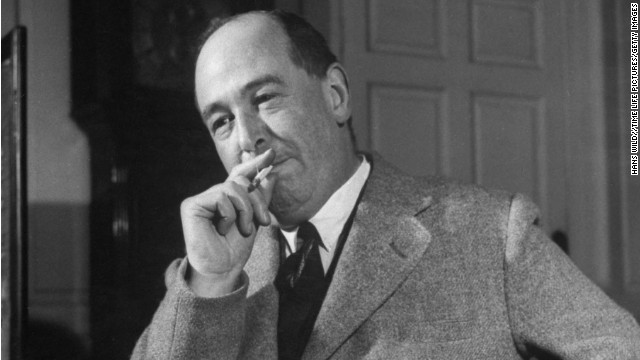
The C.S. Lewis You Never Knew

(CNN) – He looked like a “red-faced pork butcher in shabby tweeds,” lived secretly with a woman for years and was so turned on by S&M that he once asked people at a party whether he could spank them.

We’re talking, of course, about C.S. Lewis, the Christian icon and author of classics such as “Mere Christianity” and “The Chronicles of Narnia.”

It’s tempting to remember Lewis only as the self-assured defender of Christianity who never met an argument he couldn't demolish. His death 50 years ago, on November 22, 1963, was overshadowed by the assassination of President John F. Kennedy. He has since become a patron saint of American evangelicals.

But the actual man whom friends called “Jack” had a “horrible” personal life, thought he had failed as a defender of Christianity and spent so much time in pubs that his publishers initially struggled selling him to a religious audience, scholars say.   Continue at John Blake

Monday, August 20, 2012

C.S. Lewis

There is probably no Christian in modern times better known or more influential than Clive Staples Lewis. Born in Belfast in the year 1899, Lewis would write dozens of books on a variety of topics before his death on November 22, 1963 (on the very day of the deaths of John Kennedy and Aldous Huxley). At the time of his death his popularity was starting to wane but shortly thereafter there was a revival of interest in Lewis and, arguably, today he is more deeply admired than ever. He is considered by many to be the greatest apologist for the Christian faith to have ever lived. Whether you agree with this assessment or not, there is no doubt that Lewis was in a league almost by himself in his ability to write great truths in ways that spoke to our hearts and opened our eyes. For this reason, even those who are troubled with much of Lewis’ theology can hardly resist quoting him. There is a danger, however, of all-but-canonizing Lewis, giving more weight to his imaginative explorations and philosophical reasonings than to Scripture. Ruth Tucker writes, “Among Protestants there is only one pope of apologetics…. If C. S. Lewis said it, it must be true. In many circles it seems that the voice of C. S. Lewis is second only to the voice of God.”

There is no doubt that Lewis has earned the respect he receives.
Lewis penned over fifty books, some of them compiled posthumously. There are seventeen biblical, theological, and philosophically-related works, fourteen works of literary criticism, twenty of a more imaginative literary nature (including seven children’s books, four science fiction thrillers, and four books of poetry – two of these penned as a youthful atheist), and three compilations of his letters.
Lewis’ insights into life are often astounding, yet the discerning Christian needs to be aware that Lewis is not the final word on faith and practice. As a matter of fact, while much of Lewis’ apologetics are sound and his understanding of life penetrating, his theology was somewhat of a mess. Even his “friends accused Lewis of a rumpled dress and a somewhat rumpled theology too.”   Continue at Gary Gilley

Saturday, January 29, 2011

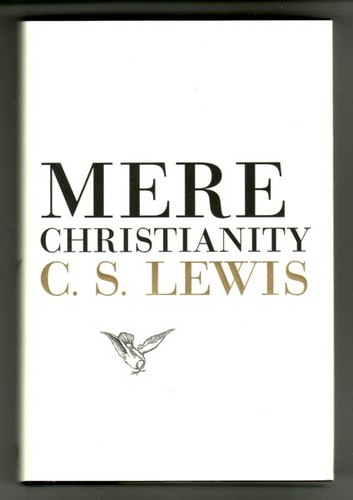
Cautions for Mere Christianity

C.S. Lewis’ Mere Christianity is a classic. It is a winsome, thoughtful, well-written defense of the Christian faith. Some of its better known sections–like the famous liar, lunatic, Lord, trilemma–have become part of the way evangelicals think and speak. No doubt God has used Lewis and Mere Christianity to awaken affections for Christ, engage the mind for Christ, and remove obstacles for the Spirit to draw people to Christ. I’m thankful for all this. More than that, I’ve benefited from every Lewis book I’ve read.

But C.S. Lewis was not an evangelical. Mere Christianity shows why.

Let me highlight two significant problems. Continue Reading>>>

Thursday, December 9, 2010

Narnia Invaded - How the New Films Subvert Lewis’s Hierarchical World

As everyone knows, two Hollywood productions of recent years bear the titles of two of C. S. Lewis’s famous stories from The Chronicles of Narnia: The Lion, the Witch and the Wardrobe and Prince Caspian. The third installment in the series, The Voyage of the Dawn Treader, is scheduled for release this December, with The Silver Chair slated for 2011.

Many Christians are very excited about these developments, believing (quite rightly) that Lewis’s stories are shot through with deeply Christian imaginative themes. What can be wrong with disseminating the stories more widely in this way? The answer is: Absolutely nothing—so long as it really is Lewis’s stories being disseminated. But there’s the rub. A thoughtful investigation suggests that the Narnia films are very far from being a faithful representation of Lewis’s own Christian vision of reality. Continue Reading>>>