The purpose of this Blog is to introduce men and women all over the World to the Doctrines of Grace; the 5 Solas; Reformation Theology and the Lord and Savior Jesus Christ.
Showing posts with label New Testament. Show all posts

Tuesday, July 2, 2013

The New Testament Explains the Old Testament

44 ”The kingdom of heaven is like a treasure hidden in the field, which a man found and hid again; and from joy over it he goes and sells all that he has and buys that field. 45 ”Again, the kingdom of heaven is like a merchant seeking fine pearls, 46 and upon finding one pearl of great value, he went and sold all that he had and bought it. (Matthew 13:44-46 NASB) 
The correct way to understand Sacred Scripture is that the Old Testament contains the “old” promises of the Messiah and the fulfillment of His Kingdom while the New Testament is the “new” revelation from Jesus and His Apostles, which reveal to us how the “old” promises are fulfilled in Him. The New Testament explains the Old Testament, not the other way around.
51 ”Have you understood all these things?” They *said to Him, “Yes.” 52 And Jesus said to them, ”Therefore every scribe who has become a disciple of the kingdom of heaven is like a head of a household, who brings out of his treasure things new and old.” (Matthew 13:51-52 NASB)   Continue at Mike Ratliff

IMAGE

Wednesday, October 24, 2012

40 Reasons to be Part of a Local Church

Is it possible to live a faithful Christian life without being a faithful part of a local church? I’ve heard many people make the argument that it is indeed possible—especially if there are no good churches around. I disagree.

At the bare minimum, there are forty different commands in the New Testament to live life in some sense with other believers. While certainly it is possible to do some of these with Christians in general, the weight of this list should convince you of the necessity of having on going relationships with other believers.

And those relationships are only strengthened by the fellowship of the local church. In fact, I submit that some of this list is simply impossible to obey if you do not have the kind of ongoing  and ever increasing fellowship with other believers that only comes through ministry in a local church:   Continue at  Jesse Johnson

Friday, July 27, 2012

What Happens to Infants who Die? The NT answers

Yesterday we saw 16 verses in the OT that address the issue of what happens to little children who die. I hope you saw that the OT lays the groundwork for a category distinction: there are two kinds of sinners who die. There are those who die because of their sin nature, namely infants. And there are those who die because they love sin, and actively embrace it; namely, adults. This distinction is important to grasp because the NT does not reestablish it from the ground up but rather Jesus and Paul both teach in such a way that the distinction is reinforced.

Again, if any of these verses trouble you, simply skip them, and let the weight of the full list be enough to convince you. The numbering picks up where yesterday left off.

17) Jesus blessed little children. There are no examples of Jesus blessing anyone who was in open rebellion to God. Again, much like Jonah 4, Jeremiah 19, 1 Kings 11, this (at the very least) creates a category distinction between sinful adults in rebellion against God, and the childlike innocence of children (Matt 18:3-5).

18) In Matthew 18, Jesus not only blesses the children, but uses them as an earthly analogy of childlike faith. He says that “unless you are converted and become like children, you will never enter the kingdom of heaven. Therefore, whoever humbles himself like this child– this one is the greatest in the kingdom of heaven.” Everyone is free to debate what exactly Jesus means here, and there are Christian answers all over the spectrum. But at the very least, Jesus has to be implying that children in their current state would go to heaven if they died. Consider this statement: “my car is as fast as a cheetah, and unless your car is like a cheetah too, it can never be fast.” Everyone can debate what it means to be fast, or how fast my car really is, or if your car even should be fast. But the entire analogy would break down if cheetahs were not indeed fast to begin with. That is the assumption that makes the analogy make sense. Whatever Jesus is saying Matthew 18, it only makes sense if the destination of children who die is an enviable one.   Continue at Jesse Johnson

Thursday, November 17, 2011

Pastors and Tithing

I was recently asked by a church if Grace Church requires their pastors to practice tithing. This is my response to that email:

The word tithing means giving ten-percent of income to the church. I do not teach or practice that approach to money. I think that is based on a faulty understanding of the Old Testament practice, and creates and propagates a wrong understanding of God’s relationship to our money.

In the OT, the Israelites were living in a theocracy, and everything they owned really belonged to God. God drove that point home by making them revert their land sales and free their slaves every 50 years. Tithing in this system served as a form of taxation. While God owned everything, he required his people to fund the Levitical system (Levites were priests, and thus generally were not farmers, merchants, or shepherds) with a tithe collected annually (Deut 12:2-19; 14:22-29). Leviticus 27:30-32 reiterates this tithe, and applies to livestock as well.

In the NT, the tithe goes the way of the Levites and the temple curtain. As the Baker Bible Encyclopedia says, “Tithing is mentioned in the New Testament only critically.” The fact was, Pharisees loved the tithe, because it was easy to enforce, said nothing of the heart, and had little to do with actual love for God. Not only that, but religious leaders were the recipients of it, and in exchange all they paid was ten-percent (to themselves!).   Keep Reading >>>

Wednesday, September 14, 2011

Can we trust the New Testament?

Several years ago I was walking in a park and met a man who identified himself as a pantheist. As I shared the Gospel with him, he raised a series of objections, the first of which concerned the reliability of Scripture. “The Bible was going along fine,” he explained, “until King James came along and changed it all. Now we have no idea what the original Bible actually said.”

The man’s objection was obviously more than a bit misinformed, but it does raise a significant question: If we do not possess the original manuscripts of the Bible, if the existing manuscripts do not completely agree with each other, and if there is no absolutely sure method of determining the original reading where these differences exist, then how can we have confidence in the Bible we possess today?

The points of difference between existing manuscripts are known as textual variants, and the process of determining the original wording where variants exist is known as textual criticism. Because this process is at least partly subjective in nature, it is not infallible and therefore we cannot know with absolute certainty what the original manuscripts said in a given place. For this reason, the question is indeed a significant one: Can we really trust the Bible as it has been handed down to us?    Keep Reading...

Tuesday, December 28, 2010

Can the Old Testament be of Value to Christians?

Jon Akin recently wrote a 2-part blog on the misuse of the Old Testament in the Church. You can read parts one and two.


This raises the question then, how is the Old Testament to be read? And is the Old Testament of value to the church today?

Jon Akin, who is completing a PhD in Old Testament studies at The Southern Baptist Theological Seminary has written several blogs that can help us with both of these questions. He writes in one of these blogs: Continue Reading>>>

Monday, December 6, 2010

The Continuity of Theological Concepts: A New Covenant Reading of Old Covenant Texts

While studying and teaching Zechariah 9-14 near Beirut, Lebanon I was challenged to think about the meaning and relevance of those chapters to Lebanese believers who often suffer because of the animosity between Lebanon and the very nation and people who are mentioned in those chapters. Does an alleged promised restoration of Israel and Jerusalem bring comfort or chagrin to believers in Lebanon? After all, are not Arabic speaking believers and Jewish believers in the Middle East the true people of God? Are they not the ones who should expect to share in the triumph of God? Does present day Israel have a “favored nation” status that trumps the “holy nation” of the church (1 Pet 2:9-10)?
Furthermore, does not a similar conundrum exist for those of us who live in North America? Do these texts have anything relevant to say to a largely Gentile church? Do we simply rejoice because ethnic Israel is to be restored or do we rejoice because the triumph which the old covenant nation expected is the triumph that belongs to all of those who are children of God through faith in Jesus Christ? Admittedly, the question of relevancy should not be determinative in the understanding of biblical texts but it does raise questions that might not be raised otherwise. Continue Reading>>>

Friday, August 27, 2010

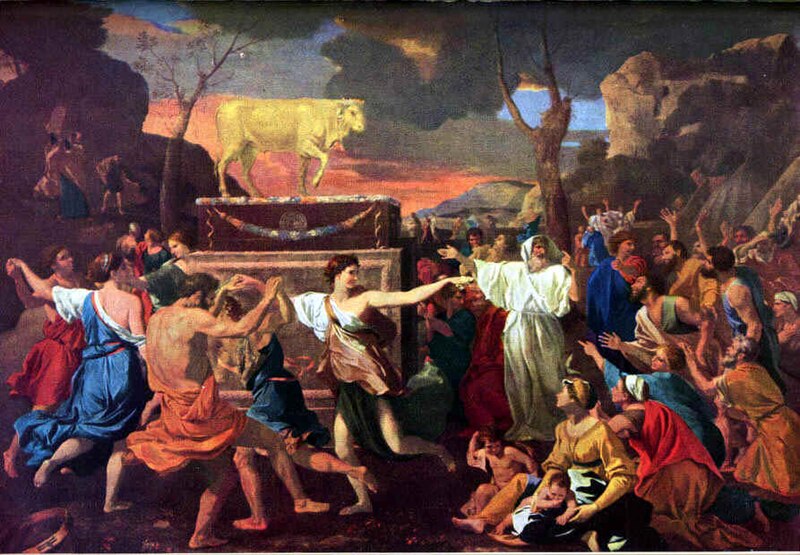
A Biblical Overview of Idolatry

In his sermon titled “Soul Idolatry Excludes Men Out of Heaven,” English Puritan Pastor David Clarkson (1621-1686) gives us thirteen pointers I’ll draw from to help us identify the idols of our hearts and I will frame them as questions.[5]
  1. What do you most highly value?
  2. What do you think about by default?
  3. What is your hightest goal?
  4. To what or whom are you most commited?
  5. Who or what do you love the most?
  6. Who or what do you trust or depend upon the most?
  7. Who or what do you fear the most?
  8. Who or what do you hope in and hope for most?
  9. Who or what do you desire the most? Or, what desire makes you most angry or makes you despair when it is not satisfied?
  10. Who or what do you most delight in, your greatest joy and treasure?
  11. Who or what captures your greatest zeal?
  12. To whom or for what are you most thankful?
  13. For whom or what great purpose do you work?
Read the whole article HERE

Image Courtesy of  wikipedia

Tuesday, June 1, 2010

What The Bible Is Not

In the Introduction of that book, author Sally Lloyd-Jones rightly explains what the Bible is not before she beautifully explains what the Bible is. She writes:

Now, some people think the Bible is a book of rules, telling you what you should and shouldn’t do. The Bible certainly does have some rules in it. They show you how life works best. But the Bible isn’t mainly about you and what you should be doing. It’s about God and what he has done.

Other people think the Bible is a book of heroes, showing you people you should copy. The Bible does have some heroes in it, but (as you’ll soon find out) most of the people in the Bible aren’t heroes at all. They make some big mistakes (sometimes on purpose), they get afraid and run away. At times, they’re downright mean.

No, the Bible isn’t a book of rules, or a book of heroes. The Bible is most of all a Story. It’s an adventure story about a young Hero who comes from a far country to win back his lost treasure. It’s a love story about a brave Prince who leaves his palace, his throne–everything–to rescues the ones he loves. It’s like the most wonderful of fairy tales that has come true in real life! Read the rest HERE

Friday, July 17, 2009

Faithful Feelings Rethinking Emotion in the New Testament

Created in the image of our passionate and compassionate God who experiences deep joy and profound sadness, we are emotional beings who experience life deeply and internally. God created us to feel. God loves emotions. Jesus wept, and so do we. The Spirit grieves, as we do. The Father rejoices, as do we. We have the emotional capacity to respond to our outer world based upon our inner actions, choices, goals, beliefs, images, longings, and desires.

However, the Christian world sometimes makes emotions “the black sheep of the image bearing family.” Some people view emotions as primarily negative, typically unreliable, and best when ignored or “controlled.” Pastors and counselors at times pit feelings against beliefs by viewing emotions as “irrational passions.”

Because of our often faulty views of emotions, New Testament scholar Matthew Elliott wrote Faithful Feelings to challenge us to rethink emotions biblically. Elliott seeks to determine how emotions were perceived by the writers of the New Testament, and what role they thought emotions should play in the life of the believer. His purpose is to explore the importance of emotions to our faith. Read the rest HERE